About Phoxinus bigerri Kottelat, 2007
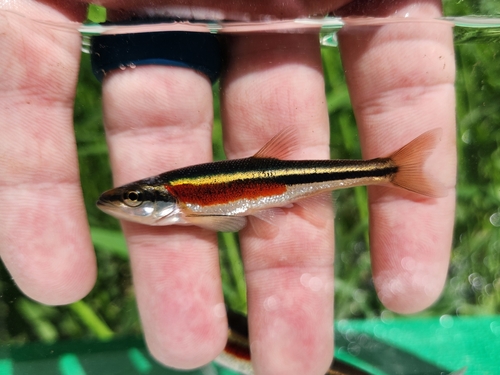
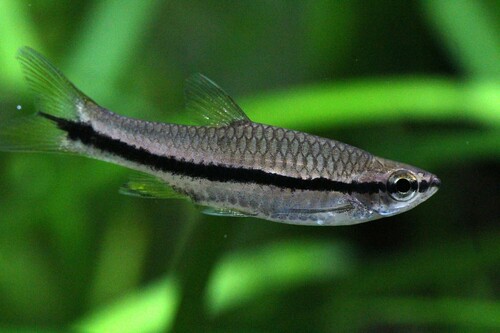
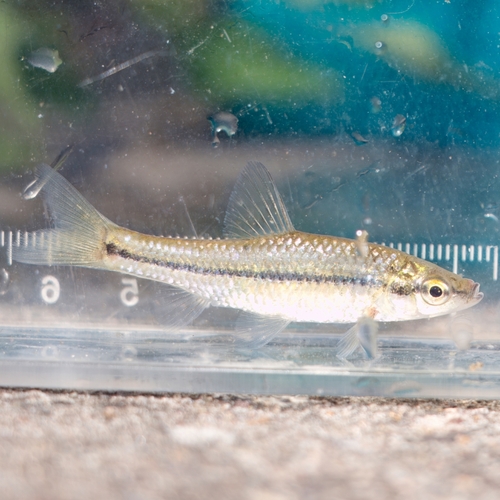
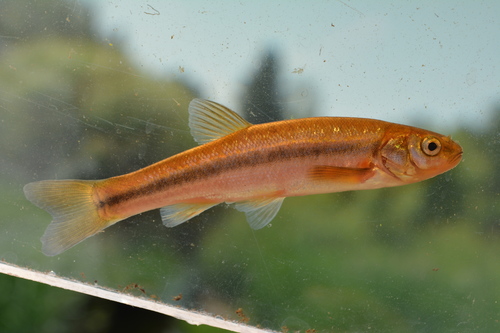
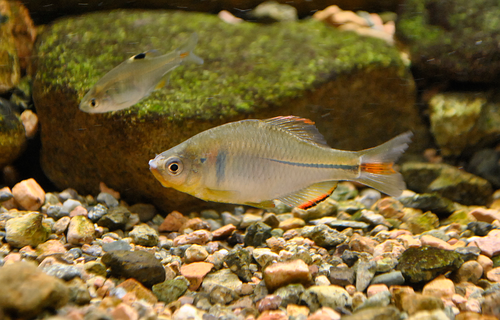
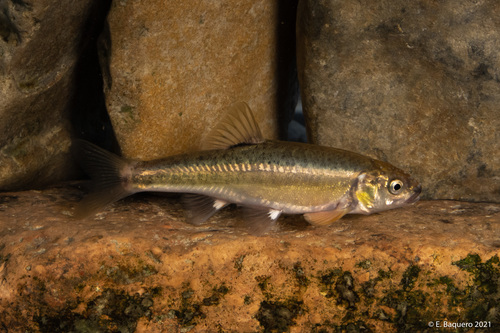
Phoxinus bigerri can be distinguished from other European species in the genus Phoxinus by the position of its anal fin origin, which is located below or behind the last dorsal fin ray. In adult individuals, the anal fin is almost the same length as the caudal peduncle, and has a margin that ranges from straight to convex. The dorsal profile of the head is nearly horizontal above the eye, then drops sharply close to the tip of the snout. The breast has scale patches that are surrounded by areas without scales; alternatively, these patches may be connected at their anterior end by one or two rows of scales. The lateral line most often extends close to the end of the caudal peduncle. The largest specimens develop a distinct hump on the nape. The maximum recorded standard length for this fish is 6.6 cm (2.6 in). Phoxinus bigerri occurs in southwestern Europe, in rivers that drain into the Bay of Biscay. The western edge of its native range is the Esva River in Asturias, Spain, and its range extends east into France, where it is native to the Eyre and Adour drainage systems, as well as the upper Ebro drainage. It has been introduced to the Duero and Da Chanca rivers in Galicia, and to the Aude river in France. This species, commonly called the Pyrenean minnow, favors relatively shallow shorelines, pools, and smoother stretches of rivers with well-oxygenated, clear water, and slow to moderate current.