About Phormia regina (Meigen, 1826)
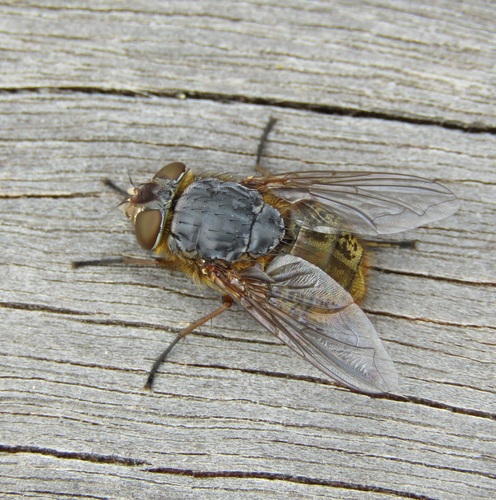
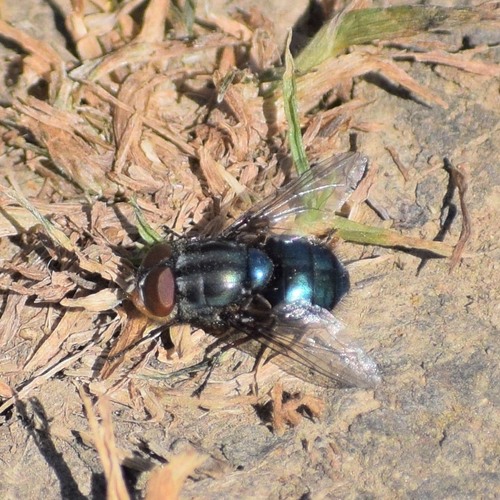
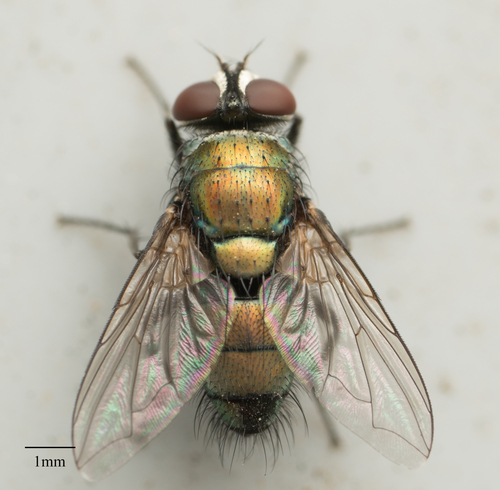
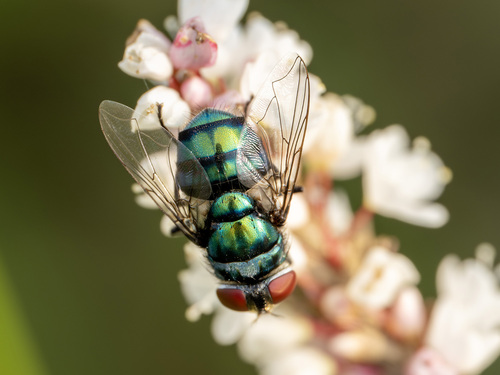
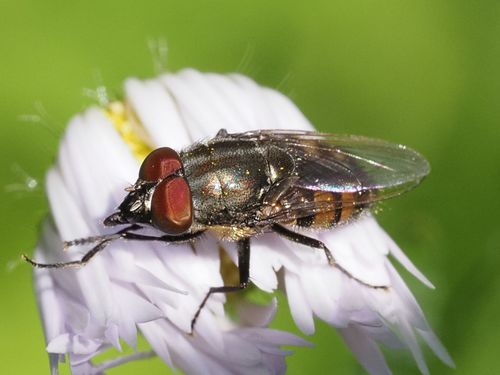
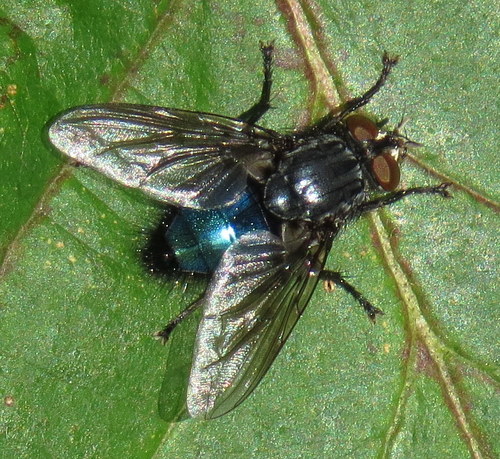
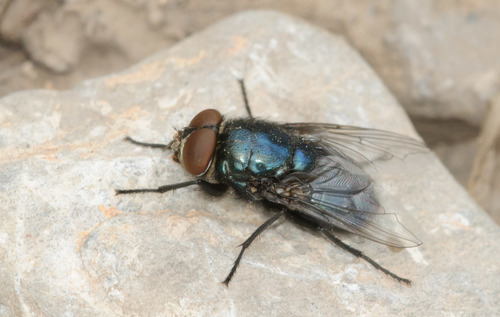
Adult Phormia regina are metallic blue or green, with a characteristic set of orange setae near the anterior thoracic spiracle. They can also be identified by their black gena (the side of the head below eye level), mostly white calypteres, and a distinctive bend in their wings. Phormia regina is commonly found throughout the entire United States and across other regions of North America. This species can be found on human corpses, animal carcasses, and feces. Researchers have observed these flies on a wide variety of animal excrement, but at least in the northwestern United States, they prefer human, mink, and swine feces. P. regina is predominantly found in the northern United States during spring and summer, but localizes to more southern regions during winter. This shift in distribution is tentatively linked to temperature's effect on the species' development. At least in the San Francisco Bay Area, these flies prefer rural areas, especially those near water sources, over urban spaces. Feeding habits change significantly over the life cycle of P. regina. Adult feeding habits depend on both the fly's sex and reproduction status. This is especially relevant for protein intake, which published research notes plays an important role in sexual maturation and copulation ability for adult P. regina. Like most other flies, the black blow fly feeds via sponging. Although adult P. regina require various nutrients, they typically get all the nutrition they need from feces in the wild. Phormia regina is a flesh-eating fly that is not usually used for medical benefit. However, maggots of the black blow fly are used in maggot therapy, a form of biotherapy. This therapy involves intentionally introducing live, disinfected maggots into the skin and soft tissue wounds of humans or animals to selectively remove only necrotic tissue and encourage healing.