About Phorcus atratus (W.Wood, 1828)
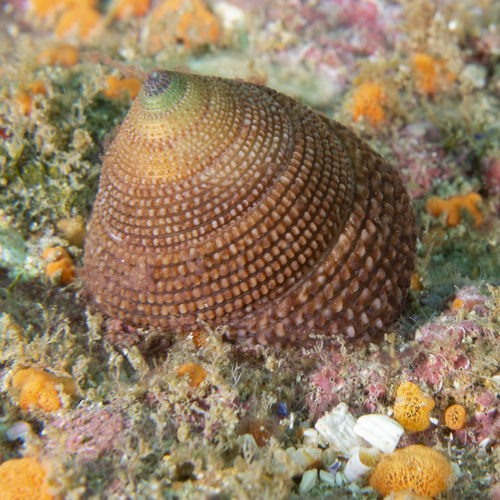
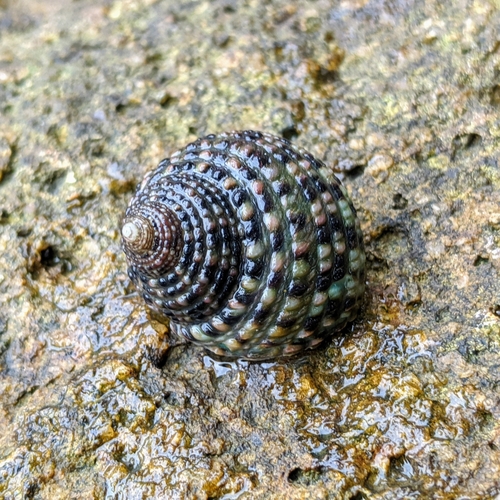
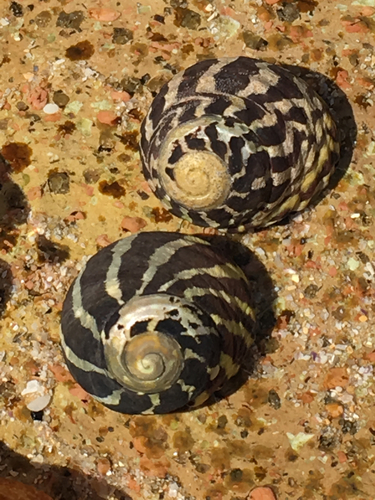
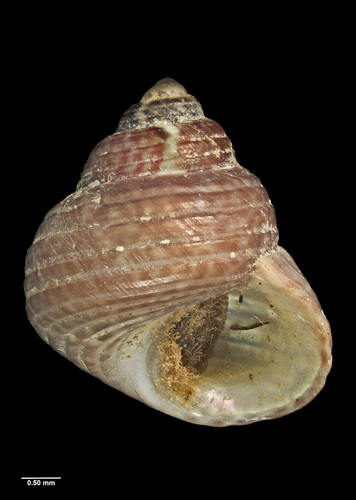
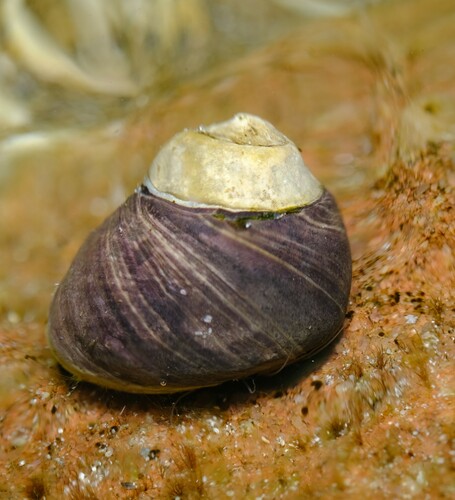
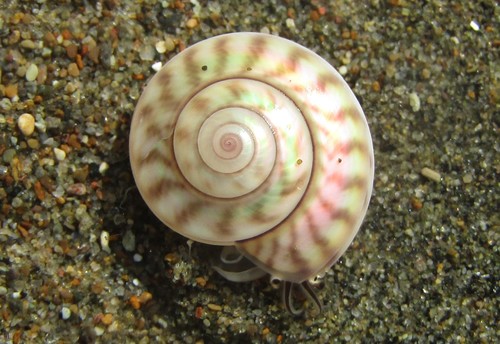
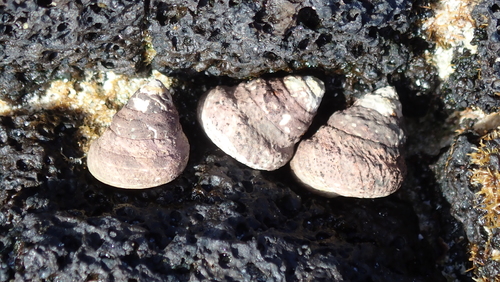
The shell of Phorcus atratus ranges from 17 mm to 24 mm in height, and 16 mm to 19 mm in diameter. It is solid, imperforate, and shaped conically, with a conical spire. The apical whorls are eroded, and the whorls that follow are dull ash-gray or purplish-black, marked with several spiral rows of white spots, or with longitudinal zigzag white stripes. The base of the shell is generally tessellated or striped with white. The shell holds 5 to 6 whorls. In young specimens, the upper whorls are marked with spiral impressed lines and two carinae; the carinae give the body whorl a squarish form. The aperture is oblique, and the lip is not much thickened within. The short columella is faintly subdentate at its base. At its upper insertion, a heavy white callus spreads over the shell base, invades the umbilicus, and closes it completely, or leaves only a narrow pit. This species is quite variable in coloration, with white appearing either in oblique zigzags or as spots. Juvenile individuals of this species are perforate. This is a marine species found in Cape Verde, the Canary Islands, European waters within the ERMS scope, and Senegal.