About Phoradendron juniperinum Engelm. ex A.Gray
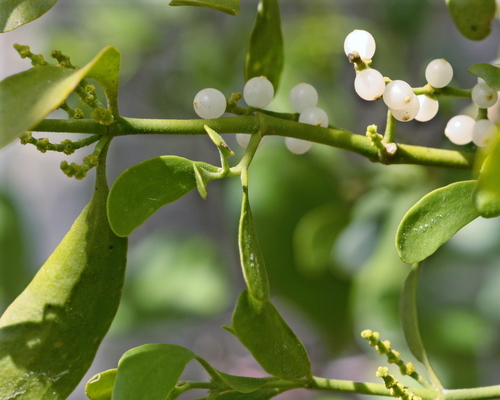
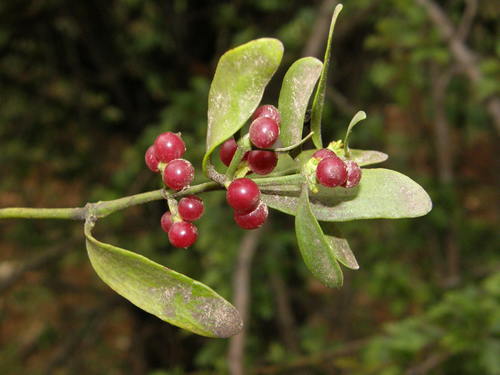
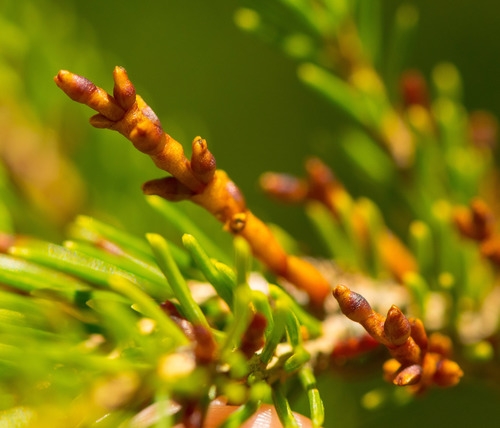
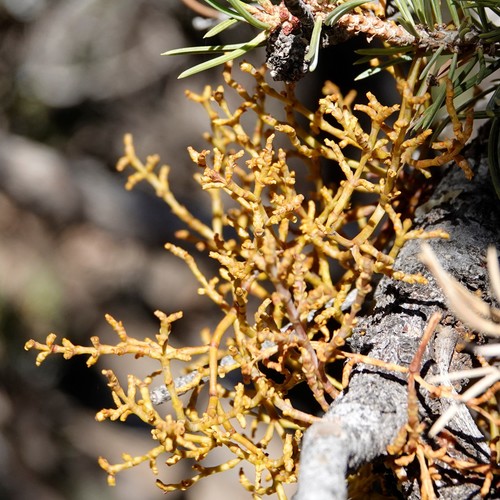
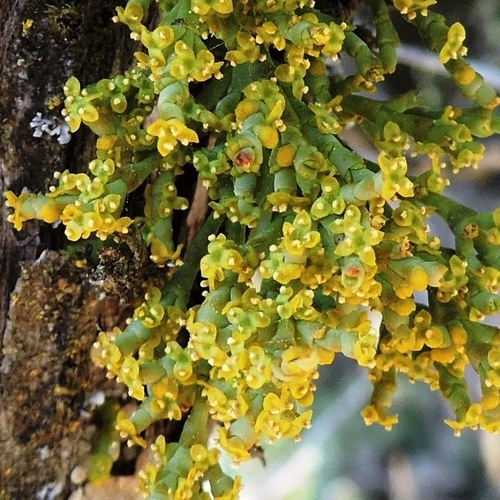
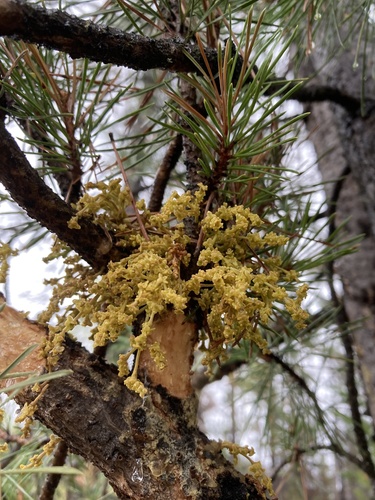
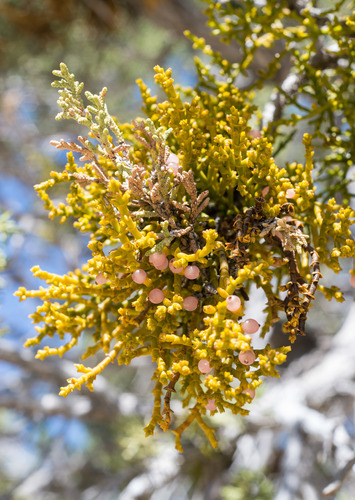
Phoradendron juniperinum is a species of flowering plant in the sandalwood family, commonly known as juniper mistletoe. It is native to the southwestern United States and northern Mexico, where it grows in a variety of woodland habitats. It has been documented in California, Nevada, Arizona, New Mexico, Oregon, Utah, Texas, Chihuahua, and Sonora. This mistletoe parasitizes juniper species, including Utah juniper (Juniperus osteosperma), Rocky Mountain juniper (J. scopulorum), and western juniper (J. occidentalis). It is a shrub that grows many erect, spreading yellow-green branches 20 to 40 centimeters long from a woody base that anchors it to its host tree. It taps into the host's xylem to obtain water and nutrients. It is hemiparasitic: it contains some chlorophyll and can produce some of its own energy via photosynthesis. Its smooth, noded branches bear flattened, scale-like leaves. The species is dioecious, meaning male and female plants produce different types of inflorescence, both formed of knobby flower clusters. After pollination, female flowers develop into shiny light pink spherical berries that measure around 4 millimeters wide. Birds eat these fruits, excrete the undigested seeds onto tree branches, and the seeds then root there. Several Native American tribes used this mistletoe for medicinal purposes, to make teas, and occasionally as food. Among the Zuni people, an infusion made from the whole plant is used to treat stomachaches. A compound infusion of the plant is taken to promote muscular relaxation during childbirth, and an infusion of twigs (either simple or compound) is taken after childbirth to stop bleeding.