About Phoradendron californicum Nutt.
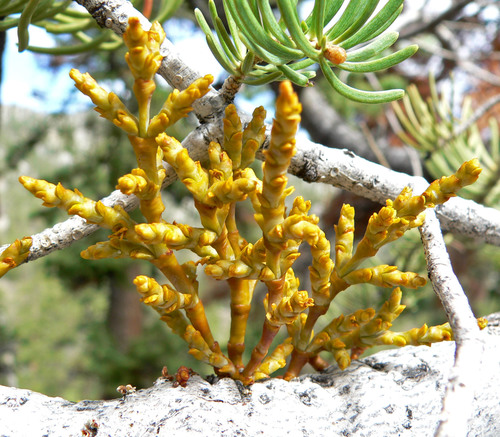
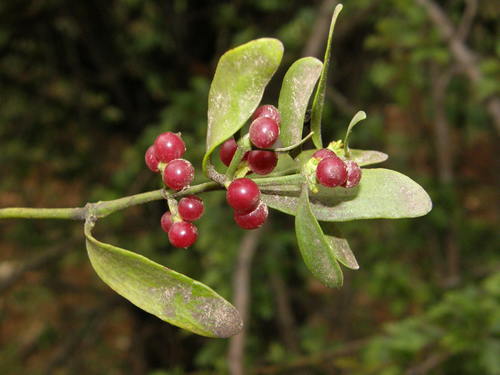
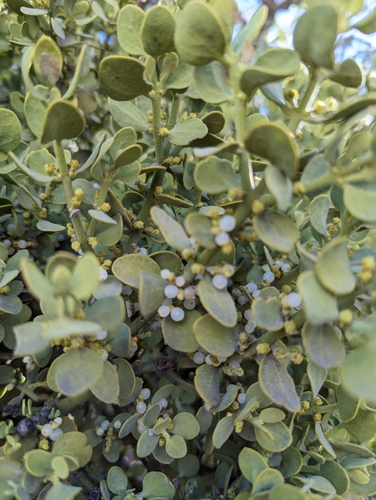
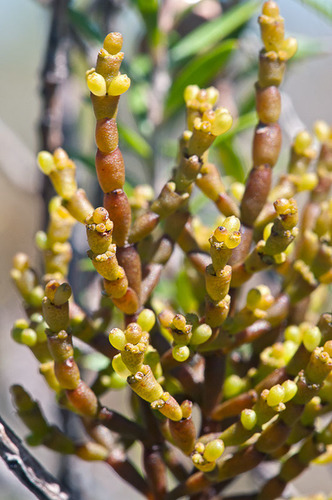
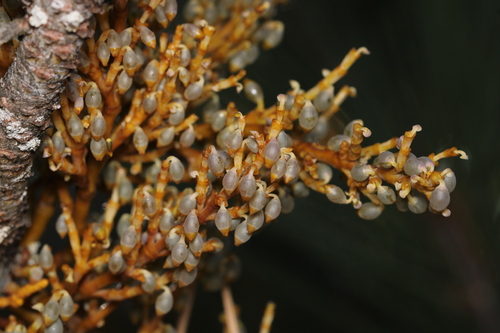
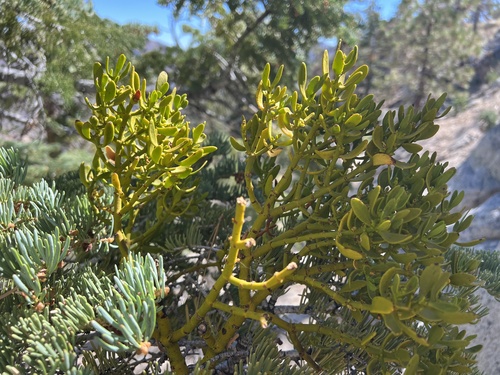
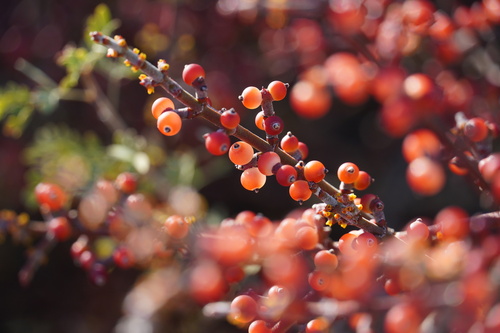
Phoradendron californicum, commonly called desert mistletoe or mesquite mistletoe, is a hemiparasitic plant native to southern California, Nevada, Arizona, Sonora, Sinaloa, and Baja California. It grows in the Mojave and Sonoran Deserts at elevations up to 1400 meters, or 4600 feet. This leafless mistletoe attaches to host plants, most commonly leguminous woody desert trees such as Cercidium and Prosopis. It obtains water and minerals from its host, but carries out its own photosynthesis, which is why it is classified as a hemiparasite. Like other mistletoes, desert mistletoe connects different nutrient cycles through its unique life history. Desert mistletoe is dioecious, and depends on insects for pollination. It produces small, fragrant flowers during the winter. A 2015 February inventory counted 13 dipteran species and 3 hymenopteran species on female P. californicum flowers growing on catclaw acacias (Acacia greggii) in the Eldorado Mountains of the southern Mojave Desert. The most abundant pollinator was the fruit fly Euarestoides acutangulus, followed by the blowfly Phormia regina, then the hover fly Eupeodes volucris. This species has multiple Spanish common names: visco, tojí, tzavo, secapalo, injerto, and chili de espino; its Seri common name is aaxt. Its white to reddish fruits are edible, but native tribes only ate fruits from mistletoes growing on mesquite (Prosopis), ironwood (Olneya tesota), or catclaw acacia (Acacia greggii). Fruits from mistletoes growing on palo verdes (Parkinsonia) or Condalia (desert buckthorn) are considered inedible. The Seri people consider desert mistletoe fruit ready to harvest once it turns translucent. Harvesters spread a blanket below the plant and hit it with sticks to dislodge the fruit. The Seri eat the fruit raw. The Tohono O'odham also eat the fruit raw. The River Pima ate the fruit boiled and mashed to a pudding-like consistency. The Cahuilla gathered the fruits from November through April, and boiled them into a paste, adding a small amount of wood ash to the pot. The desert mistletoe plant (but not its berries) contains phoratoxins that can easily cause death by slowing heart rate, increasing blood pressure, triggering convulsions, or causing cardiac arrest. Some of these compounds can produce hallucinations, but there is no reliable way to determine a safe dosage. People who attempt to use this mistletoe to get a high die each year, and Native peoples used other plant species to seek visions. During the Christmas season, amateur sellers often sell cuttings of desert mistletoe on street corners in Tucson, Phoenix, and other Sonoran Desert cities, even though this species looks very different from the other mistletoes traditionally used as holiday decorations in other regions.