About Phoneutria pertyi (F.O.Pickard-Cambridge, 1897)
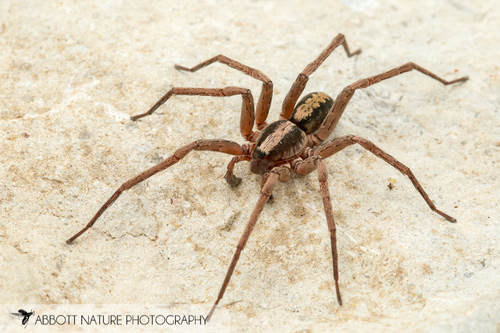
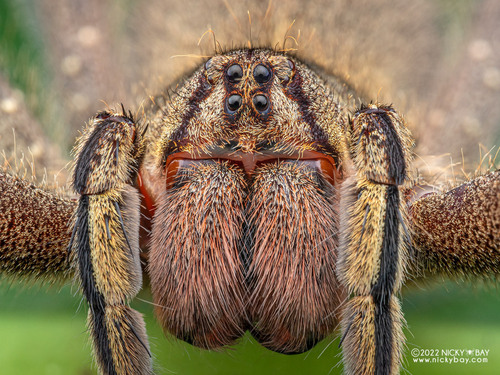
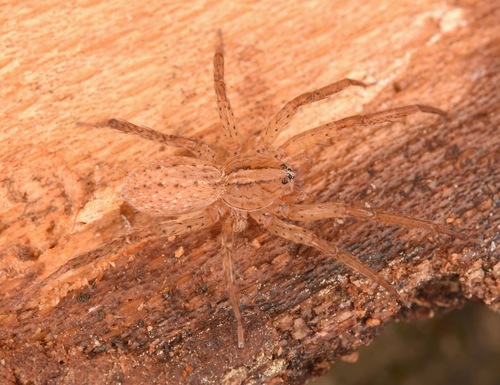
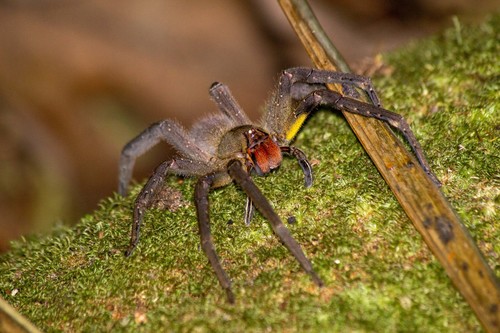
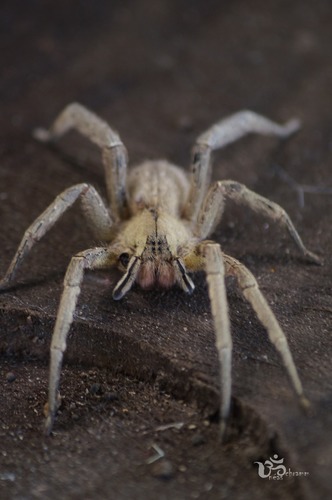
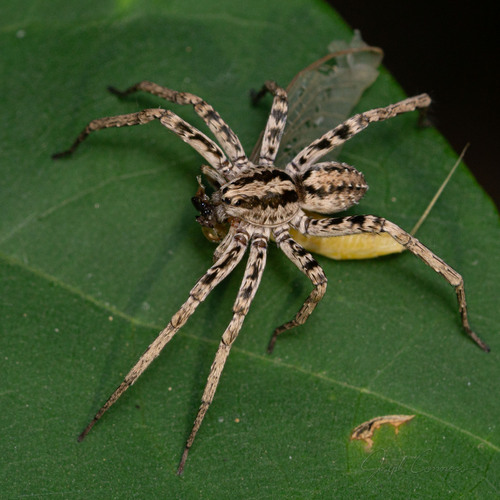
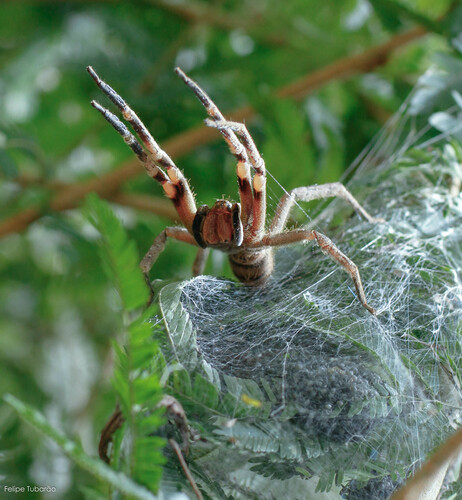
Phoneutria pertyi is a species of spider in the family Ctenidae, native to Brazil. It is very morphologically similar to two other species in its genus: P. nigriventer and P. eickstedtae. Females of P. pertyi have several basal grooves in the epiginal lateral apophysis, which are absent in P. nigriventer. Males have the longest tibial pedipalp, or a tibial pedipalp similar in length to the cambium, with a curved, hook-shaped apex on the emboli. The dorsal shield of the prosoma is reddish-brown and covered in golden bristles. The ocular area has light gray bristles and a dark brown oblique band stretching toward the anterior dorsal shield along the edge of the prosoma. Chelicerae are dark brown and hold golden-yellow and white setae, and the sternum is light brown. The tibial pedipalp is brown dorsally with a median golden longitudinal stripe; the retrolateral face has a white stripe, and legs I and IV are yellowish brown. The abdomen is golden dorsally, with longitudinally arranged dark markings in its median region. Ventrally, it is yellowish brown, with or without a dark brown transverse band near the epigastric groove. Four distinct white lines run across the posterior half of the abdomen, and the area adjacent to these lines has two dark brown lateral bands. P. nigriventer is the most heavily studied species in the genus, and research on other Phoneutria species, including P. pertyi, remains scarce. Analyses of P. pertyi venom have identified 296 unique sequences, 61 of which correspond to peptide toxins putatively rich in cysteines. Other identified putative venom components include proteases, defensins, and serine proteases. Glycine-rich proteins (GRP), a class of venom component never previously documented for the genus Phoneutria, were also found. Eight sequences of cysteine-rich toxins from P. pertyi are classified as new toxins.