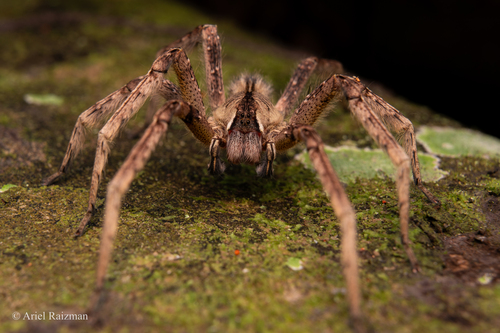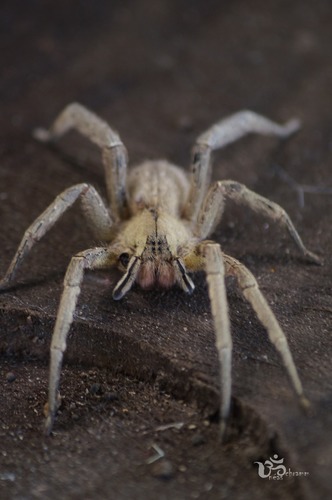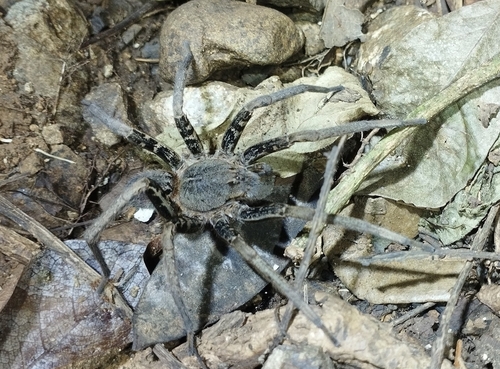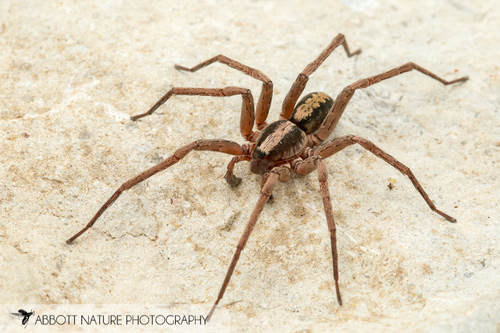
About Phoneutria nigriventer (Keyserling, 1891)
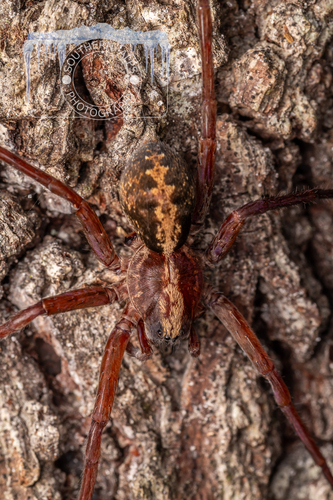
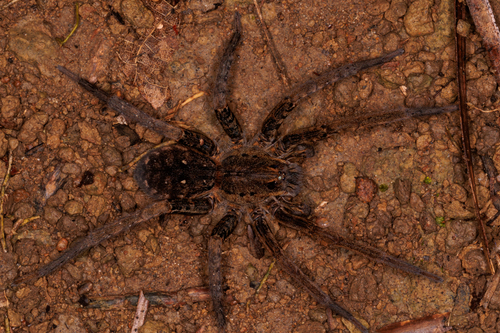
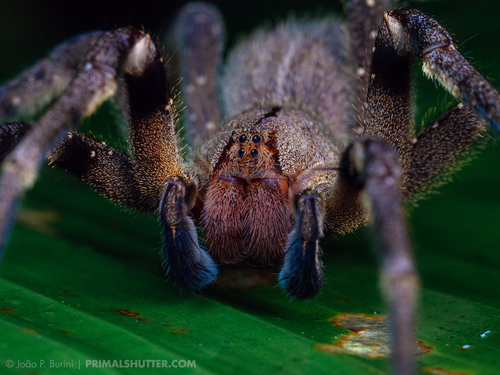
Phoneutria nigriventer is a large spider. Larger individuals reach a maximum body length of around 5 cm, with a leg span of up to 15 cm. Its body is covered in thick brown hair. This species is nocturnal: it hunts by ambush at night rather than building webs to catch prey, and hides under logs or in crevices during the day. When threatened, it raises its first two pairs of legs as a warning. It can be found in banana trees, foliage, urban regions, and often inside human residences. Like most spider species, female Phoneutria nigriventer are larger than males. During mating, males perform a courtship dance to attract female attention, and males will fight each other for mates. After mating, females may attack males. Females can store sperm in a separate chamber away from eggs, holding it until conditions are right for fertilization. They lay around 1,000 eggs, which they keep in a silk egg sac. One study notes that females carrying egg sacs are slightly more toxic than females without egg sacs. Bites from P. nigriventer to humans can cause a range of symptoms, including priapism, tachycardia, arrhythmias, cardiogenic shock, acute pulmonary edema, and convulsions. This spider can choose to deliver a dry bite that injects no venom, or only inject a minimal dose of venom. P. nigriventer venom contains at least six neurotoxic peptides collectively known as PhTx3, individually named Tx3-1 through Tx3-6. Tx3-3 is also called ω-Phoneutria nigriventer toxin ω-PnTx3-3, while Tx3-4 is also referred to as phonetoxin IIA or ω-Ptx-IIA. These toxins act as broad-spectrum calcium channel blockers that inhibit glutamate release, calcium uptake, and glutamate uptake at neural synapses. At lethal concentrations, these neurotoxins cause loss of muscle control and breathing problems, leading to paralysis and eventual death by asphyxiation. Bites also cause intense pain and inflammation because the venom has an excitatory effect on the serotonin 5-HT4 receptor of sensory nerves. This stimulation of sensory nerves triggers a cascading release of neuropeptides including substance P, which in turn triggers inflammation and pain. Studies on venom effects in dogs record a low lethal dose of approximately 0.2 mg/kg when administered subcutaneously. The median lethal dose (LD50) for females is 0.63 mg/kg with a 95% confidence interval of 0.54–0.71 mg/kg; for females with egg sacs, the LD50 is 0.61 mg/kg with a 95% confidence interval of 0.56–0.73 mg/kg. For males, the LD50 is 1.57 mg/kg. Differences between male and female venom have been recorded: females produce a larger volume of venom than males. The PhTx-2 group is identified as the most toxic fraction of the venom, and it is particularly potent for primates. Humans are ten times more sensitive to P. nigriventer venom than mice, and primates including humans and monkeys react particularly strongly to the venom's components. In addition to intense pain, the venom can cause priapism (prolonged erection) in humans. These bite-related erections are uncomfortable, last for many hours, and can lead to impotence. One venom component, Tx2-6, is currently studied for potential use in treatments for erectile dysfunction. The natural prey of this spider includes crickets, katydids, mantids, and larger animals such as tree frogs, lizards, and bats. The average venom yield from an individual is 1.25 mg, dropping to 0.4 mg during the winter.