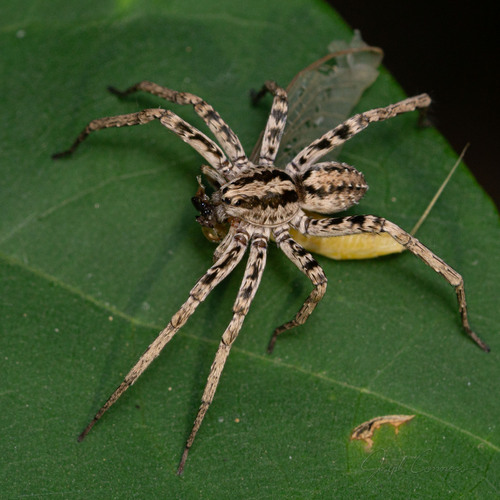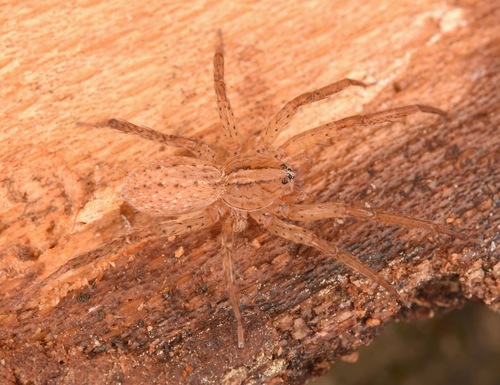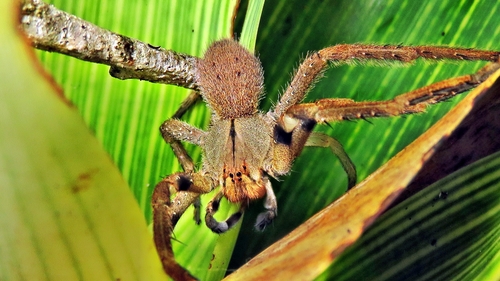
About Phoneutria keyserlingi (F.O.Pickard-Cambridge, 1897)
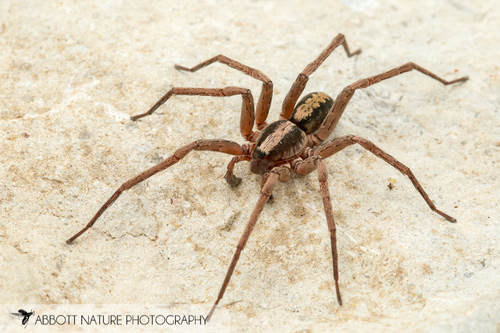
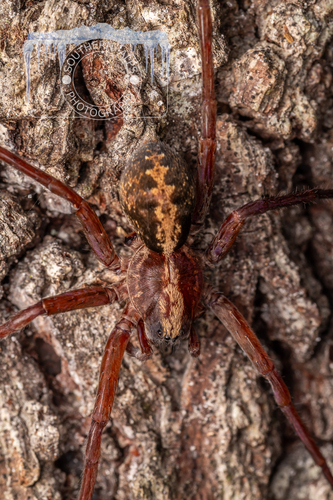
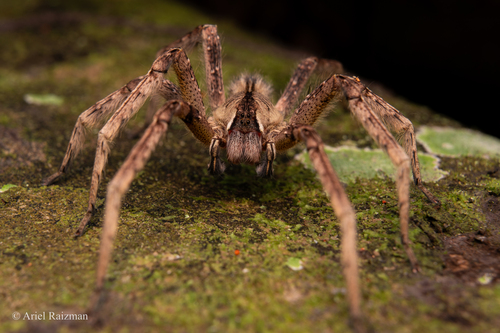
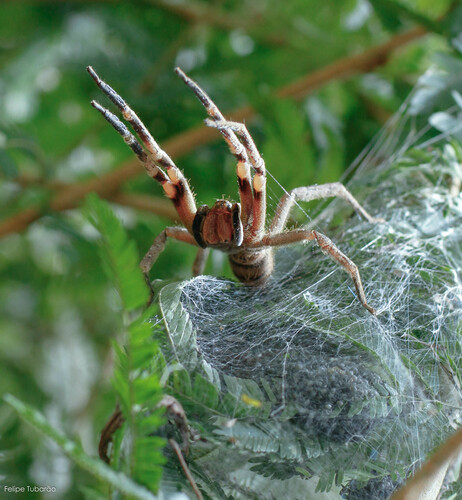
Phoneutria keyserlingi is a spider species in the Ctenidae family that is found in Brazil. This species is venomous, so it should always be treated with caution. Overall research on the genus Phoneutria has been scarce, though a recent analysis of the venom of P. keyserlingi has identified neurotoxins in the venom that are similar to those isolated from Phoneutria nigriventer. These toxins are active on the neuronal ion channels Ca²⁺, Na⁺, and K⁺, as well as on NMDA-type glutamate receptors.
CRISP-1 is a cysteine-rich allergen protein found in the venom of P. keyserlingi. This protein falls into the CAP protein domain, which includes other CRISP proteins that have been found in venom from a wide range of other animal groups: cephalopods, cone snails, scorpions, reptiles, and ticks. All CAP domain proteins are allergy-inducing toxins. While the specific role of CRISP-1 in spider venom has not yet been determined, it is already confirmed that CRISP-1 can induce dangerous allergic reactions in humans.