About Phoneutria boliviensis (F.O.Pickard-Cambridge, 1897)
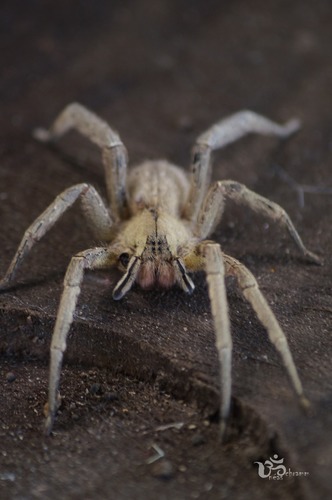
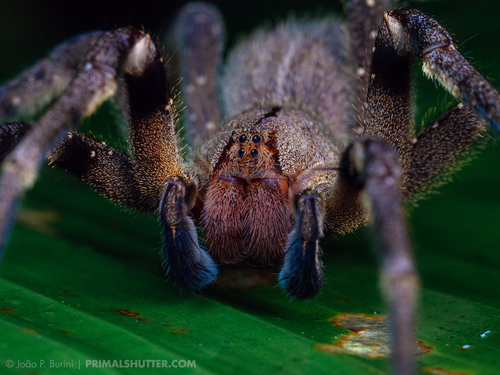
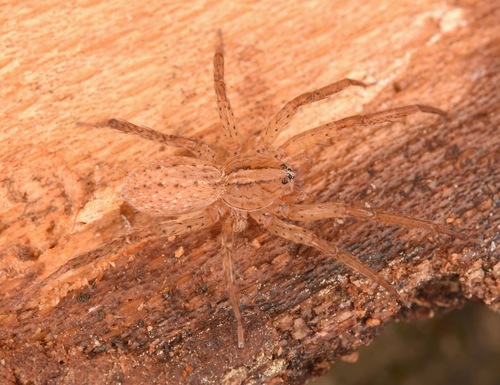
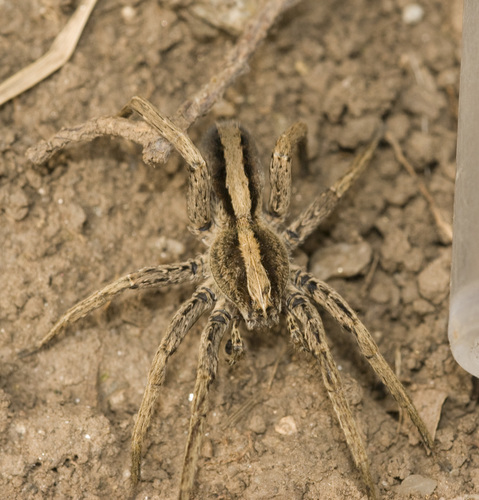
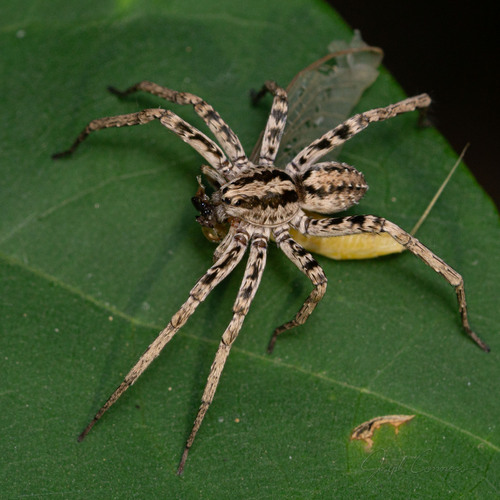
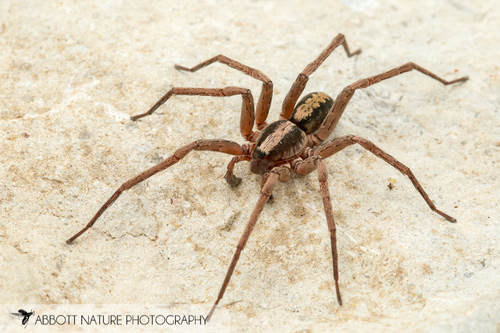
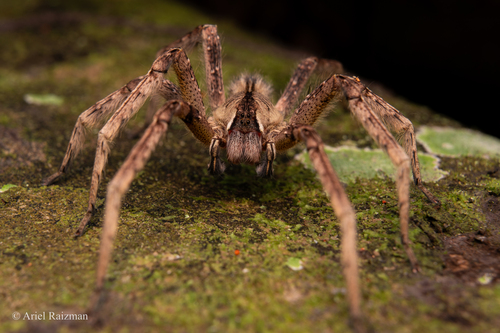
Male Phoneutria boliviensis have variable body coloration: their prosoma, legs, and sternum are brown, while the opisthosoma is dark. Adult males reach a total body length of 30 to 35 mm. Females are slightly larger, growing to between 30 and 40 mm in body length. Their prosoma ranges from yellowish to brownish brown, with clipped lateral black lines and a thin longitudinal black band. Yellow bands are present on the dorsal side of the pedipalp. The dorsal side of the female opisthosoma is yellowish, marked with a pair of bright yellow-brownish stripes. The ventral side of the opisthosoma ranges from gold to yellow, with two distinct brown spots and two white spots. The chelicerae range from red to reddish-brown. The legs have two small dorsal yellow spots and thin black transverse stripes. Phoneutria boliviensis is distributed across both Central America and South America. In South America, it occurs in Bolivia, Paraguay, Peru, Ecuador, Brazil, and Colombia. It inhabits areas associated with dry and humid tropical forests, usually found in soil that contains little organic waste. Female Phoneutria boliviensis can lay up to four egg sacs. Between 430 and 1300 spiderlings hatch from the eggs after an incubation period of 28 to 34 days. During mating, the male rides on the female, a copulation position typical of modern wandering spiders.