About Pholcus phalangioides (Fuesslin, 1775)
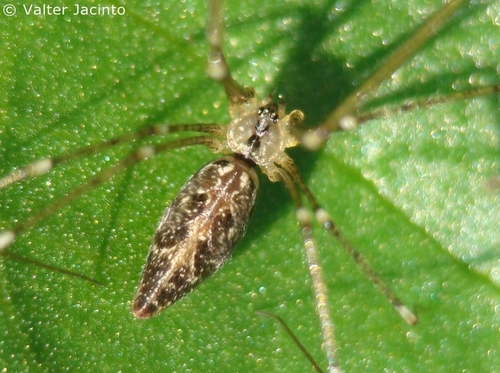
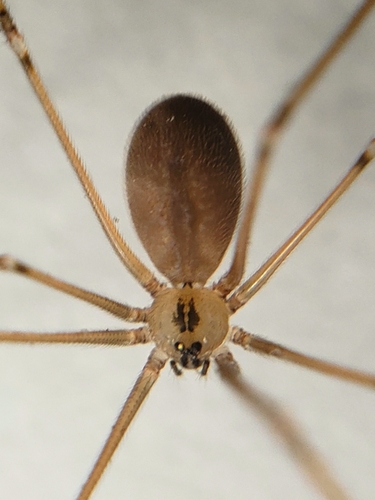
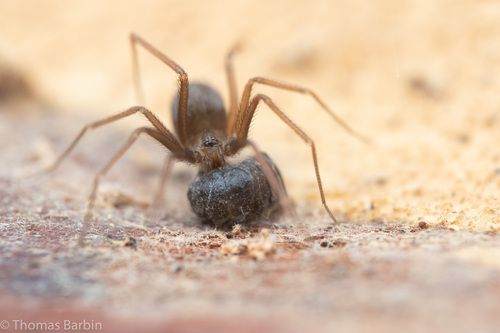
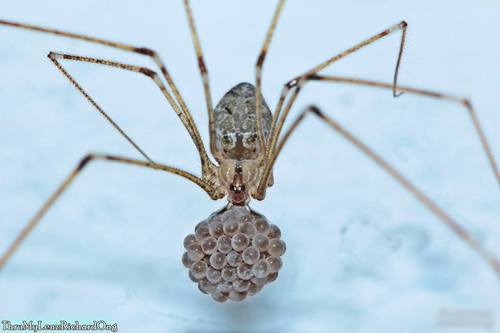
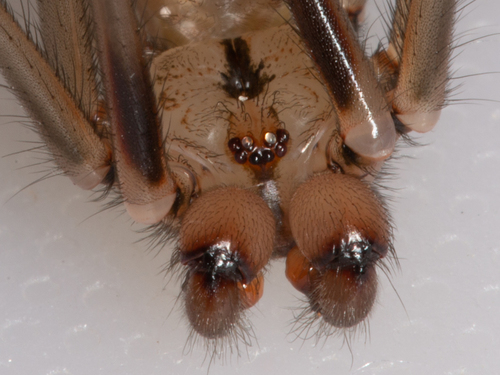
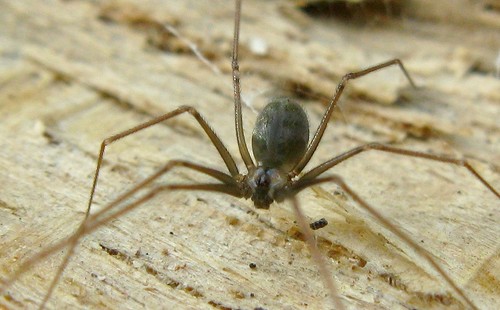
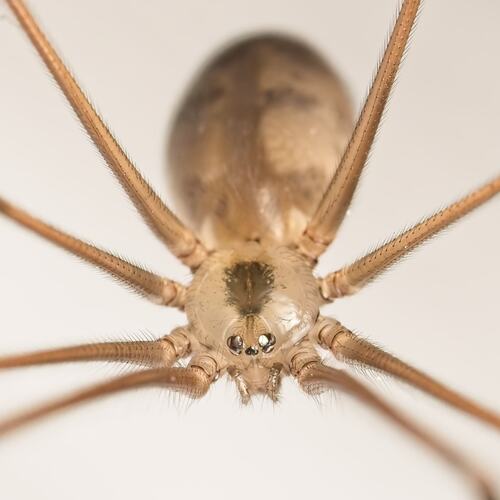
Pholcus phalangioides (Fuesslin, 1775) is sexually dimorphic, with females slightly larger than males. Body length differs between the two sexes: males measure around 6 to 10 mm, with an average length of 6 mm, while average female body length ranges from 7 to 8 mm. As the common name "daddy long-legs" (used in North America) suggests, this spider has eight very long, thin legs covered in fine grey bristles. On average, leg length is roughly 5 to 6 times the length of the spider's body; the average leg length for an adult female is about 50 mm. Like all spiders, the body of P. phalangioides is divided into two main parts: the prosoma (more commonly called the cephalothorax) and the opisthosoma (more commonly called the abdomen). Most of the prosoma is taken up by the brain. The opisthosoma is the posterior body segment, and it holds most of the spider's internal organs, including the heart, respiratory system, mid-gland, reproductive system, genital tract, and silk glands. P. phalangioides has translucent bodies that are typically grey-pale brown, with a dark spot on the back of the prosoma and faint dark spots on the dorsal side of the opisthosoma. While some other species in the family Pholcidae have six eyes, P. phalangioides has eight eyes. The eyes are arranged with a pair of smaller dark eyes at the front of the prosoma, followed by three parallel rows of larger eye pairs. Like other spider species, P. phalangioides has a hard exoskeleton covering its body. Exoskeleton molting occurs at different intervals depending on the spider's age, with younger spiders molting much more frequently. During the molting process, the spider produces specific enzymes that separate its body from the inner tissue of the old exoskeleton, allowing the spider to exit the old exoskeleton. The leftover discarded exoskeleton is called an exuviae. This species takes about one year to reach maturity after hatching, and can live up to two years or more after reaching maturity. The exact original native range of P. phalangioides is uncertain because the species has spread across the globe alongside humans. It was originally thought to be most likely native to subtropical regions of Afro-Eurasia, as it prefers warmer climates, but recent authorities consider it native only to Asia. As a synanthropic species, P. phalangioides' modern global distribution is mostly shaped by human spread. Today, it can be found in most temperate countries on every continent. P. phalangioides cannot survive well in cold environments, so in temperate regions it prefers warm indoor spaces, especially inside human homes. It favors dimly lit, quiet, calm dark areas, and is commonly found in the corners of buildings and homes, as well as in attics. Wild populations living outdoors can be found in caves and between rock crevices. Over the last twenty years, the use of this spider's silk in medicine has received significant attention. Silk is valued for wound healing because it contains compounds including vitamin K. Spider silk is primarily made of proteins built from non-polar amino acids glycine and alanine. It also contains pyrrolidine, an organic compound that retains the silk's moisture, and potassium nitrate, which stops fungal and bacterial growth on the silk.