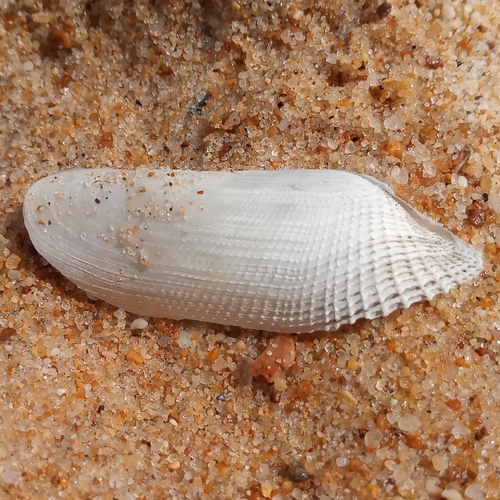
Pholas dactylus Linnaeus, 1758 is a animal in the Pholadidae family, order Myida, kingdom Animalia. Not known to be toxic.

Photo of Pholas dactylus Linnaeus, 1758 (Pholas dactylus Linnaeus, 1758)
🦋 Animalia

Pholas dactylus Linnaeus, 1758

Pholas dactylus Linnaeus, 1758

Common piddock (Pholas dactylus) is a bioluminescent boring filter-feeding marine mollusc found in North Atlantic and Mediterranean coasts.

Family
Genus
Pholas
Order
Myida
Class
Bivalvia

About Pholas dactylus Linnaeus, 1758

Pholas dactylus, commonly known as the common piddock, is a bioluminescent, clam-like marine mollusc that belongs to the family Pholadidae. To create shelter, this species bores into substrate by grinding material away using the hard portions of its shell while rotating around its longitudinal axis, and it lives inside the resulting tubular burrow. While Pholas dactylus has been recorded boring into the hard metamorphic rock gneiss, it more commonly inhabits softer rock. It is a filter feeder that uses its siphons to access water outside of its burrow. It was once considered a highly valued food source in Europe. Common piddocks are sensitive to light, and will retract into their shell when exposed to light. This species is distributed along the coasts of the North Atlantic and the Mediterranean Sea.
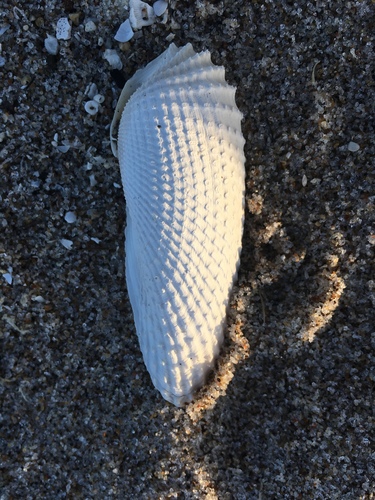
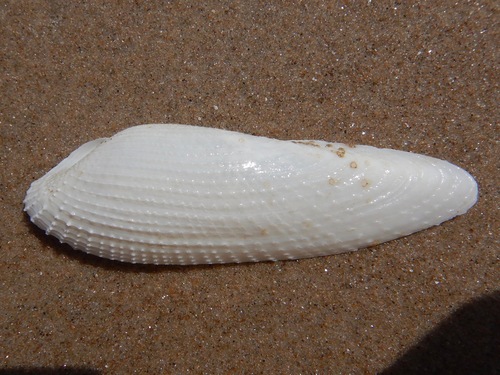
Photo: (c) Sergio Henriques, all rights reserved, uploaded by Sergio Henriques

Taxonomy

Animalia Mollusca Bivalvia Myida Pholadidae Pholas

More from Pholadidae

Sources: GBIF, iNaturalist, Wikipedia, NCBI Taxonomy · Disclaimer

Identify Pholas dactylus Linnaeus, 1758 instantly — even offline

iNature uses on-device AI to identify plants, animals, fungi and more. No internet needed.

Download iNature — Free

Start Exploring Nature Today

Download iNature for free. 10 identifications on us. No account needed. No credit card required.

Download Free on App Store
