About Phoebastria irrorata (Salvin, 1883)
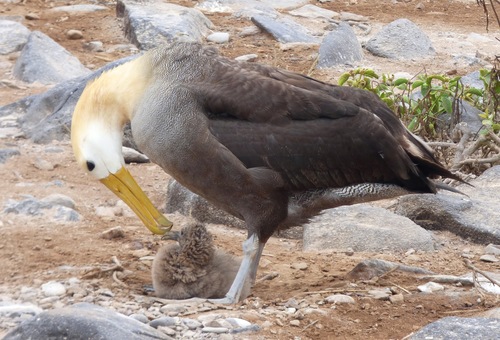
Phoebastria irrorata, commonly known as the waved albatross, is a medium-sized albatross species. Adults measure 80 to 90 cm (31 to 35 in) in body length, have a wingspan of 220–250 cm (7.2–8.2 ft), and weigh between 2.7 and 4.0 kg (6.0 and 8.8 lb), with males averaging significantly heavier than females. This species has distinct plumage and physical features: its yellowish-cream neck and head contrast sharply with its mostly brownish body. Its most notable feature is a very long, bright yellow bill that appears disproportionately large next to the bird’s relatively small head and long, slender neck. Upper parts and most underparts are chestnut brown with fine barring, which is slightly coarser on the rump. Upper-wings, back, and tail are brown, while the breast and underwings are whitish, and the axillaries are brown. Waved albatrosses have bluish feet. Juveniles resemble adults, but have more white coloration on their heads. Chicks are covered in brown, fluffy feathers. The maximum recorded lifespan of this species ranges from 40 to 45 years. Waved albatrosses primarily breed on Española Island in the Galápagos archipelago. Non-breeding individuals have been sighted on Genovesa Island and Isla de la Plata, and it is possible that a small number of breeders, around 10 to 20, also nest at these two locations. During the non-breeding season, this species migrates east and southeast to the continental shelf off the coasts of Peru and Ecuador. Vagrants are occasionally sighted in Colombia. In January 2026, an individual was spotted off the coast of California near Piedras Blancas Light Station, approximately 3,300 miles outside of the species’ normal range. A suspected sighting of a waved albatross also occurred in Northern California in October 2025. It remains unknown why this individual traveled so far north.