About Phlyctenanthus australis Carlgren, 1950
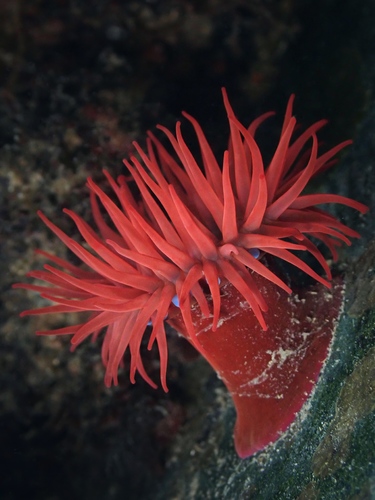
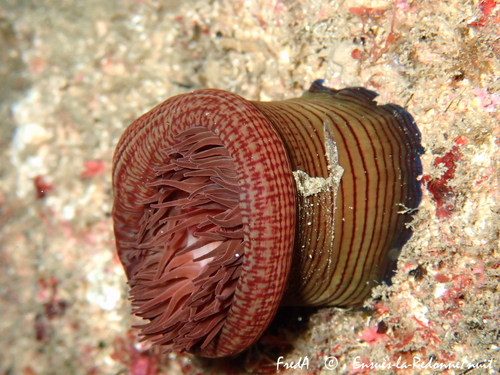
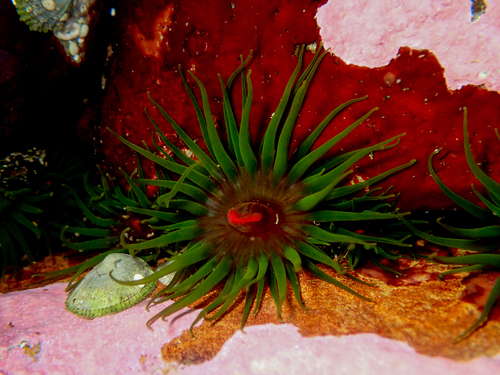
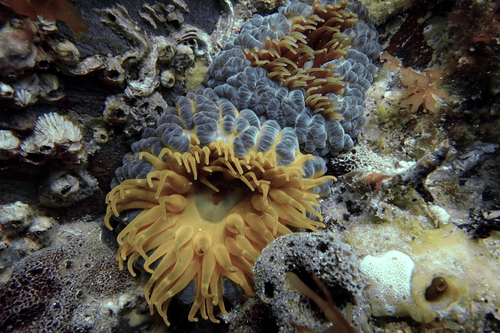
Phlyctenanthus australis is a large sea anemone that resembles the swimming anemone Phlyctenactis tuberculosa, but unlike the swimming anemone, this species stays permanently attached to rock. It has a large pedal disc and a wide, brick-red column covered in large, closely spaced vesicles. It has a well-developed fosse, and a strong, clearly defined circumscribed sphincter. It can have up to 96 short tentacles, and the muscles of both the tentacles and the oral disc are ectodermal. It has two siphonoglyphs, which are grooves that lead down to the gullet. The body cavity is split into sections by forty-eight pairs of mesenteries. Its cnidom, the full set of cnidocyte types the species has, includes spirocysts, basitrichs, and microbasic p-mastigophors. This sea anemone is yellowish-brown overall, with bluish-grey vesicles and pinkish-brown tentacles. Phlyctenanthus australis is native to seas surrounding Australia, and its range covers Western Australia, Victoria, Tasmania, New South Wales, and the Great Barrier Reef. It occurs from the intertidal zone down to depths of approximately 35 metres (115 ft). While it normally attaches to rocks in shallow water, Phlyctenanthus australis has also been found growing attached to the carapace of the crab Libinia spinosa.