About Phlox paniculata L.
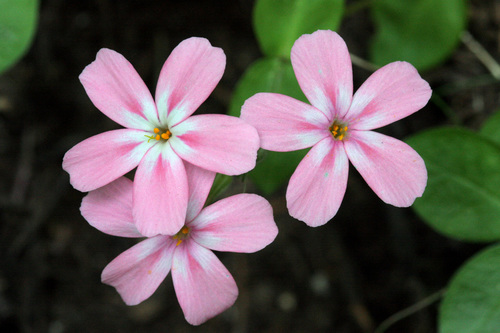
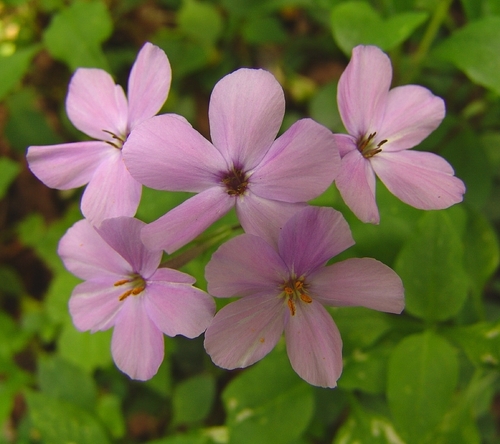
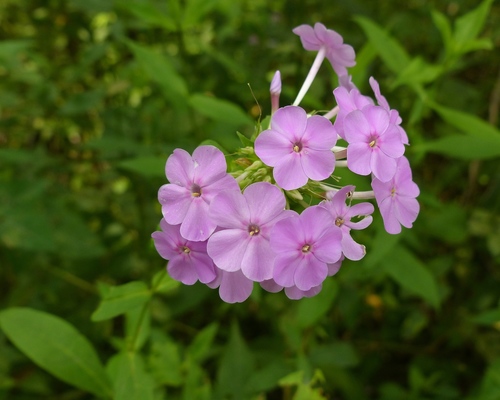
Phlox paniculata L. is an erect herbaceous perennial that grows 120 cm (47 in) tall and 100 cm (39 in) wide. It has opposite, simple leaves that grow on slender green stems. Its flowers measure 1.5–2.5 cm (0.6–1.0 in) in diameter, are often strongly fragrant, and are produced from summer through fall. Flowers are grouped in panicles that bear many branching stems, which is the source of the specific epithet paniculata. In wild populations, typical flower colors are pink or purple, and white is rare. Fall phlox is native to parts of the central and eastern United States. It occurs as an introduced species in other areas of the United States, Canada, Europe, and Asia. In the Chicago Region, it is questionably native, or any original native populations may have been entirely destroyed. Populations found in this region appear to be escapes from gardens that have established in nearby woods and waste ground, which likely explains all collections of the species in this area made since 1945. Within its natural native range, it grows along stream banks and in moist wooded areas. Phlox paniculata is widely cultivated for its showy, fragrant flowers that bloom in high summer. It requires a sheltered location with full sun or partial shade, growing best in fertile, moist soil. It can be propagated by division or root cuttings taken in autumn, or by basal cuttings taken in spring. This species makes excellent cut flowers. In hot, dry locations, plants are sensitive to powdery mildew; any affected stems should be removed immediately. The plant has been used for medicinal purposes. Leaf extract from this plant is used as a laxative, and to treat boils.