About Phlogophora meticulosa (Linnaeus, 1758)
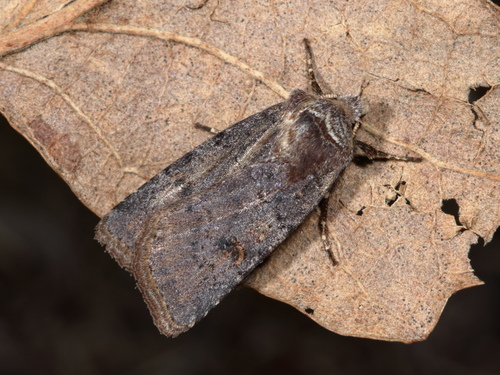
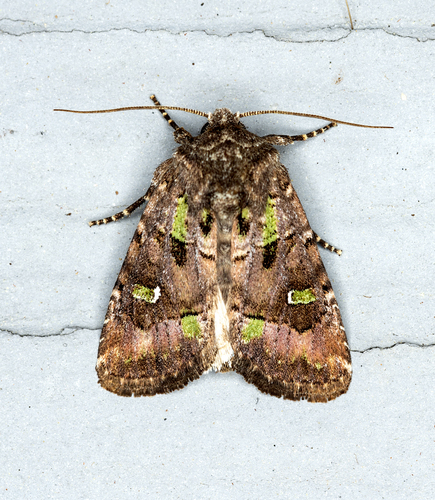
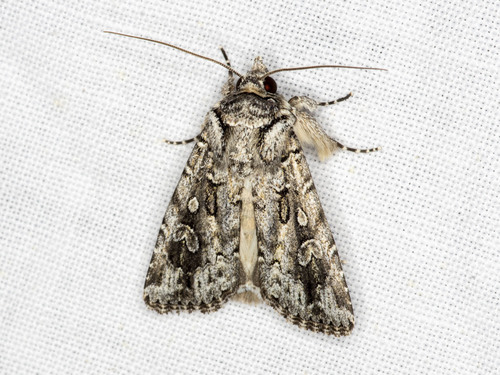
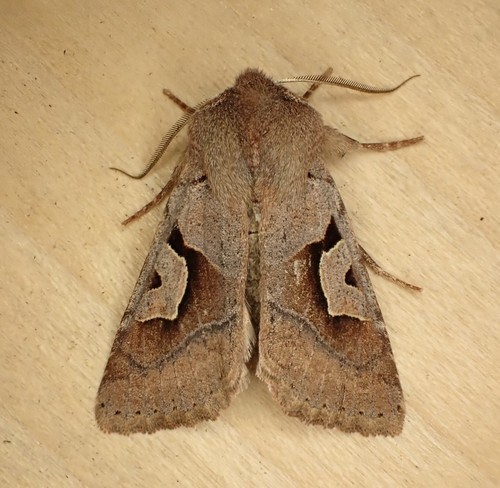
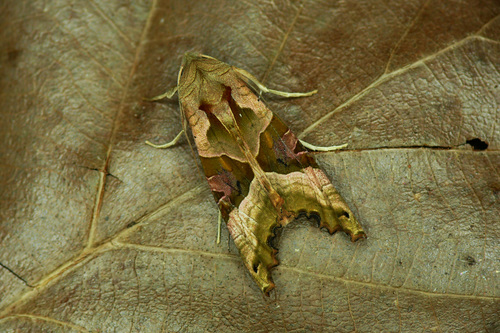
This moth species, Phlogophora meticulosa, has a wingspan of 45–52 mm. Its forewings have a very distinctively shaped, sharply pointed apex. Its common name comes from the characteristic forewing markings: the base colour is buffish, turning brown toward the termen, with a bold V-shaped pink-and-green marking. Despite this bright colouring, the angular markings create excellent disruptive camouflage patterning. The hindwings are whitish with darker venation.
In more technical terms, the forewing is whitish ochreous, with the base and costal area extensively pinkish; a triangular space on the inner margin before the inner line, the terminal area beyond the submarginal line, and a costal shade beyond the outer line are olive greenish. The central area is dark green, pinkish toward the costa, triangular in shape, with its blunt apex resting on the inner margin. The three stigmata are more or less rosy green, with the two upper ones having pale lateral edges. The outer line is double and angled outwards on vein 5. The submarginal line is preceded by a blackish-green lunule between veins 6 and 7. The fringe is rufous green, blackish along the excision below vein 4. The hindwing is pale ochreous, with the discal spot, veins, and often the whole inner half tinged with greenish fuscous; it has dark outer and double submarginal lines, with the latter often forming a grey band below vein 4.
The form ab. roseobrunnea (first recorded by Warren from São Jorge Island in the Azores) differs: it has a central triangle that is rich red brown tinged with fulvous, the whole wing is tinged reddish, all green shades are strongly mixed with reddish, and the metathorax and dorsal tufts are deep fulvous instead of green. Recorded food plants for the species can be found in the work of Robinson, G. S. et al.