About Phloeodes diabolicus (LeConte, 1851)
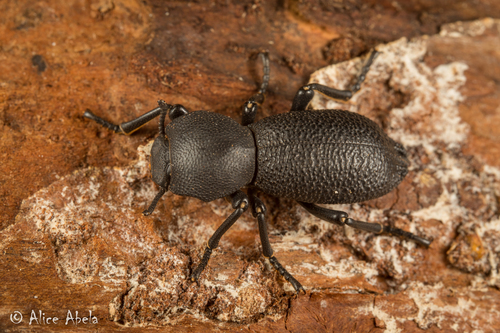
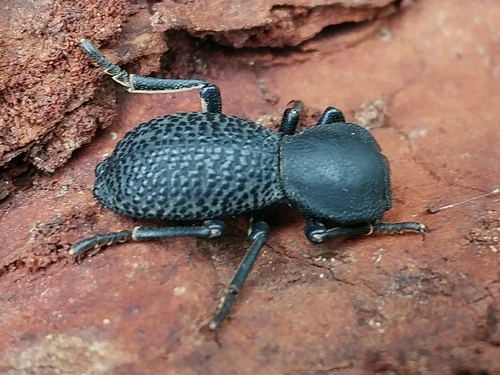
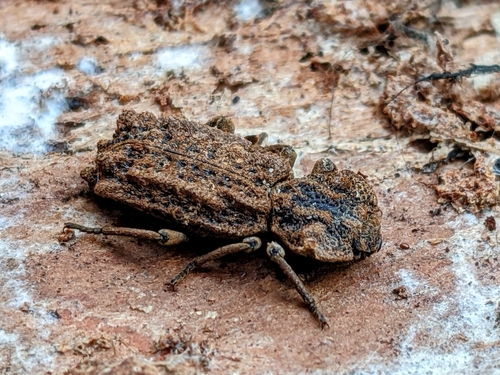
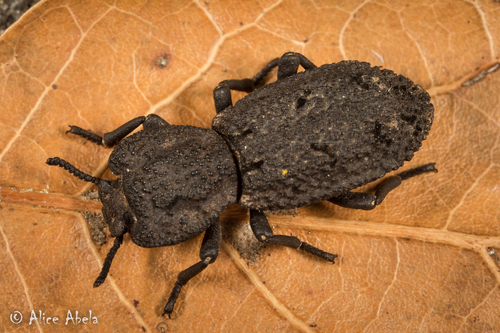
The diabolical ironclad beetle, Phloeodes diabolicus, was formerly classified as Nosoderma diabolicum, and is a species of beetle in the Phloeodes genus. It is native to the California floristic province of California and Baja California, and is thought to feed on fungi that grow under rotting tree bark. This flightless beetle has an exceptional adult lifespan of eight years, far longer than the weeks or months most other adult beetles live. It is widely known for its extreme durability. Its thick, densely layered, interlocking elytra, connected to the ventral cuticle by complex lateral support structures, can withstand a maximum force of 149 newtons, equal to over 15 kilograms or 33.069 pounds. Phloeodes diabolicus shares its range with the reproductively isolated sister species Nosoderma plicatum. Their combined range includes California, parts of southern Oregon, and Baja California. Like other members of the tribe Zopherini, these insects are holometabolous and well adapted to bore through wood, especially during the larval stage. Larvae of this species have a larger thorax and smaller legs than beetle species that do not bore into wood. These beetles are thought to be generalist decomposers that feed on rotten wood from a wide variety of tree and shrub species, alongside the fungi that grow on this wood. Phloeodes diabolicum, previously named under its former classification as Nosoderma diabolicum, is found most often under the bark of decomposing oak trees, leading researchers to believe it prefers white rot fungi as a food source. This species is flightless, and its fused elytra are hypothesized to have evolved to provide protection from crushing and reduce evaporative moisture loss over the species' approximately eight-year lifespan. This adaptation allows the beetle to survive in drier climates and resist predation by birds and lizards, even though it cannot fly away from these threats. Like other species in its family, the diabolical ironclad beetle tends to play dead when threatened, and can survive long periods without food or water. Unlike other species in its family, the waxy secretion that this species produces, which normally functions to prevent moisture loss, is also thought to play a role in sexual attraction for Phloeodes diabolicus. In this species, the secretion counts as a masculine secondary sex characteristic.