About Phlegmariurus phlegmaria (L.) Holub
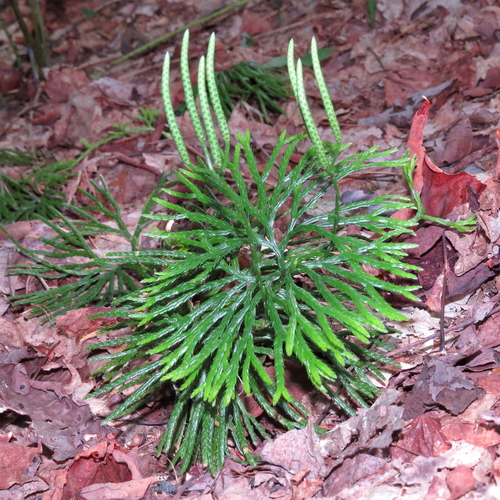
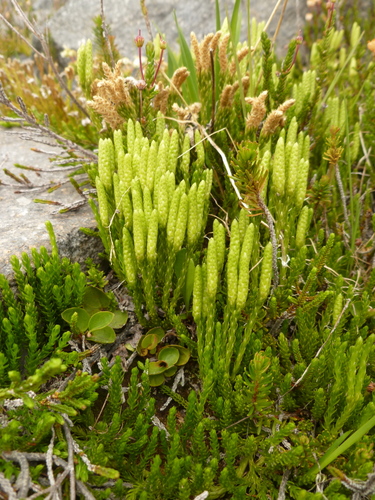
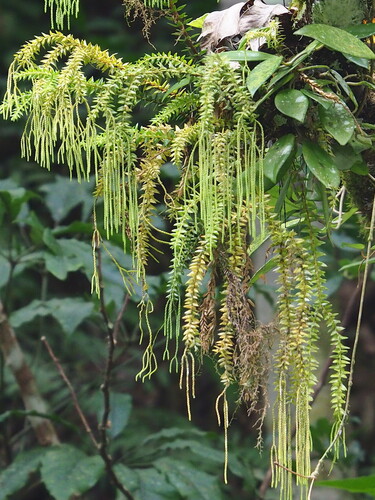
Phlegmariurus phlegmaria (L.) Holub is a vascular lycophyte that resembles many moss species. The specialized fluid-conducting vascular tissues that distinguish lycophytes from more basal bryophytes, which include mosses and liverworts. In the lycophyte life cycle, the diploid sporophyte stage is dominant. Sporophytes of this species produce off-white tetrahedral spores measuring 37 × 35 μm, with spore angles that never exceed 130°. Phlegmariurus phlegmaria is a variable species, with plants from different regions showing wide variation in stature. This species can be identified by its petiolate sterile microphylls and small fertile microphylls borne on thin branching strobili. Individual plants have true root systems. Their elongated aerial stems, which can grow up to 80 cm long, hang from host trees. Its leaves are arranged spirally, are lanceolate (lance-shaped), narrow, and rounded at the base. Leaves become even narrower at the extreme base in the fertile stem zone where sporangia are located. The leaves of Phlegmariurus phlegmaria are coriaceous, meaning they have a leathery texture. Leaf morphology differs between the fertile and sterile zones, making the two zones easy to distinguish. Leaves growing in the fertile zone are called sporophylls, which are club-shaped – this shape gives the species its common name "clubmoss". Homosporous spores are produced in the axils of sporophylls. Phlegmariurus phlegmaria is native to multiple regions: east, west, and south tropical Africa, specifically Cameroon, Comoros, Equatorial Guinea, Gabon, Ghana, Madagascar, Malawi, São Tomé and Príncipe, Sierra Leone, Tanzania including the Zanzibar Archipelago, and Uganda; temperate and tropical Asia, specifically the Chinese provinces of Guangdong, Guangxi, Hainan, Yunnan, southern Japan's Kyushu prefecture, the Ryukyu Islands, Malaysia, Sri Lanka, Taiwan, and Thailand; Australasia, specifically northeast Queensland in Australia, and New Zealand; and the northwest and southwest Pacific, specifically Fiji, Guam, and the Chuuk island group of Micronesia. It is likely native to other paleotropic locations, but has not yet been reported in these areas.