About Phlebodium aureum (L.) J.Sm.
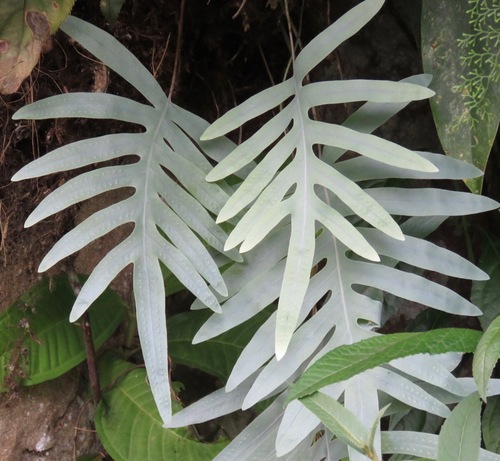
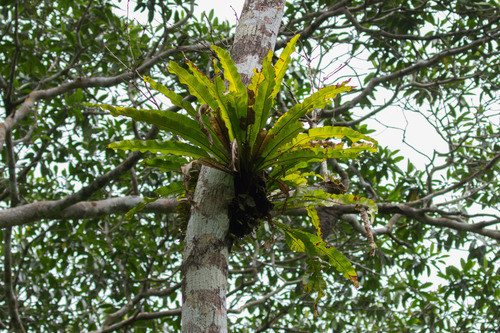
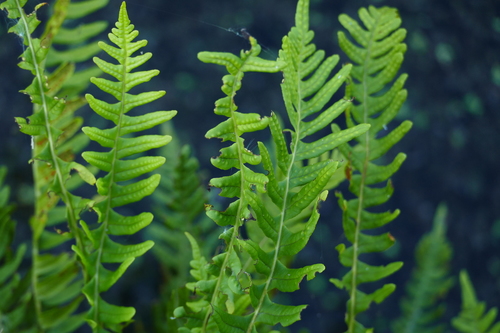
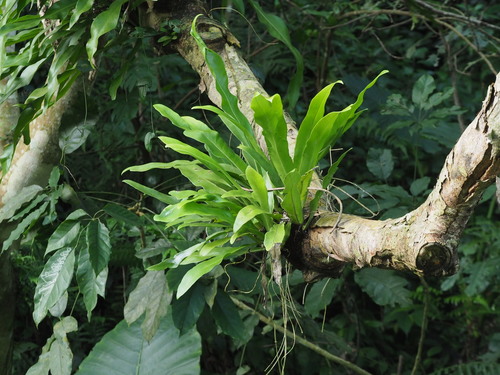
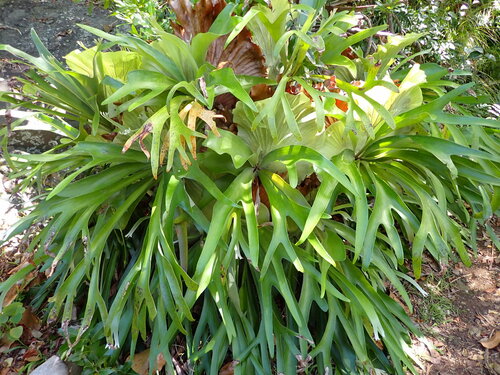
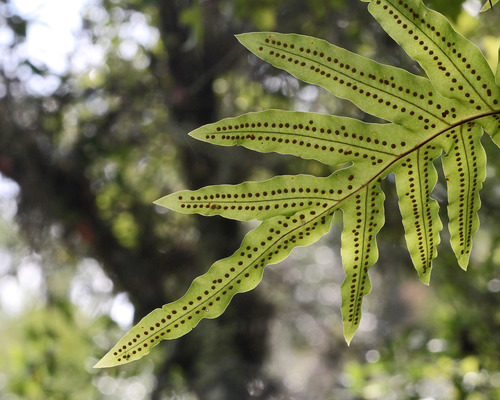
Phlebodium aureum (L.) J.Sm. is a rhizomatous fern. It has a creeping rhizome that is 8–15 mm in diameter, rarely reaching 30 mm, and is densely covered in golden-brown scales that give the species its name. Its fronds are large and pinnatifid, or deeply lobed, measuring 30 to 130 cm long and 10–50 cm broad, with up to 35 pinnae. Frond color ranges from bright green to glaucous green, and frond margins are undulate. Several round sori grow along each side of the pinna midrib, and the minute spores are dispersed by wind. The fronds remain evergreen in areas with year-round rainfall, and are semi-evergreen or briefly deciduous in regions with a marked dry season. This species is native only to the eastern side of the Americas and the Caribbean, ranging from extreme southeastern Georgia in the United States, south into Florida. It is also found in the Bahamas, Puerto Rico, Hispaniola, the Lesser Antilles, and coastal regions of Caribbean and Atlantic South America, including Venezuela, Brazil, Suriname, French Guinea, Guyana, and Paraguay. It is the only species of the genus Phlebodium found in North America or on Caribbean islands; all other Phlebodium species are endemic to South America. This fern is rarely terrestrial, and usually grows as an epiphyte in the canopies of tropical rainforests and on dwarf palms of subtropical forests. It is common in the cloud forests of the Caribbean and northern South America. In Florida, it grows in a variety of habitats including swamps and hammocks, so it appears able to tolerate a wide range of microclimates. Its restriction to tropical and subtropical regions is explained by its intolerance of any frost except very brief, light frosts. High light levels are also critical for the growth of this species. Phlebodium aureum is well-adapted to cultivation, and is valued both as an ornamental plant and for use in herbal medicine. In non-tropical climates, it can be grown in greenhouses as long as night temperatures do not fall below approximately 5 °C. Several cultivars have been selected for garden planting, with leaf colors varying from grey-green to silver-green to blue-green, or with cristate or very wavy frond margins. The cultivar 'Blue Star' has silvery blue-green finger-shaped leaves. When grown as a houseplant, it can be placed in low to moderate light areas, and direct sunlight that can damage leaves should be avoided. It is recommended to water indirectly and allow the growing medium to dry slightly between waterings, because standing water can damage the rhizomes. Humid areas of the home, such as kitchens and bathrooms, are favorable for growing it if these spaces receive enough light. As a tropical plant, Phlebodium aureum grows best at temperatures between 16–24 °C (61–75 °F) and does not tolerate cold temperatures well. Most care issues for this plant are caused by improper watering. In Central American folk medicine, decoctions of Phlebodium aureum have been used as a panacea. These tonics were prescribed for a wide range of ailments, from asthma to heart disease. Modern medical research has also investigated this species, which is often referred to by its deprecated synonym Polypodium leucotomos. Oral consumption of Polypodium leucotomos extract has been studied for the treatment of dermatologic disorders including melasma, vitiligo, psoriasis, polymorphous light eruption, atopic dermatitis, postinflammatory hyperpigmentation, photoaging, and skin cancer. Oral consumption of this extract has been shown to protect the skin from ultraviolet light damage. Clinical studies demonstrate that Polypodium leucotomos extract provides photoprotection against the effects of both UVB and UVA light. A review of 19 human studies and 6 basic scientific studies found that Polypodium leucotomos was well tolerated and had a favorable side effect profile. Because of this, Polypodium leucotomos supplementation has been proposed as an adjunct photoprotection strategy that can be used alongside traditional UV filters such as sunscreen.