About Philodromus cespitum (Walckenaer, 1802)
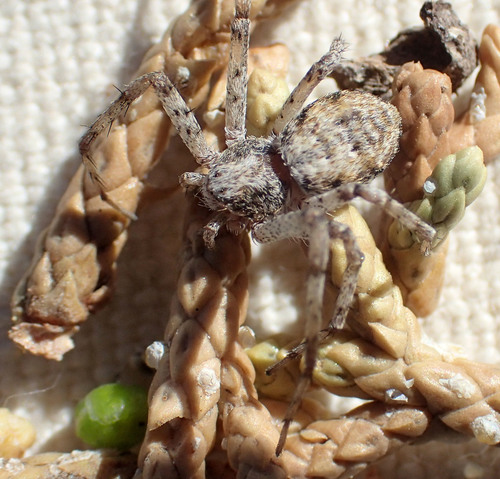
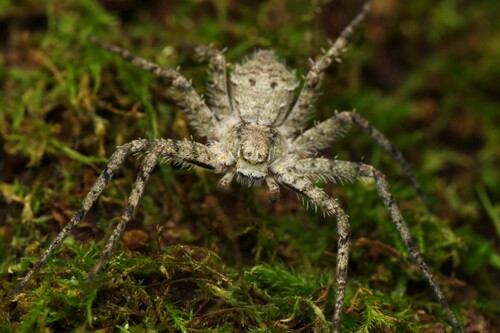
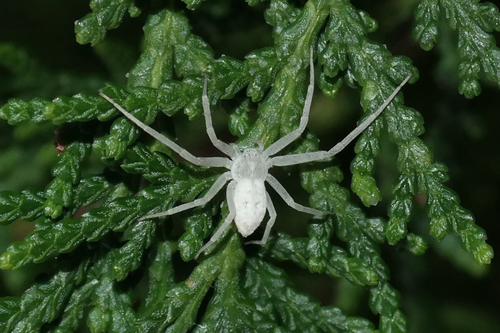
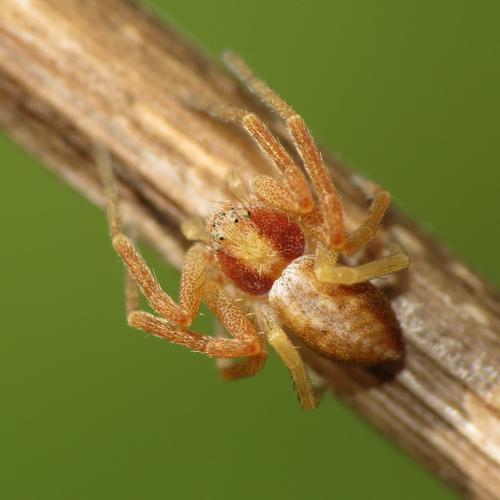
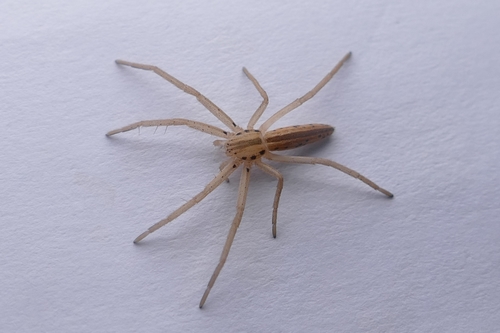
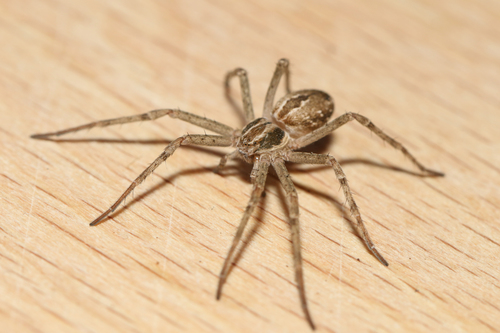
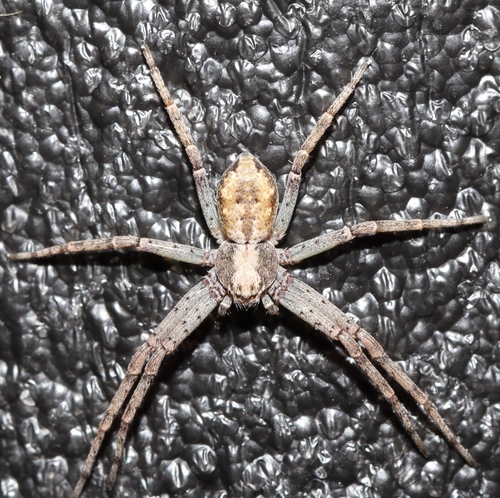
Male Philodromus cespitum are approximately 3.5 to 5.0 mm long, while females are roughly 5.3 mm long. This species has variable body color, most often in shades of brown or yellow. Spots are a common body pattern, and males typically have more spots than females. Legs are usually yellowish brown or grey, and some individual spiders of this species also have spots on their legs. Males have a noticeably asymmetric sperm duct, and male pedipalps hold nerve tissue and a sensory organ. Philodromus cespitum lives in foliage, and is the dominant species found in Central European fruit orchards. It is more concentrated in orchard centers than orchard edges; larger individuals are found in the center, while smaller individuals are found around the edges. This spider also occurs in cotton fields. Its distribution covers North America, Europe, North Africa, Turkey, Russia, Kazakhstan, China, Korea, and Japan. Adult females are most often seen in June and July. Spiderlings are present year-round, but are most abundant from August to October. Females lay around 250 eggs, and build five to seven egg cocoons during oviposition. The total number of eggs a female lays is not affected by changes in temperature. The number of hatching larvae decreases after the third egg cocoon a female builds. The period from oviposition to hatching is 20 days at 15 °C, and 10 days at 24 °C. The total developmental time of nymph stages is approximately 430 days. Regardless of temperature, developmental time is longer for females than for males. Females of this species generally live longer than males. When kept in a laboratory, both sexes have shorter lifespans when housed together than when housed individually.