About Philodendron hederaceum (Jacq.) Schott
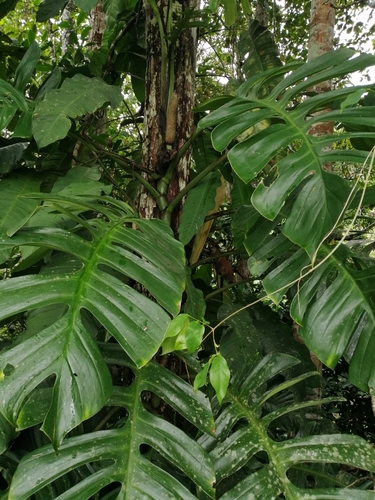
Philodendron hederaceum (Jacq.) Schott is an evergreen climbing semi-epiphyte, meaning it can grow with roots both in and out of soil. It reaches 3–6 m (10–20 ft) in length, and produces simple, alternate heart-shaped glossy leaves that grow up to 30 cm (12 in) long. Mature plants occasionally produce white flower spathes; flowering typically occurs around 15 years after planting, and inflorescences are rare, with spike-type inflorescences being the most common when they do form. After flowering, the plant can produce berries that are typically orange, red, or white. For cultivation, it requires a minimum temperature of 15 °C (59 °F), so it must be grown under glass or as a houseplant in temperate regions. Under its synonym Philodendron scandens, it has gained the Royal Horticultural Society's Award of Garden Merit. It is easy to maintain, needing medium sunlight and moist soil. It is widely used as an ornamental houseplant for indoor decoration, popular for this purpose due to its attractive striking green color, fast-growing spiraling leaves, and convenient size. Philodendron species including this one are known to remove toxins such as formaldehyde from indoor air. Varying concentrations of calcium oxalate crystals are present in parts of the plant. If large quantities are ingested, the plant cannot be properly digested, and the calcium oxalate crystals can deposit in organs like the kidneys, potentially causing cardiac issues in humans. The plant is known to be toxic to mice and rats, but current published research has conflicting conclusions about its toxicity to cats. The American Society for the Prevention of Cruelty to Animals notes that Philodendron hederaceum can cause oral irritation, painful swelling of the mouth, lips, and tongue, drooling, vomiting (not observed in horses), and difficulty swallowing in animals. Philodendron species are of interest to medical research for potential therapeutic applications, due to the presence of terpenoids and flavonoids. These natural compounds have biological activities that make them of research interest, including antioxidant, anti-inflammatory, and disease-preventative effects.