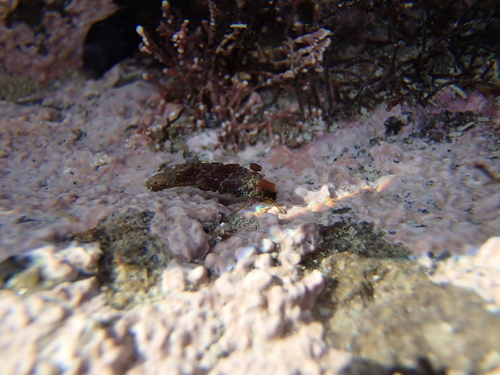
About Philanisus plebeius Walker, 1852
This species, Philanisus plebeius, was first described by Walker in 1852. Walker's original description of the male of the species notes that it is tawny, and thinly covered with tawny hairs. Its antennae are testaceous, rather stout, slightly setaceous, and much longer than the body. Its legs are testaceous and long; fore-tibiae have no spurs, while hinder tibiae have two pairs of long spurs, with one pair near the tips and the other at the tips. The abdomen has two appendages at its tip. The wings are narrow; fore-wings are slightly gray, with pale brown marks or interrupted bands, and hind-wings are subhyaline. Body length ranges from 2 1⁄2 to 2 3⁄4 lines, and wing length ranges from 7 to 8 1⁄2 lines. Philanisus plebeius occurs across coastal areas of New Zealand, and also on the coast of New South Wales, Australia.

