About Phereoeca uterella (Walsingham, 1897)
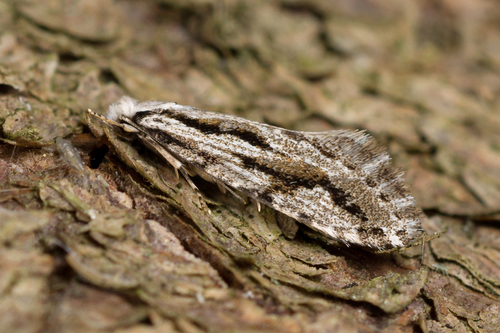
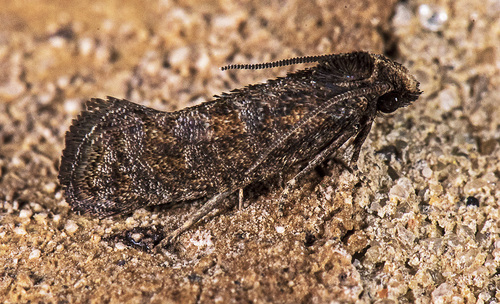
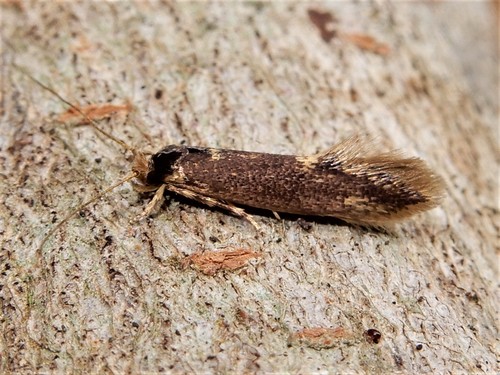
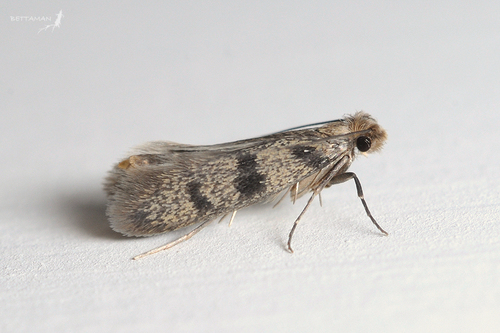
Adult females of Phereoeca uterella have a maximum wingspan of 13 mm. Their forewings are gray with distinct dark spots, while their plain hindwings are fringed with long gray hairs. Adult males are smaller, with a maximum wingspan of 9 mm, more slender in build, and have less distinct wing markings. The species has reduced mouthparts, which suggests adults do not feed. Females lay up to 200 tiny pale blue eggs in sheltered locations. Larvae build a protective case out of silk, and camouflage the case with additional materials including soil, sand, and insect droppings. When a larva reaches full growth, its protective case measures up to 14 mm long, which is twice the length of the larva itself. The case is noticeably thickened in the middle, giving it an appearance similar to a pumpkin seed. This shape lets the larva turn around inside the case; the case has openings at both ends, and the larva’s head can use either opening. Pupation takes place inside this protective case. The main food source for Phereoeca uterella appears to be silk, most commonly spider webs, but also silk produced by other arthropods including discarded cases from other members of this species. Larvae also feed on dander and shed human hair. Wool, but not cotton, is another favoured food, and this species can act as a household pest.