About Pheosia gnoma Fabricius, 1776
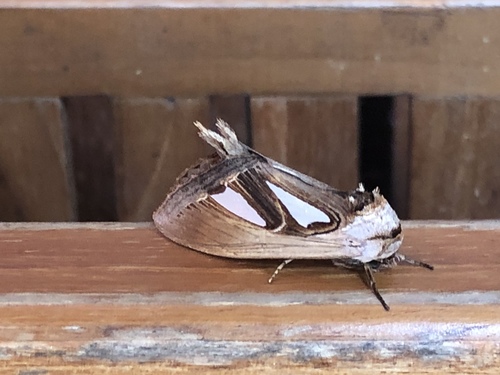
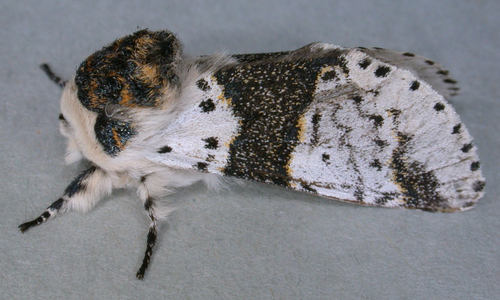
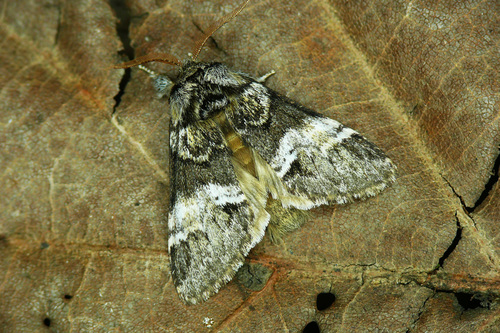
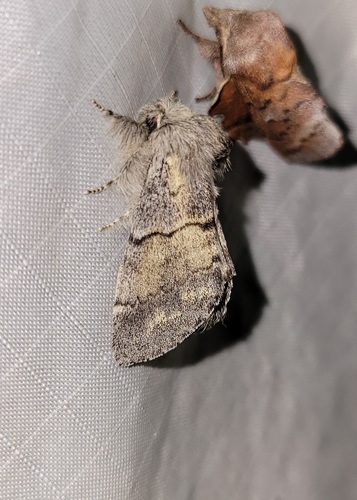
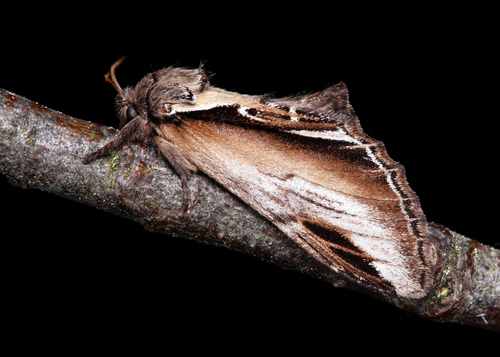
This moth species, Pheosia gnoma Fabricius, 1776, is often confused with the related Pheosia tremula, but can be distinguished by several key features. P. gnoma is typically smaller than P. tremula, and its base body color usually contains less brown. The main distinguishing trait is the broader, clearer white wedge-shaped mark between veins 1 and 2 on P. gnoma's forewings. Per Seitz's description, the species is very similar to P. tremula, generally slightly smaller, with the white wedge-spot below vein 1 of the forewing shorter, entirely white, and lacking dark scaling. The anal angle of the hindwing is brownish and has no white marginal line. A dark form of this species, ab. leonis Stichel, occurs in the Higher Alps; it is barely distinguishable from the Arctic form frigida Zett. (45f) from Lapland, where the forewing wedge-spot is grey instead of white. Pheosia gnoma is distributed throughout Central Europe, ranging north to Lapland and south to Southern France, Northern Italy, Croatia, and Bukovina, and also occurs in East Asia's Amurland. Newly laid eggs are whitish green, and gradually darken until they end up grey, resembling poppy-seeds. Mature larvae are either dark brown-red or bright light green, and have a glossy texture. They have a blackish transverse bar on the tubercle, a broad orange-yellow lateral line, with white-edged black stigmata positioned along the upper edge of this lateral line. A similar yellow longitudinal stripe runs along the larva's underside. Larvae feed on birch between July and September. Pupae are dark brown. Adult moths produce two generations annually, active May to June and again in August; only one generation occurs per year in northern regions. Confirmed host plants are birch (Betula) in the British Isles, Betula pendula and Betula pubescens in Finland. The species overwinters as a pupa located underground. The common name of Pheosia gnoma is the lesser swallow prominent.