About Phenacobius mirabilis (Girard, 1856)
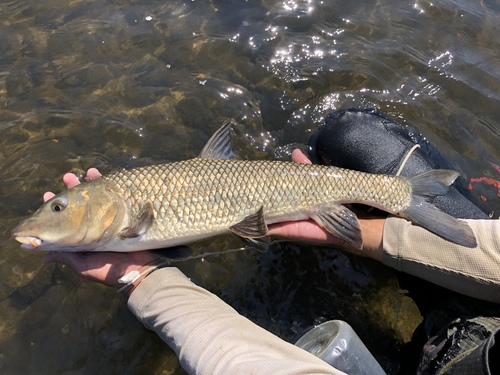
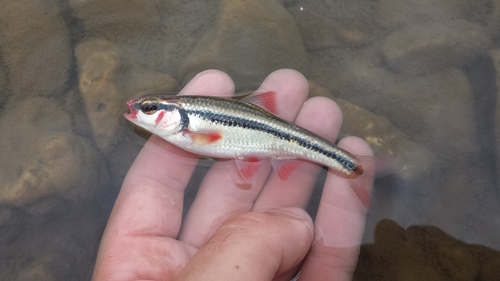
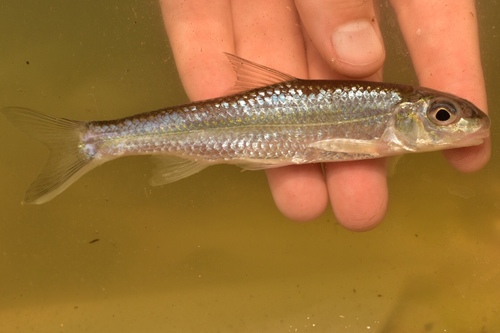
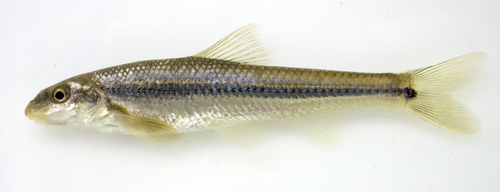
Phenacobius mirabilis, commonly known as the suckermouth minnow, is a species of freshwater ray-finned fish that belongs to the family Leuciscidae, which includes shiners, daces, and minnows. This species is native to North America. Its range covers the Mississippi River basin from Ohio and West Virginia west to Wyoming, Colorado, and New Mexico, and from southeastern Minnesota south to northern Alabama and southern Oklahoma. It is also found in the western Lake Erie drainage in Ohio. In terms of ecology, the suckermouth minnow lives in small to medium-sized streams and rivers with water that ranges from clear to turbid. It prefers water temperatures between 5 and 25 degrees Celsius, and a mixed sandy gravel substrate. Ideal habitat for this species consists of permanently flowing streams with riffles that have low siltation. It is a highly adaptable species that has been observed travelling long distances. Suckermouth minnows are often seen swimming along sandy gravel substrate, where they feed on chironomid midge larvae and pupae, caddisfly larvae, and plankton. This species is also known to be cannibalistic. For its life cycle, Phenacobius mirabilis spawns in groups from late spring to early summer. Spawning occurs when water temperatures are around 14 to 25 degrees Celsius, and embryos require water temperatures between 17 and 23 degrees Celsius to hatch. Eggs are laid in gravel beds and do not receive any parental care after being deposited. The typical lifespan of this species is 3 to 5 years.