About Phellodendron amurense Rupr.
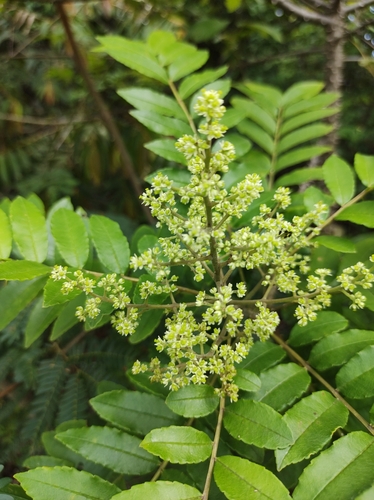
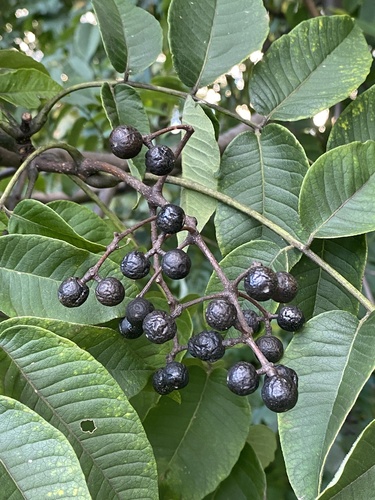
Phellodendron amurense is a tree species in the Rutaceae family, commonly known as the Amur cork tree. It is the main source of huáng bò (Chinese: 黄柏 or 黄檗), one of the 50 fundamental herbs in traditional Chinese medicine. The Ainu people used this plant's fruit, called shikerebe-ni (sikerpe in Ainu), as a painkiller. It is called hwangbyeok in Korean and kihada (キハダ) in Japanese. It is native to eastern Asia, including northern China, northeast China, Korea, Ussuri, the Amur region, and Japan. In many parts of North America, the Amur cork tree is considered invasive, and the State of Massachusetts officially lists it as a noxious weed. In traditional Chinese medicine, this plant has been used to treat meningitis, bacillary dysentery, pneumonia, tuberculosis, tumours, jaundice, and liver cirrhosis. When taken orally, it is used to treat abdominal pain, diarrhea, gastroenteritis, and urinary tract infections. Phellodendron amurense may protect cartilage from the progression of osteoarthritis, and may be a potentially important chemopreventive agent for lung cancer. It can inhibit prostatic contractility, which suggests it may be useful for treating urological disorders caused by prostatic urethral obstruction, such as benign prostatic hyperplasia (BPH). Nexrutine, a bark extract from Phellodendron amurense, may have potential to prevent prostate tumor development. Compounds found in its leaves — quercetin, quercetin-3-O-beta-D-glucoside, quercetin-3-O-beta-D-galactoside, and kaempferol-3-O-beta-D-glucoside — show significant free radical scavenging activity comparable to that of vitamin E. Alkaloids in the plant material give the tree both antibiotic and antimicrobial properties. The major chemical constituents of its bark are isoquinoline alkaloids: palmatine, jatrorrhizine, and phellodendorine, while berberine is found in its leaves. An indole alkaloid has also been detected in the roots of young dioecious trees of this species. Historically, dye extracted from this tree's bark was used across East Asia to color paper for sutras and other documents, including the Diamond Sutra. This yellow dye also provided protection against insect damage.