About Phaseolus lunatus L.
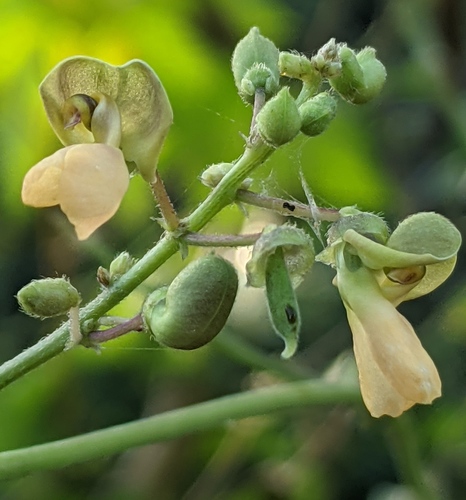
Phaseolus lunatus L., commonly known as lima bean, butter bean, sieva bean, double bean or Madagascar bean, is a legume cultivated for its edible seeds. Even though lima beans and butter beans belong to the same species, they are often treated as distinct in culinary contexts: lima beans are small and green, while butter beans are large and yellow. In regions where both are classified as lima beans, the green small variety may be labeled "baby" limas, or less commonly "junior" limas.
Like many other beans, raw lima beans are toxic because they contain compounds such as phytohaemagglutinin, and require boiling for at least ten minutes to make them safe. Canned lima beans are pre-cooked, so they do not need extra boiling before eating. Lima beans can contain anti-nutrients including phytic acid, saponin, oxalate, tannin, and trypsin inhibitor. These compounds reduce nutrient absorption in animals and can cause damage to some organs. Besides boiling, roasting, pressure cooking, soaking, and germination can all significantly reduce the levels of these anti-nutrients.
Wild and cultivated Phaseolus lunatus originate from Mesoamerica and South America. Two separate gene pools of cultivated lima beans indicate two independent domestication events. The Mesoamerican domesticated lima bean is distributed across neotropical lowlands, while the Andean domesticated type grows in the western Andes. The species was first found in Peru, and it may have been the first plant brought into cultivation by native farmers there. Andean domestication occurred around 2000 BC, and resulted in the large-seeded lima type. The second domestication took place in Mesoamerica around 800 AD, and produced the small-seeded Sieva type. By around 1300 AD, cultivation had spread north of the Rio Grande, and the plant began to be grown in the Old World starting in the 1500s.
Small-seeded Sieva type lima beans grow from Mexico to Argentina, generally below 1,600 m (5,200 ft) above sea level. Large-seeded wild lima type lima beans are distributed in northern Peru, between 320 and 2,030 m (1,050 to 6,660 ft) above sea level. The Moche culture, which existed from 1 to 800 AD, cultivated lima beans extensively and often depicted the plant in their art. During the Spanish Viceroyalty of Peru, lima beans were exported to other parts of the Americas and Europe. The export crates were labeled with their origin point "Lima, Peru", which gave the bean its common name. The term "butter bean" is widely used in North and South Carolina in the United States to refer to a large, flat yellow/white variety of lima bean (P. lunatus var. macrocarpus, or P. limensis). In the United States, Sieva-type beans are traditionally called butter beans, also known as the Dixie or Henderson type. In both the United Kingdom and the United States, "butter beans" refers to either dried beans sold for rehydration, or ready-to-eat canned beans.
In Oaxaca, Mexico, where the main rainy season runs from June to August, most above-ground parts of the lima bean die during the dry season. Germination or budding happens in June or July, the first inflorescence forms in October or November, and flower and fruit production usually ends between February and April.