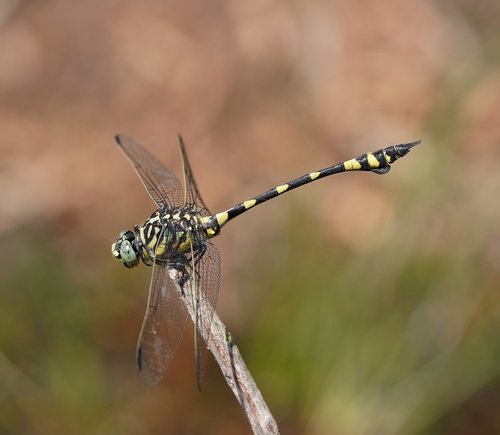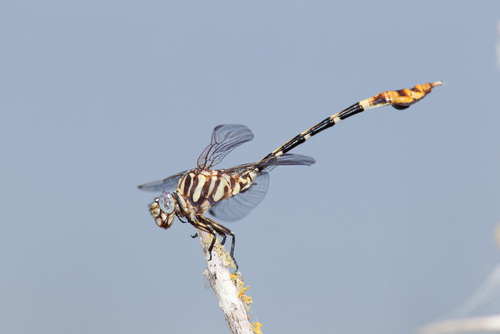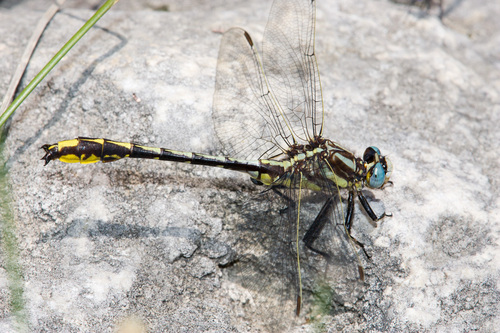
About Phanogomphus graslinellus (Walsh, 1862)
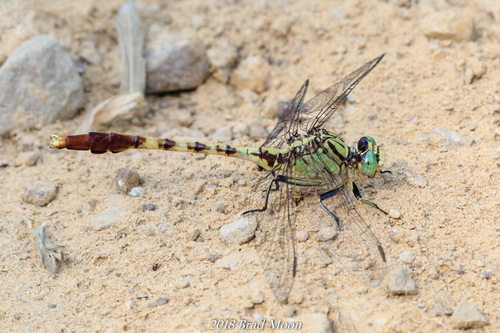
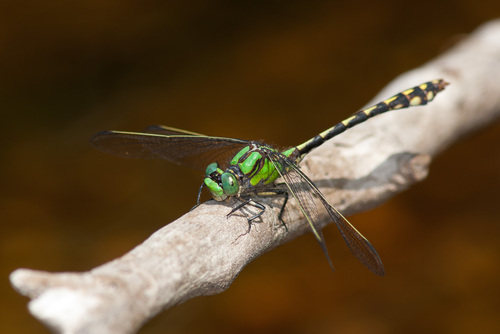
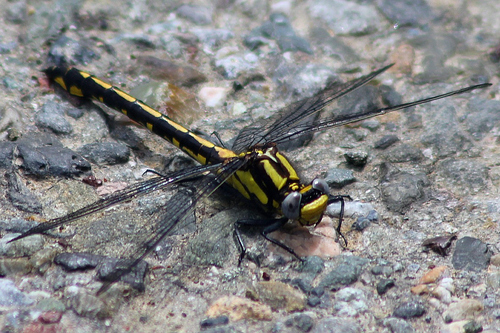
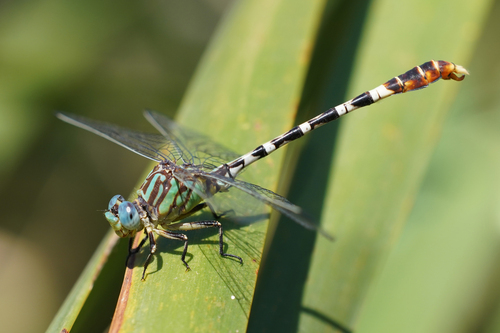
Phanogomphus graslinellus is a dragonfly species in the Gomphidae family, commonly known as the pronghorn clubtail. This species was recently classified as a member of the genus Gomphus, but in 2017 it was reclassified to the genus Phanogomphus after Phanogomphus was elevated from a subgenus to full genus rank.
Its known geographical range covers multiple states in the United States: Arkansas, Colorado, Iowa, Idaho, Illinois, Indiana, Kansas, Kentucky, Michigan, Minnesota, Missouri, Montana, Nebraska, North Dakota, Nevada, Ohio, Oklahoma, South Dakota, Texas, Washington, and Wisconsin. It is also found across multiple Canadian provinces: Alberta, British Columbia, Manitoba, Ontario, and Saskatchewan.
Pronghorn clubtails live near lakes, ponds, and slow streams of all sizes. Nymphs of this species are very selective in their habitat choice, and are often only found in specific stretches of a given stream, lake, or pond. Nymphs burrow into sand or mud, leaving only the upturned tip of their abdomen exposed. They breathe while buried by pumping water in and out of the exposed tip of their abdomen. Nymphs emerge as adults at the edge of the water just before sunrise.
Though species records are sparse, adult pronghorn clubtails are thought to have a flight season from early June to August. They cannot tolerate cooler temperatures, and are rarely seen flying on cool or cloudy days. Adults hunt from perches on rocks or twigs. After mating, the female flies alone to lay eggs, with the male no longer attached. She deposits eggs by dipping the tip of her abdomen into rivers, lakes, or slow streams while hovering above the water.