About Phallus impudicus L.
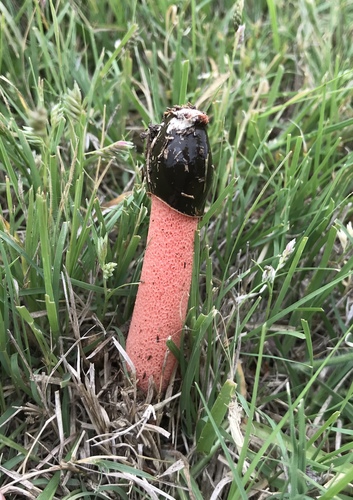
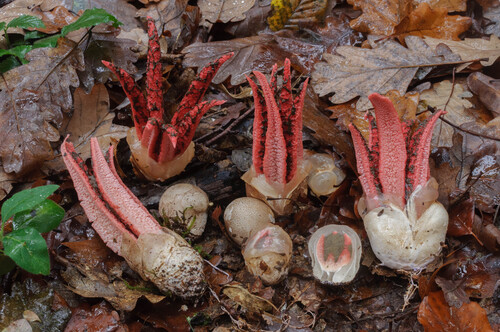
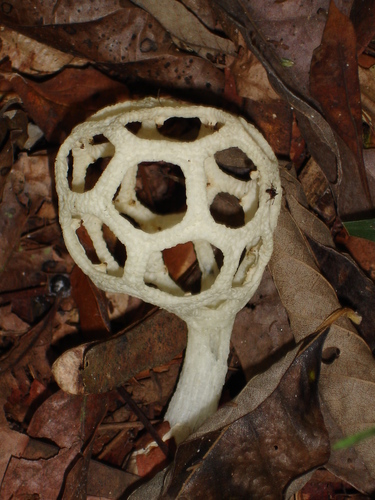
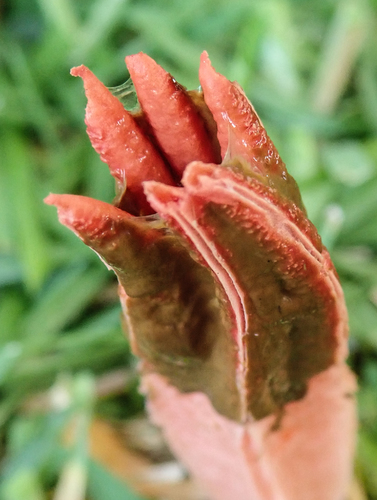
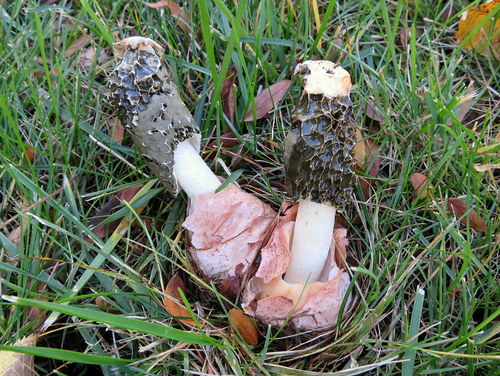
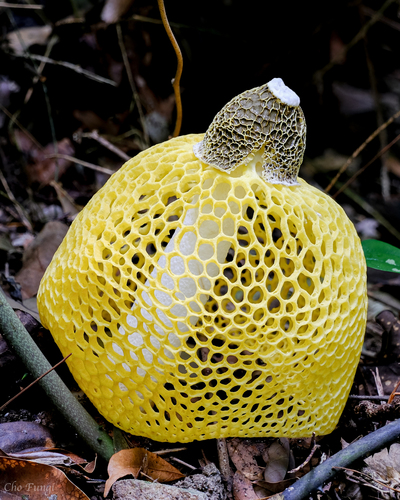
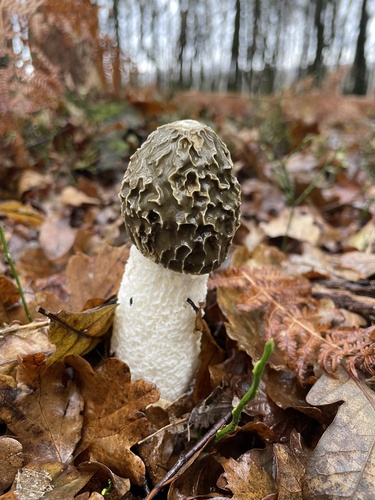
Commonly known by the common name common stinkhorn, Phallus impudicus L. is sometimes called witch's egg in its immature stage. Immature fruit bodies are whitish or pinkish, egg-shaped, and typically measure 4 to 6 cm long by 3 to 5 cm wide. The outer surface of the immature fruit body has a thick whitish volva, also called the peridium, which covers an olive-colored gelatinous gleba. The gleba holds the fungus's spores, produces a strong odor to attract flies, and matures as the fruit body expands. Inside the gleba is a green layer that develops into the head of the mature expanded fruit body. At the center of the immature fruit body is a hard, white, sponge-like airy structure called the receptaculum, which becomes the stalk of the mature fruit. Immature eggs develop into fully grown mature stinkhorns very rapidly, over just one to two days. Mature fruit bodies are 10 to 30 cm tall and 4 to 5 cm in diameter, topped with a conical cap 2 to 4 cm high. The cap is covered with greenish-brown slimy spore-bearing gleba. In older mature specimens, the slime eventually wears away, exposing a bare yellowish surface marked with pits and reticulate ridges. This exposed surface bears a passing resemblance to the common morel (Morchella esculenta), so Phallus impudicus is sometimes mistaken for this edible species. The growth rate of Phallus impudicus has been measured at 10–15 cm per hour. Growing fruit bodies can exert up to 1.33 kPa of pressure, which is enough force to push up through asphalt. The spores of Phallus impudicus are elliptical to oblong in shape, with dimensions of 3–5 μm by 1.5–2.5 μm. Phallus impudicus can be found throughout much of Europe and North America, and has also been collected in Asia (including China, Taiwan, and India), Costa Rica, Iceland, Tanzania, and southeast Australia. In North America, it is most common west of the Mississippi River; Ravenel's stinkhorn (Phallus ravenelii) is more common east of the river. The fungus grows in association with rotting wood, so it is most often found in deciduous woods, where it fruits from summer to late autumn. It may also grow in conifer woods, or in grassy areas such as parks and gardens. It can also form mycorrhizal associations with certain trees. Unlike many mushrooms that spread spores via air currents, stinkhorns produce a sticky spore mass on their cap tip that has a sharp, sickly-sweet carrion odor to attract flies and other insects. Odorous compounds found in the gleba include methanethiol, hydrogen sulfide, linalool, trans-ocimene, phenylacetaldehyde, dimethyl sulfide, and dimethyl trisulfide; dimethyl trisulfide is also emitted from fungating cancerous wounds. Mature fruiting bodies can be smelled from a considerable distance in woodland, and most people find the cloying odor extremely unpleasant at close range. When flies land on the gleba, they collect spore mass on their legs and carry spores to new locations. An Austrian study found that blow-flies (species Calliphora vicina, Lucilia caesar, Lucilia ampullacea and Dryomyza anilis) also feed on the gleba slime. Soon after leaving the fruit body, these flies deposit liquid feces that contain a dense suspension of Phallus impudicus spores. The study also noted that beetles (Oeceoptoma thoracica and Meligethes viridescens) are attracted to the fungus, but appear to play a smaller role in spore dispersal, as they tend to feed on the hyphal tissue of the fruiting body. There is a possible ecological association between Phallus impudicus and badger (Meles meles) setts. Fruiting bodies of Phallus impudicus are commonly clustered in a zone 24 to 39 metres from badger sett entrances. Badger setts typically have a regular supply of badger cadavers, because badger cub mortality is high and cub deaths often occur within the sett. Fruiting of large numbers of stinkhorns attracts a large population of blow-flies (species in genera Calliphora and Lucilia, which breed on carrion). This attraction ensures rapid decomposition and removal of badger carcasses, which eliminates a potential source of disease for the badger colony. The laxative effect of the gleba reduces the distance from the fruiting body that spores are deposited, which helps sustain consistently high densities of Phallus impudicus near setts. At the immature egg stage, pieces of the inner receptaculum layer can be cut out and eaten raw. Raw receptaculum is crisp and crunchy with a pleasant radish-like taste, though some sources disagree on its overall palatability. The fungus is eaten and enjoyed in France and parts of Germany, where it may be sold fresh or pickled and used in sausages. Similar related species are consumed in China. Venous thrombosis, the formation of a blood clot in a vein, is a common cause of death in breast cancer patients; patients with recurrent disease are typically kept on lifelong anticoagulant treatment. One research study has suggested that extracts from Phallus impudicus can reduce the risk of venous thrombosis by reducing the incidence of platelet aggregation, and may have potential as supportive preventive nutrition. In medieval times, Phallus impudicus was used as a cure for gout and as a love potion.