About Phalacrocorax punctatus (Sparrman, 1786)
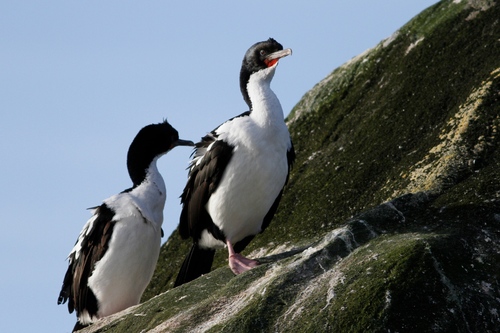
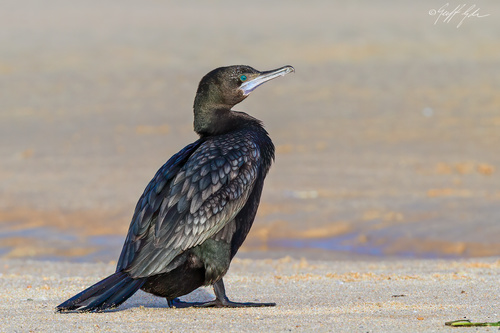
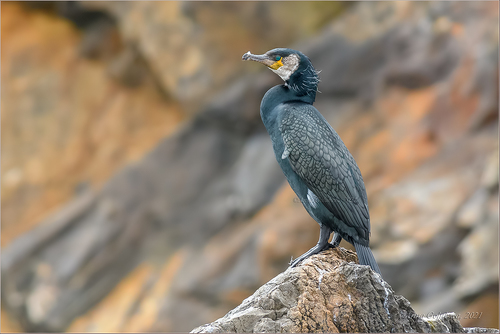
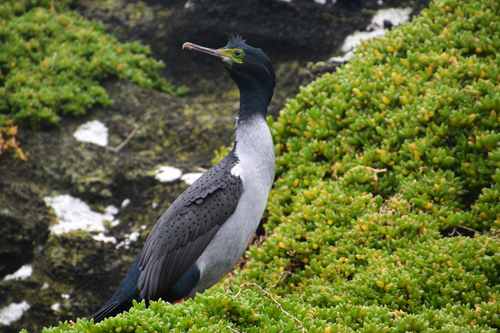
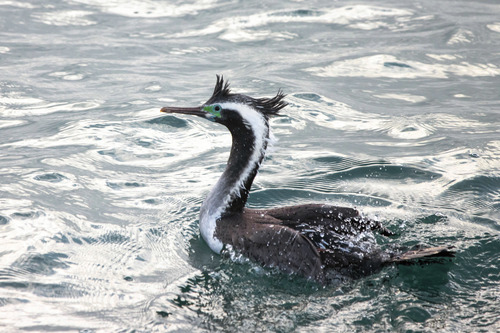
The spotted shag, scientifically named Phalacrocorax punctatus (Sparrman, 1786), is a medium-sized marine bird. Adults measure 64 to 74 centimetres (25 to 29 inches) in length and weigh 700 to 1,200 grams (25 to 42 ounces). Their bodies are very slim, with a distinctive black, decurved double crest that grows on both the forehead and nape. They have a long, slender, orange-brown hooked bill and yellow-orange feet. Their body plumage is a mix of grey and blue; adult birds have small black spots on their backs and wings, which gives the species its common name. Their irises are brown, and the ring surrounding the iris is blue. A small patch of bare skin between the eyes and bill turns green-blue just before breeding season. Non-breeding adults lack crests and have paler underparts. Males and females are extremely similar in appearance, with almost no sexual dimorphism, but they can be distinguished by their calls and mating behavior. Spotted shags are generally quiet, only vocalizing when at resting, roosting, and nesting sites, where their calls are loud grunts. They typically fly in V-formation, and in flight they appear slender and pale, with darker rumps and tails, making it hard to tell males and females apart. This species is endemic to New Zealand, and breeds only along New Zealand's coastlines and offshore islands, with most populations found on the South Island. High concentrations occur on the South Island's west coast and near Stewart Island, though the species also occurs at some locations on the North Island. During the breeding season, spotted shags remain mostly at their breeding sites; outside of breeding, they disperse more widely across other coastal areas. Large breeding colonies are located around Banks Peninsula near Christchurch, and at a rocky outcrop called 'Shag Rock' in Wellington Harbour. The species is locally common, but total population estimates for New Zealand range from 10,000 to 50,000 breeding pairs, equal to 20,000 to 100,000 individual birds. In the past, population sizes were limited by food availability, which led to a population increase during the late 1980s. Spotted shags prefer to nest on cliffs along rocky coasts, where they use ledges or cracks for nesting sites, and form colonies of over a thousand birds. They very rarely enter freshwater environments or enclosed estuaries. Nests are built with a stick foundation, lined with seaweed.