About Phaeosaces coarctatella (Walker, 1864)
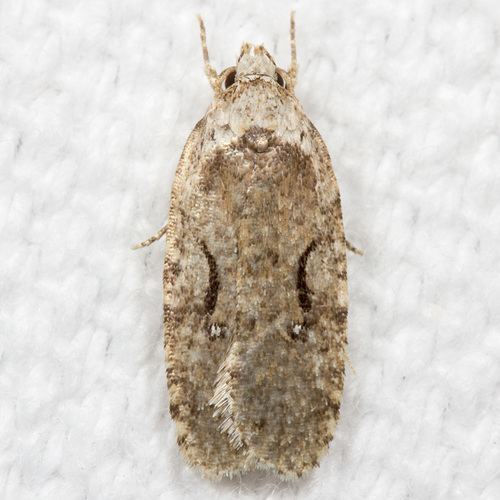
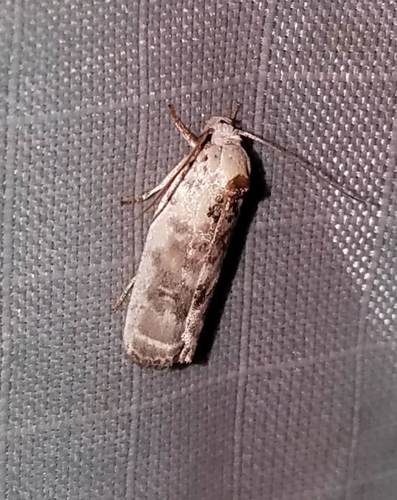
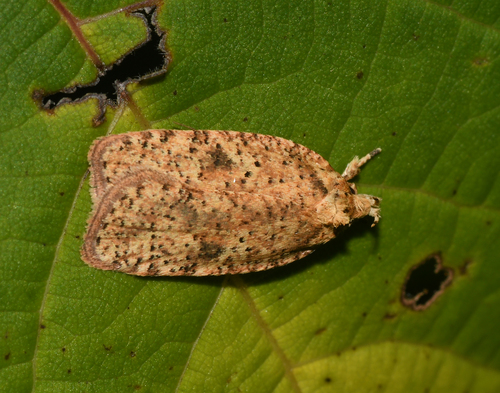
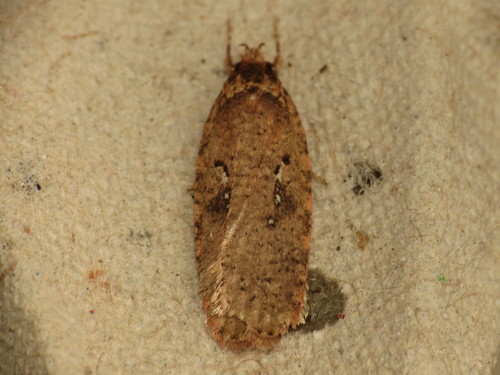
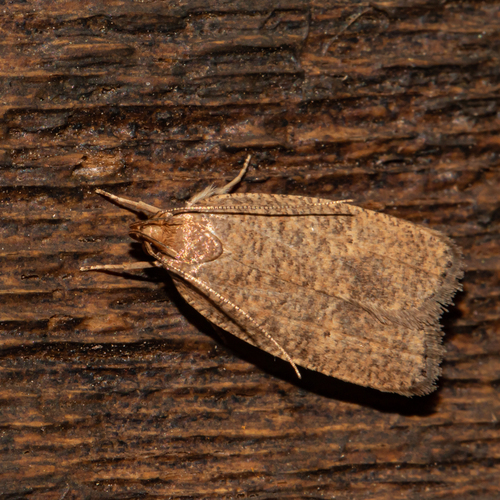
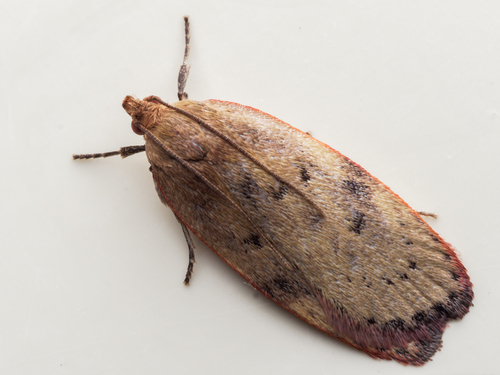
The species Phaeosaces coarctatella was originally described by Walker based on male adult specimens, with the following description: Male specimens are reddish fawn-colour, paler on the underside. Palpi are smooth, slender, and twice as long as the breadth of the head; the third joint is setiform and shorter than the second. Antennae are slender and very minutely setulose. Hind tibiae have a slight fringe. Wings are moderately broad and slightly rounded at the tips. Fore wings have two black points in the disc beyond the middle; the second point lies very near the first, positioned a little further toward the hind end of the wing and more exteriorly. The exterior border of the fore wing is slightly convex and oblique. Hind wings are yellowish cinereous, with a slight gilded appearance. Body length is 6 lines, and wing length is 16 lines. P. coarctatella has a total wingspan between 22 and 30 mm. It is variable in appearance: some specimens have a greenish shade on their forewings, while others are reddish brown. The amount of black shading on the forewings is also variable across individuals. The male genitalia of P. coarctatella is extremely long and has over 30 spirals, though the reason for this structure is unknown. P. coarctatella is endemic to New Zealand and can be found throughout the country. This species inhabits both native forest and cultivated areas including domestic gardens. The larvae of P. coarctatella are lichen-feeding browsers that are active at night. During the day, larvae shelter in hollow twigs, under bark, or within old wood-borer tunnels. They emerge during the evening to feed on epiphytic lichens. Larvae pupate inside their day-time shelters.