About Phaeolus schweinitzii (Fr.) Pat.
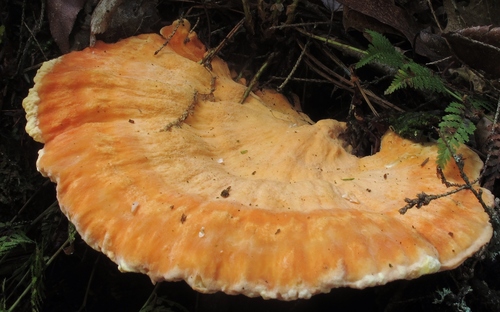
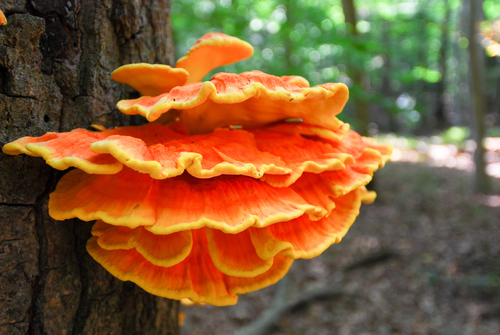
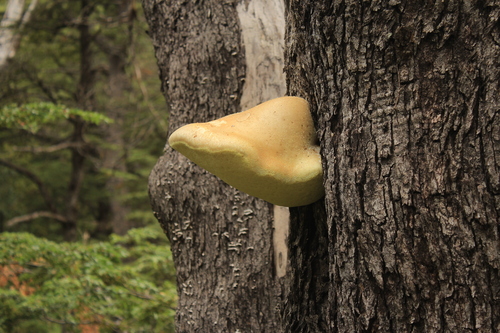
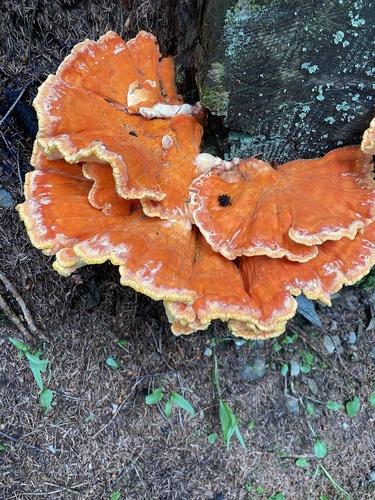
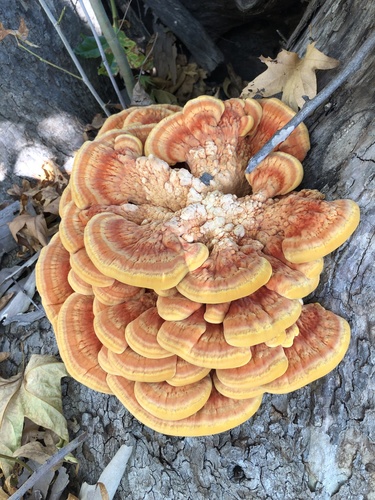
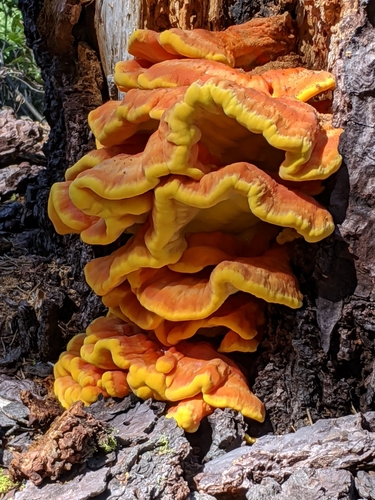
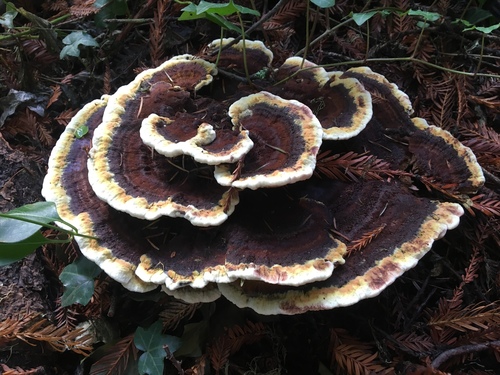
Phaeolus schweinitzii is a polypore fungus. Unlike typical bracket fungi, its fruiting body can appear to grow on the ground when it develops from the roots or base of a host tree. Fruiting bodies emerge in late summer or fall, and often incorporate grass blades, twigs, or fallen pine needles as they grow. Their color is generally tannish, with darker brown centers; young specimens have orange to pale margins. They can grow to more than 25 centimeters (10 inches) in diameter. As fruiting bodies age, their pore surface changes from yellow to greenish yellow, the upper surface darkens, and the yellow-brown flesh becomes harder and more wood-like. The pores turn brown when bruised. The spores of this species are white, elliptical, smooth, and inamyloid. Infection by Phaeolus schweinitzii causes brown rot, a type of decay that degrades cellulose. This causes a loss of tensile strength, which often leads to brittle fracture near the base of the tree stem, even at fairly early stages of decay. Decay that starts above ground can result in branches snapping or breaking off. Phaeolus schweinitzii causes butt rot in conifers including Douglas-fir, spruce, fir, hemlock, pine, and larch. It is native to North America and Eurasia, and has been found as an exotic species in New Zealand, Australia, and South Africa. This species is commonly called dyer's polypore, and as the name indicates, it is an excellent natural source of green, yellow, gold, or brown dye. The resulting dye color depends on the material being dyed and the mordant used. Phaeolus schweinitzii is not edible.