About Phaeoclavulina myceliosa (Peck) Franchi & M.Marchetti
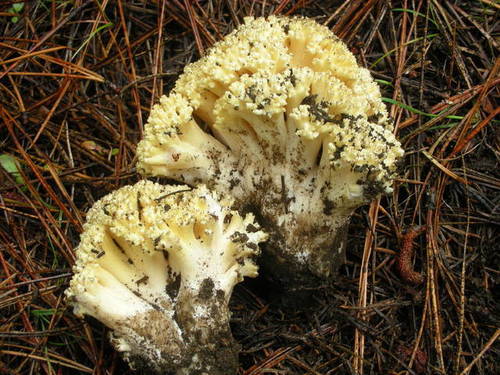
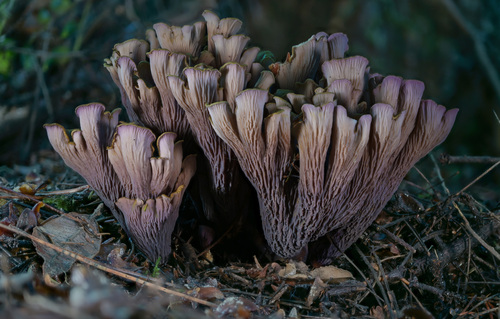
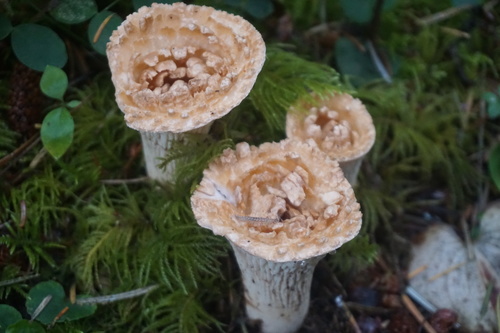
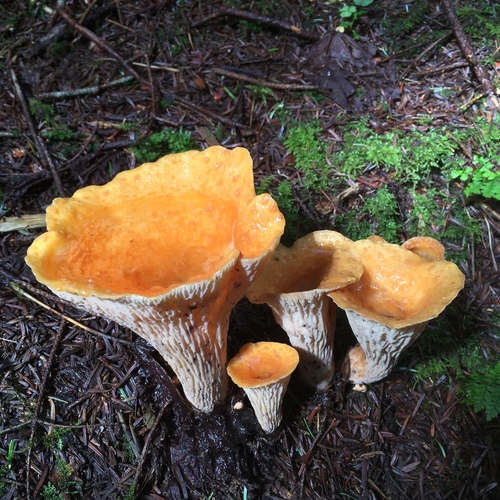
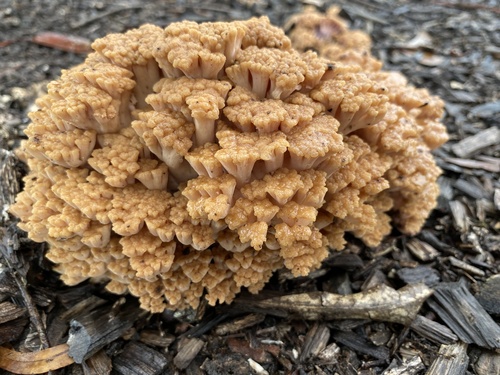
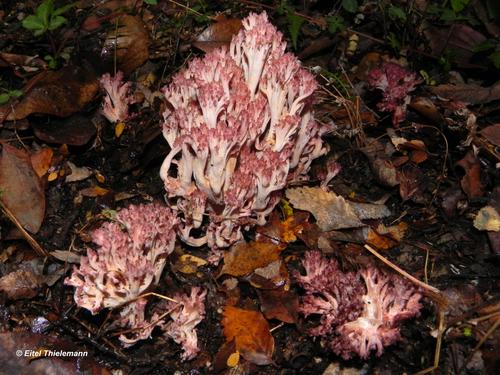
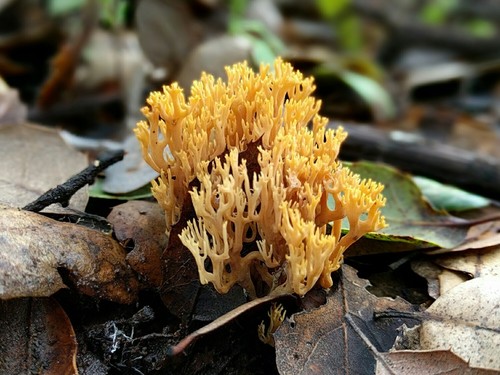
Phaeoclavulina myceliosa, previously known as Ramaria myceliosa, is a coral fungus species belonging to the family Gomphaceae. This species is found in North America. It was first formally described by Charles Horton Peck in 1904 under the original name Clavaria myceliosa. The type specimen of this species was collected by botanist Edwin Bingham Copeland in the mountains near Stanford University, California. In 1950, E. J. H. Corner reclassified the species by moving it to the genus Ramaria. Giachini and his colleagues suggested that Ramaria myceliosa is the same species as the European Phaeoclavulina curta, but they did not publish any molecular evidence to back this proposed synonymy. In a 2014 publication focused on California fungi, authors proposed moving Ramaria myceliosa to the genus Phaeoclavulina. As of January 2016, this reclassification has not been accepted by either MycoBank or Index Fungorum. The fruiting body of this fungus typically measures 3–6 cm in both height and width, with a yellowish to tan color. Its branch tips split into two to four points, the flesh is whitish, it has a mild odor, and it has a bitter taste. The stalks of the fruiting body grow to about 2 cm tall, and the spores produced by the species are yellowish. This species is classified as inedible, and its close similar species are Ramaria abietina and Ramaria stricta.