About Phacellodomus erythrophthalmus ferrugineigula (Pelzeln, 1858)
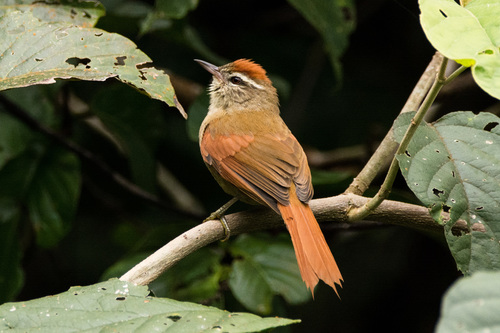
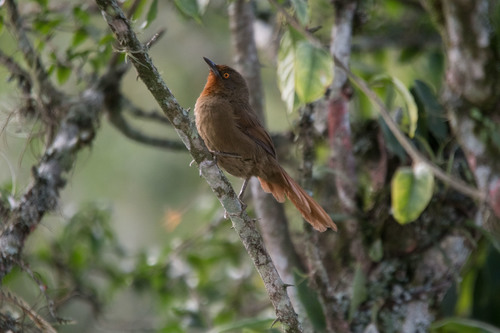
The orange-eyed thornbird, subspecies Phacellodomus erythrophthalmus ferrugineigula, is 16 to 18 cm (6.3 to 7.1 in) long and weighs approximately 21 to 27 g (0.74 to 0.95 oz). It is a medium-sized thornbird, with males and females sharing identical plumage patterns. On an otherwise rufescent-brownish face, adults have an indistinct rufous-brown supercilium, darker brown lores, and a darker brown stripe running behind the eye. The forehead and forecrown are bright rufous. The remainder of the crown, the back, and the rump are dark brownish olive; the uppertail coverts are a chestnut-tinged brownish olive. The wings are mostly warm brown, with brighter coloring at the base of the flight feathers and duller coloring at the feather tips. The tail is rufous. The throat is dark rufous, and the rest of the underparts are olivaceous brown, which becomes paler at the center of the belly. The iris is orange, the maxilla is black, the mandible is gray, and the legs and feet range from greenish gray to gray. This subspecies of orange-eyed thornbird is found only in southeastern Brazil, occurring from southern Bahia south to northeastern São Paulo state. Within the Atlantic Forest biome, it primarily lives in humid lowland and montane evergreen forest, as well as secondary forest. It can also be found near small marshes, along watercourses within woodlands, in Eucalyptus plantations, and in urban areas. Most individuals occur from near sea level up to 850 m (2,800 ft) in elevation; in the southern portion of its range, it can be found locally as high as 1,700 m (5,600 ft).