About Phacelia dubia (L.) Trel.
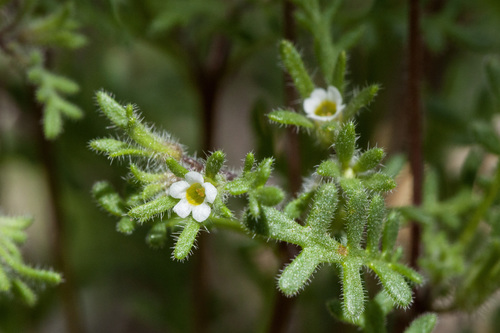
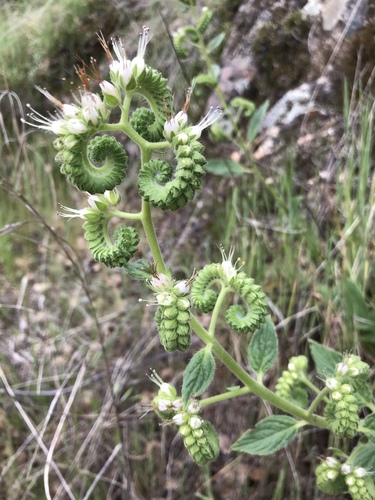
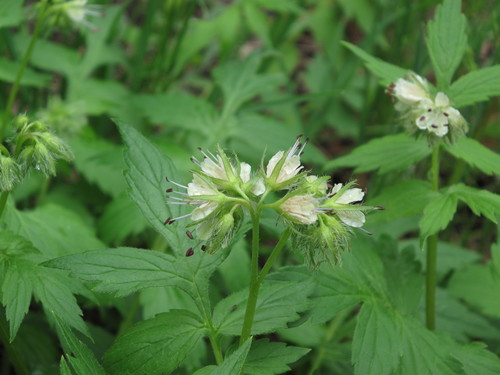
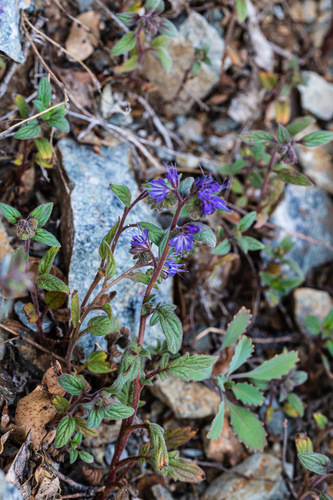
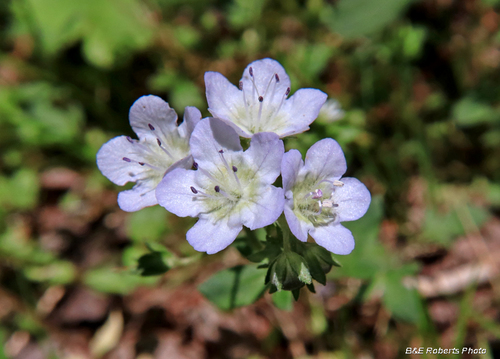
Phacelia dubia (L.) Trel. has slender ascending stems 12 to 30 centimeters long, which may be finely pubescent or smooth, and branch from the base. Its lower and basal leaves are petiolate, 2.5 to 5 centimeters long, and either dentate or have pinnatifid lobes. The upper leaves are sessile, much smaller, and less divided than the lower leaves. The flowers of this species are 8 to 11 millimeters broad, borne on 6 to 15 millimeter long pedicels, arranged in racemes that hold 5 to 15 flowers each. The fruit is a capsule 3 millimeters in diameter. Phacelia dubia is widely distributed across the eastern United States, though local populations may be spotty. It has been recorded in Alabama, Arkansas, Washington, D.C., Delaware, Georgia, Louisiana, Maryland, Mississippi, North Carolina, New York, Ohio, Pennsylvania, South Carolina, Tennessee, Virginia, and West Virginia. This species is presumed extirpated from the state of Ohio. In Virginia, Phacelia dubia grows in well-drained floodplain forests, rocky woodlands, barrens, and fields. The species relies on appropriate habitat to persist, and can be eliminated from an area by development, changes in land use, or competition with invasive species.