About Phacelia covillei S.Watson
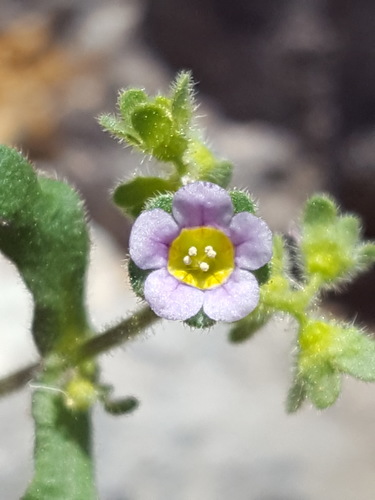
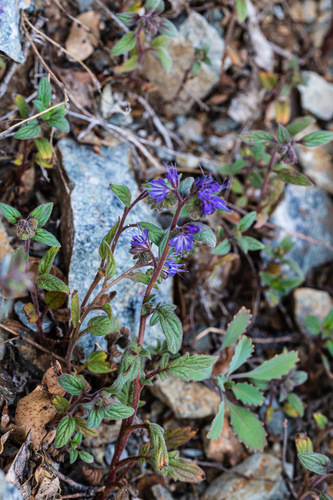
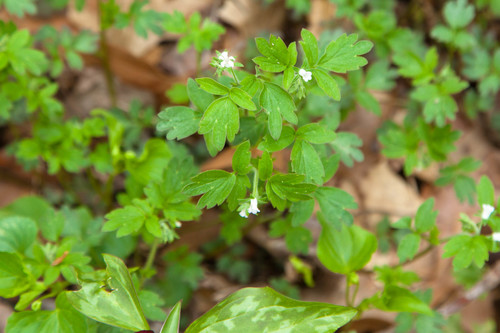
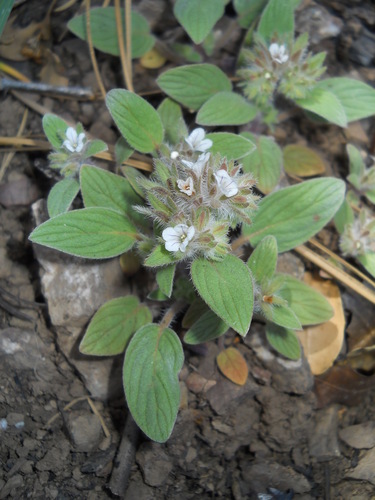
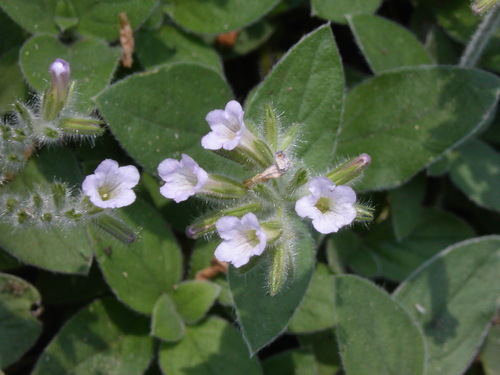
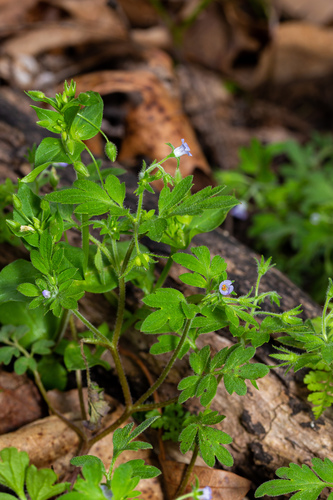
Phacelia covillei S.Watson, or Coville's phacelia, has slender, weak stems that are 15 to 30 centimeters (6 to 12 inches) long, covered in fine soft hairs, and branch from the base. Its leaves bear 3 to 7 deeply divided lobes. The species produces small, light blue-violet flowers in early spring. These flowers grow on stalks called pedicels that measure 13 to 17 millimeters (0.52 to 0.68 inches) long, arranged in racemes that hold 1 to 6 flowers each. The corolla tubes are approximately 6 millimeters long. Its fruits are spherical capsules 3 to 4 millimeters (0.12 to 0.16 inches) in diameter, and each capsule contains 1 to 4 seeds.
Phacelia covillei has a very limited, disjunct distribution across the eastern United States. It grows in Maryland and North Carolina, where state authorities list it as S1, endangered. It is also found in Indiana, Ohio, Virginia, and West Virginia, where State Heritage Programs have not distinguished it from Phacelia ranunculacea (Nutt.) Constance, which they list as endangered in each state, according to records from Sewell 2003 and Sewell and Vincent 2006. This species also occurs in the District of Columbia, Illinois, and Missouri, where officials have not assigned it any conservation status. It is common in parts of its range, growing in floodplain forests and adjacent slope forests. Populations of this species can be eliminated by development, changes in land use, competition with invasive species, or any combination of these factors. In the Potomac Gorge Area of Maryland and Virginia, Phacelia covillei is self-pollinating, meaning it is evidently not pollinated by insects or other animals.