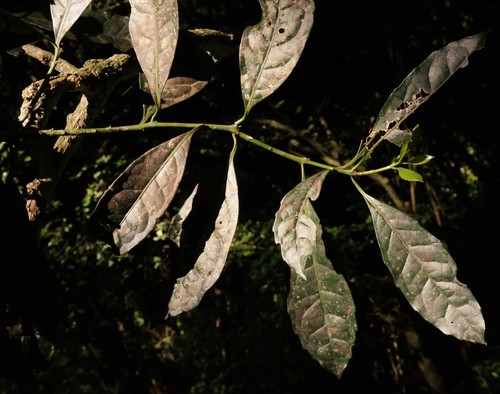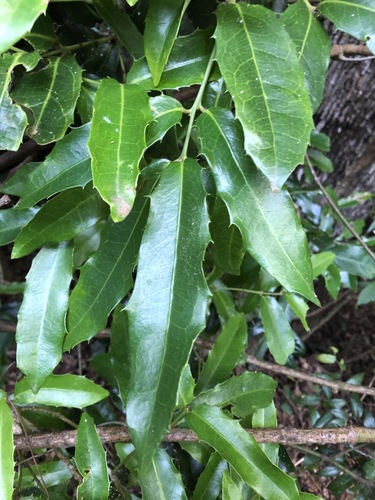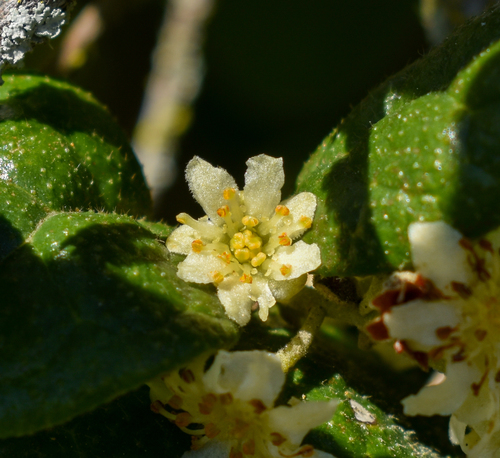
About Peumus boldus Molina
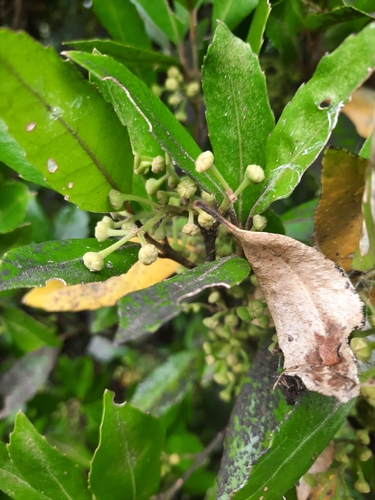
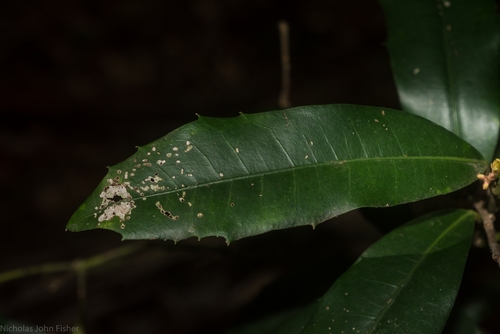
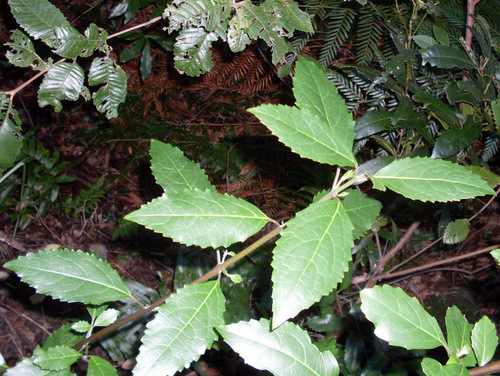
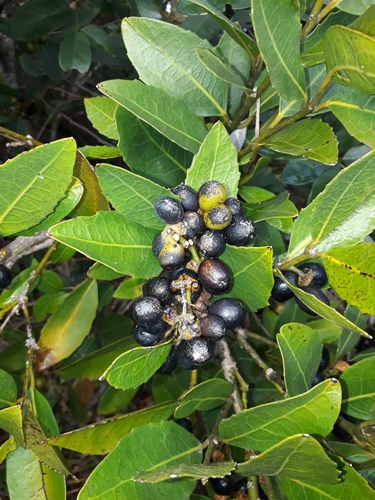
Peumus boldus Molina, commonly known as boldo, is a characteristic component of the sclerophyllous forests endemic to central Chile, growing alongside other native species including litre, quillay, peumo, and bollén. It belongs to the family Monimiaceae, which is closely related to Lauraceae, a family that includes many aromatic leaf plants such as cinnamon, cassia, bay leaf, and camphor laurel. Boldo leaves have a strong, woody, slightly bitter flavor and a camphor-like aroma; when brewed into tea, they develop a soft, slightly bitter flavor with a rough, coniferous aftertaste. The plant’s assertive flavor comes primarily from the compound ascaridole, which is also found in the epazote plant. Its edible fruits are small green drupes roughly 2 centimeters in diameter, that form between December and February. They have a pleasant, tasty flavor and are nutritious, though they remain little known outside of the plant’s native range. Boldo leaves are used for culinary purposes primarily across Latin America, in a similar way to bay leaves. They are used to flavor savory dishes including fish, mushrooms, and vegetables, added to sauces, and used by local South American cooks to wrap fish and meat for frying. Dried boldo fruits are used to make spicy condiments, and boldo leaves are also prepared as a herbal tea, most commonly in Chile and Argentina. In Brazil, Argentina, Chile, Uruguay, and Paraguay, boldo is often mixed with yerba mate or other teas to moderate their flavor; many families keep a live boldo plant at home for this use, and pre-made boldo teabags are widely available in most supermarkets. It is widely used as a mild folk medicine across both urban and rural areas of many South American countries, even among people who do not regularly drink herbal teas other than mate. It is officially listed as a phytotherapeutic plant in the Brazilian pharmacopoeia, classified as a cholagogue and choleretic for the treatment of mild dyspepsia. In 2009, the European Medicines Agency released a safety assessment of boldo. Boldo leaf contains the alkaloid boldine, plus 2–4% volatile oil, with major constituents being ascaridole (16–38%), 1,8-cineole (11–39%), and p-Cymene (9–29%). Ascaridole is highly toxic, which raises safety concerns about the use of boldo leaf in traditional herbal medicinal products. Abortifacient and teratogenic effects were observed in rats given very high doses (800 mg/kg) of a dry ethanolic boldine extract in early pregnancy; these effects were not seen at lower doses. Most existing research on boldo focuses on boldine, and there is limited published information on whole boldo leaf herbal preparations; where studies exist, they usually lack detailed descriptions of the preparations used. No published genotoxicity or carcinogenicity studies are available for whole boldo leaf herbal preparations. Boldo oil should not be used either internally or externally. When boldo leaf is used, total exposure to ascaridole must be considered for safety, and ascaridole levels in herbal medicinal products should be measured. Due to ascaridole’s low solubility in water, the use of aqueous extracts including herbal teas is considered acceptable. The use of ethanolic extracts of boldo leaf is not considered acceptable for traditional herbal medicinal products, because these extracts can contain potentially higher levels of the toxic constituent ascaridole.