About Petrosedum rupestre (L.) P.V.Heath
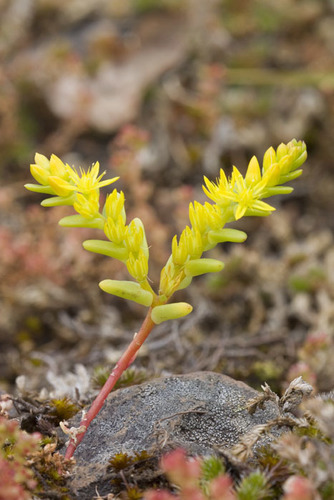
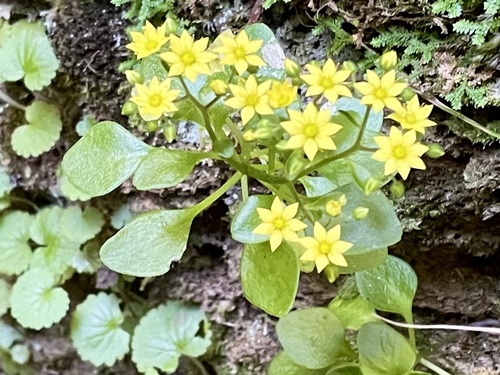
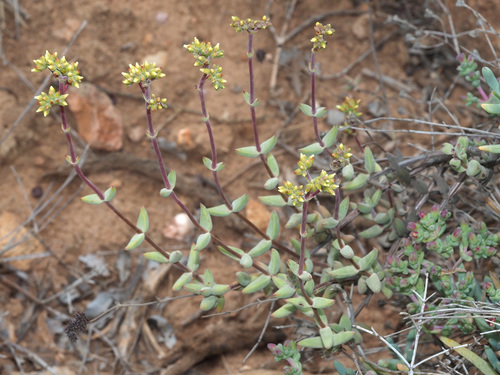
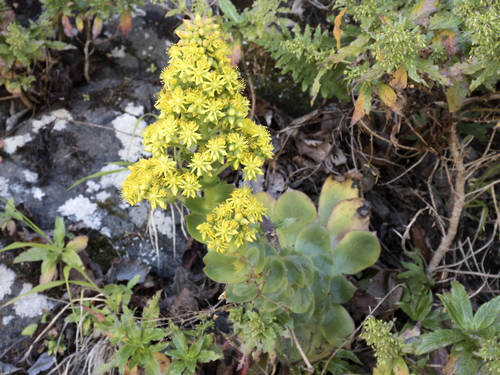
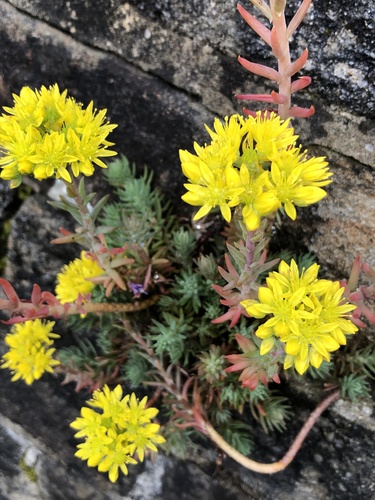
Plants of Petrosedum rupestre are typically up to 10 centimeters tall, with sprawling stems and stiff foliage that resembles spruce branches, though the tissue of the foliage is softer. The leaves are most often blue-gray to gray, but can also range to light green and yellow shades, and the flowers of the species are yellow. Like many species in the Sedum group, Petrosedum rupestre has a prostrate, spreading growth habit.
As an ornamental plant, Petrosedum rupestre is very popular. It is grown in garden settings, in containers, and as a houseplant, and it is naturally drought-tolerant. There are multiple named cultivars of this species that have variegated, multi-colored leaves. The plant is propagated via cuttings through vegetative cloning.
This species is prone to developing fasciation, which produces cristate forms. These forms have attractive cactus-like shapes with irregular curves, but the cristate growth reverts easily to the typical form. To maintain the cristate form, all normal offshoots must be removed quickly when they appear.
In Europe, including the United Kingdom, Petrosedum rupestre is occasionally used as a salad leaf or an herb. It is reported to have a slightly astringent or sour taste.