About Petrosaurus thalassinus (Cope, 1863)
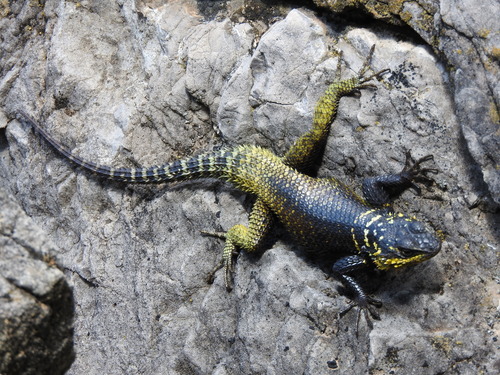
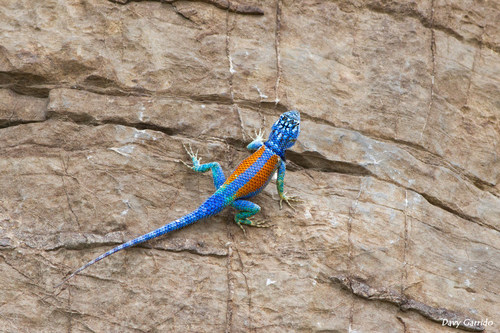
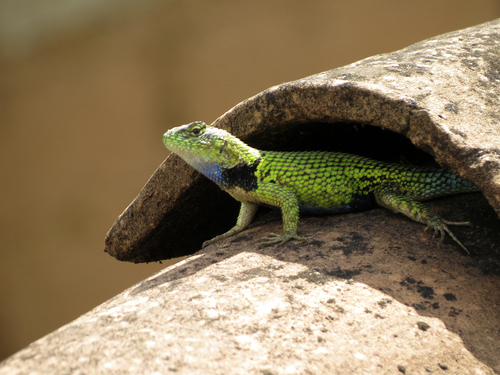
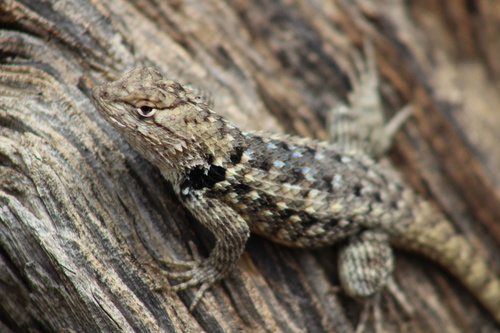
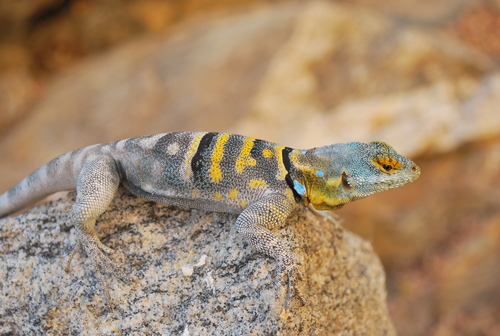
Petrosaurus thalassinus, first formally described by Cope in 1863, can reach a total length of 45 cm (18 in) when including the tail. It has a flattened body covered in small, smooth granular scales, with slightly keeled scales located close to the tail. The head is bluish, with red to orange coloring around the eyes; the neck is yellow with blue spots and streaks. The dorsal surface of the tail is gray-blue with darker cross bars, and the intensity of all of the species' coloration increases during the breeding season for both males and females. This lizard most often occurs in areas right around rocky canyons, boulder-covered hillsides, arroyo bottoms, and seaside cliffs. It is particularly common on rocks near large trees or other types of vegetation, and is rarely found in areas with no vegetation at all. Its known geographic range is limited to the Sierra la Laguna and its connected ranges, the Sierra la Trinidad in the Cape region of Baja California Sur, Mexico, plus the islands of Espiritu Santo and Partida Sur in the Gulf of California. In the Sierra la Laguna, it occurs from sea level up to an elevation of 2,020 meters.