About Petronia petronia (Linnaeus, 1766)
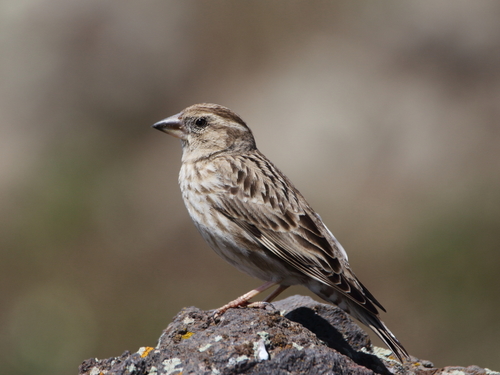
The rock sparrow, with the scientific name Petronia petronia (Linnaeus, 1766), measures 15–17 cm (5.9–6.7 in) in length. On average, it is slightly larger than a house sparrow, and has a noticeably larger, more conical bill. It has a prominent whitish supercilium and a less distinct crown stripe. Its back and wings are patterned brown, its underparts are streaked, and it has a diagnostic but hard-to-spot yellow throat spot. Its plumage is largely made up of similar earth tones, with a distinctive yellow patch on the upper breast that creates a sharp contrast against these tones. This carotenoid-based trait is found in both sexes, and plays an important role during the breeding season by signalling both attractiveness and social status. This species has a loud wheezy song. It is a very rare vagrant to areas north of its breeding range, with only one recorded sighting in Great Britain: at Cley, Norfolk on 14 June 1981. This gregarious species also occurs in human settlements when located in suitable habitat. The rock sparrow primarily forages on the ground. It feeds on seeds year-round, and eats berries in autumn. In spring, its diet includes invertebrates, particularly caterpillars and grasshoppers, which are also fed to its young.