About Petrolisthes violaceus (Guérin, 1831)
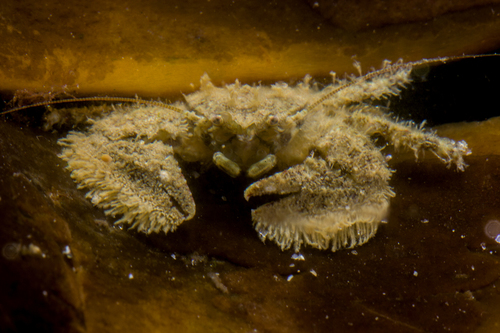
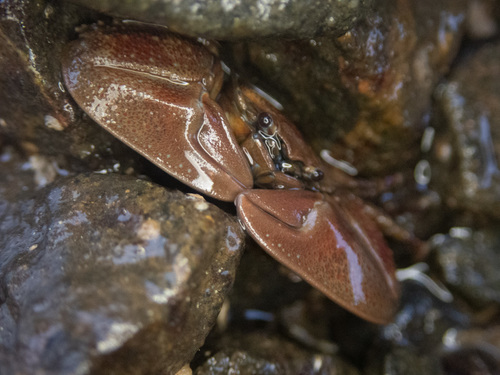
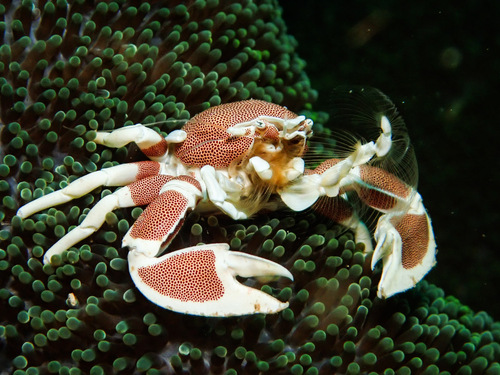
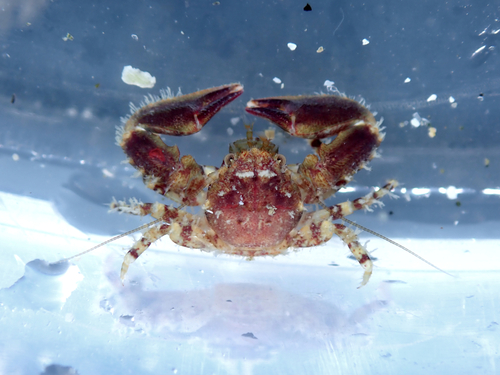
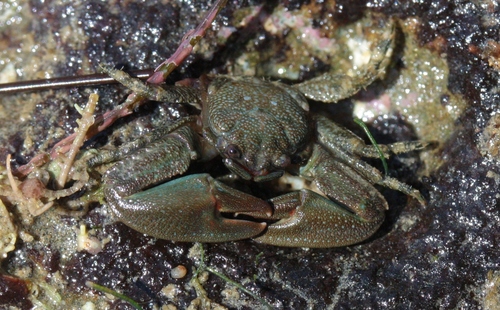
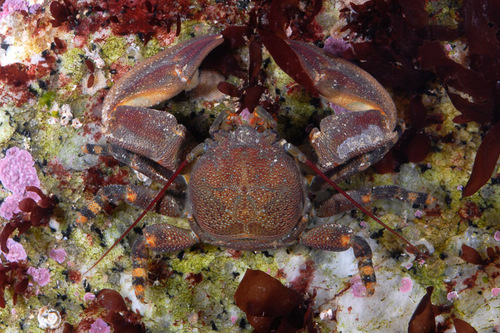
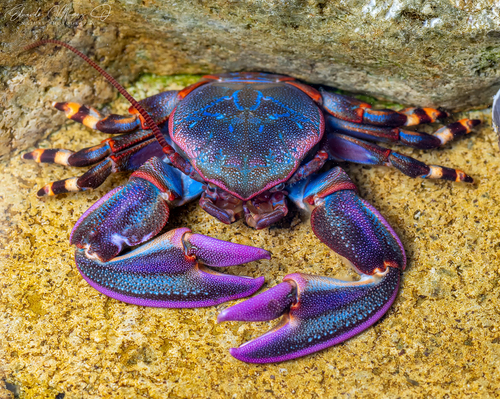
The species Petrolisthes violaceus (Guérin, 1831) has planktonic larvae that stay in the plankton for more than 25 days. Larval development takes place across four stages: prezoea, two zoeal stages, and a megalopa stage. The geographic range of Petrolisthes violaceus extends from Callao, Peru to the Taitao Peninsula in Chile. Within this range, it is one of the most common decapods found in the intertidal zone. It is a free-living crab, most often found in crevices, under boulders, or between rocks. When compared to another species in the same genus, Petrolisthes laevigatus, P. violaceus occupies the lower section of the intertidal zone. It is also more active and more aggressive than P. laevigatus. Due to its vertical distribution and intertidal habitat, P. violaceus is regularly exposed to air for varying lengths of time, with exposure periods changing based on tide height. A study by Gaitán-Espitia et al. showed that P. violaceus displays a gradient of physiological responses in metabolic rate and heart rate across a 3000-kilometer latitudinal gradient. Because P. violaceus lives in the lower intertidal zone, it is better able to handle water hypoxia. Researchers have proposed that in aquatic conditions, P. violaceus uses an oxyconformer strategy, and can adjust its oxygen demands to suit an environment with fluctuating oxygen levels.