About Petrolisthes elongatus (H.Milne-Edwards, 1837)
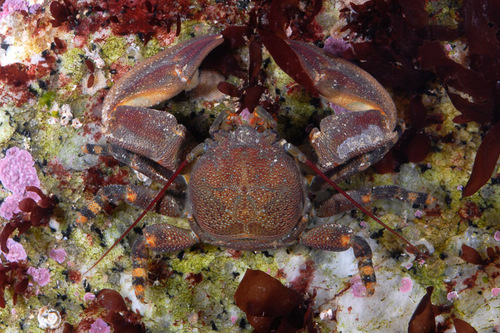
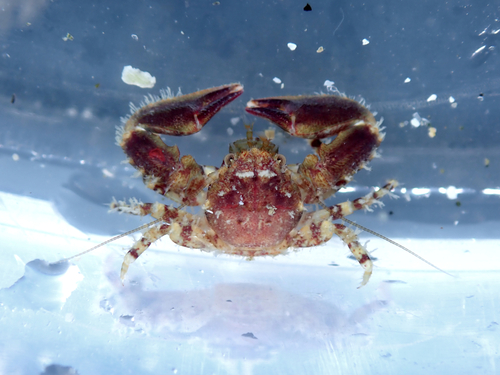
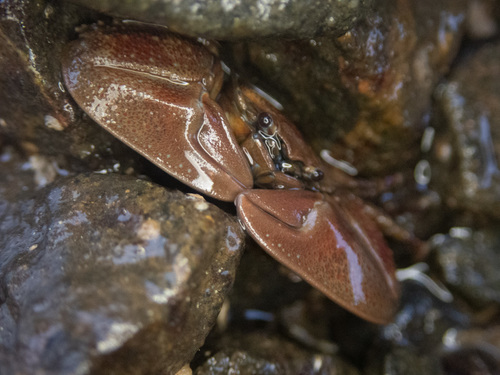
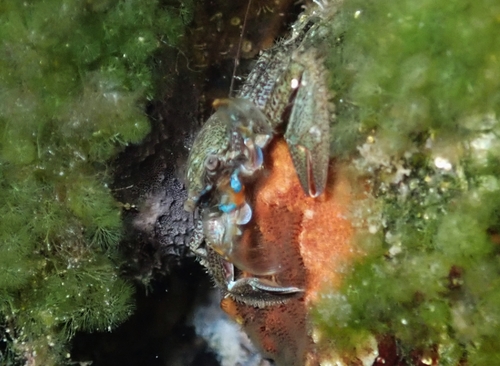
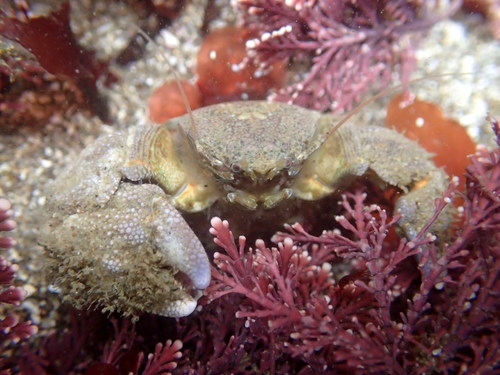
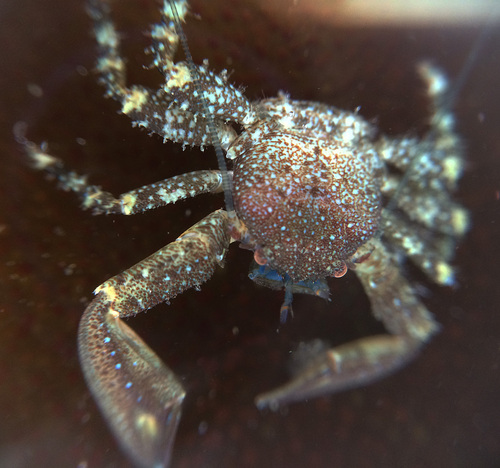
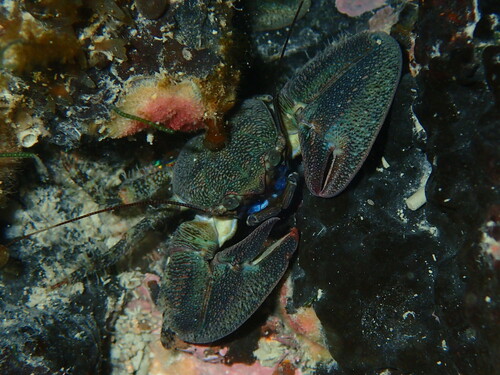
This species, Petrolisthes elongatus, has a flattened carapace with smooth side and rear margins, reaching a maximum width of 18 mm (0.71 in). Long, whip-like antennae grow from the front corners of the carapace, and a short rostrum extends out past the large, prominent eyes. This species feeds in two ways: it can filter feed using long setae that grow from the maxilliped palps, or it can scavenge by chopping flesh with its second maxilliped and shredding it further with its mandibles. The large chelipeds are typically smooth, with no teeth or serrations. In males, chelipeds are mainly used for territorial defense, and males usually have one cheliped that is enlarged. Randomly placed spines are found on the chelipeds and legs, and these spines can break off due to wear. The dorsal surfaces of the chelipeds, legs, and carapace share the same colour range: black, blue, greenish, or greyish, while the ventral surfaces of these areas are a lighter colour. The last pair of legs are setose, reduced in size, and carried folded under a large abdominal flap. This abdominal flap also lets the animal swim backwards. Both the telson and uropods are setose. Studies conducted in New Zealand in the 1960s and 1970s found a north-south difference in this species' breeding biology. Ovigerous females can be found year-round in the Auckland region, but are only found in the summer months around Kaikōura. It is estimated that females brood two or three clutches of eggs over their lifespan, producing between 500 and 1000 eggs per brood. P. elongatus is native to all regions of New Zealand, and has been introduced to Tasmania and Victoria, Australia. In New Zealand, it lives in mussel beds, wharf pilings, estuaries, and the intertidal zone of rocky shores, where it is abundant under boulders and stones.