About Petrolisthes cabrilloi Glassell, 1945
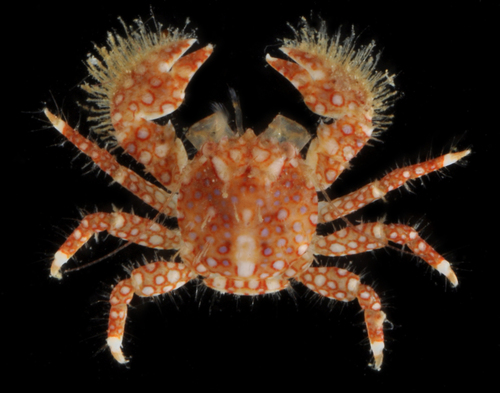
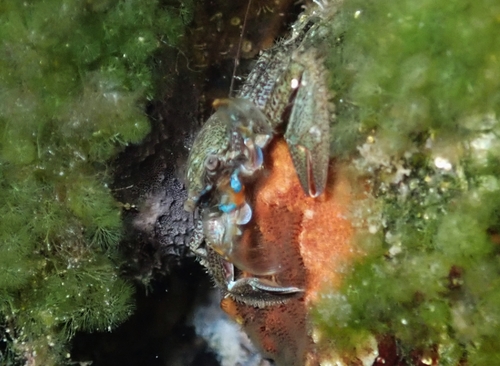
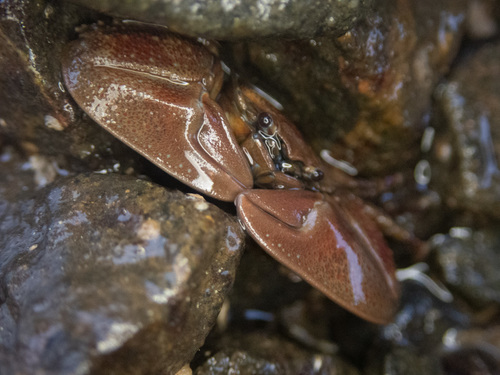
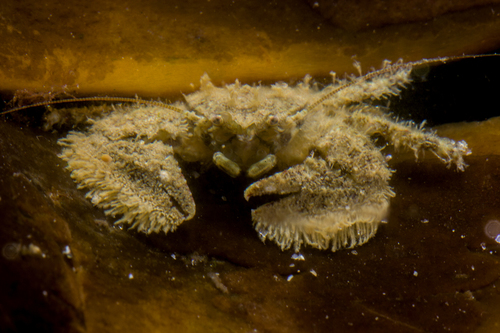
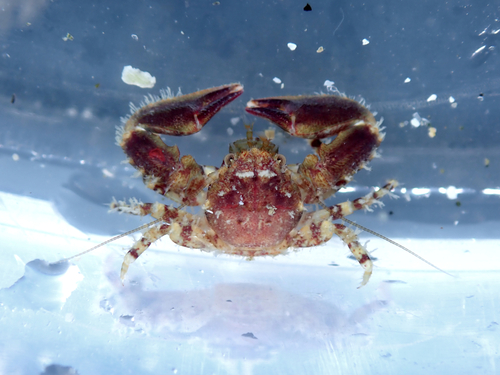
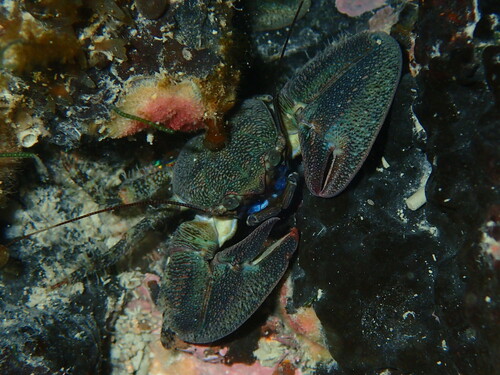
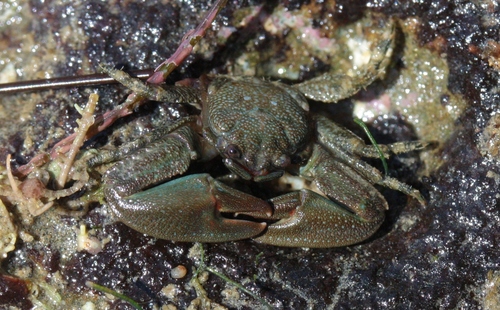
The Cabrillo porcelain crab, Petrolisthes cabrilloi, is a smooth species with a dull orange carapace marked by small spots. These spots contain some pubescence, and the carapace is noticeably hairier in juvenile individuals. The chelipeds, commonly known as pincers or claws, are large, measuring about three times the width of the carapace. Each cheliped is flattened, and its carpus (or "wrist") is roughly twice as long as it is wide, with no strong tubercles or teeth present. P. cabrilloi is most similar in appearance to P. cinctipes, and both are often found under the same rocks. Only P. cabrilloi has pubescent, setose ambulatory legs, a carpus that is twice as long as it is wide, and pubescence on the juvenile carapace. Among all Petrolisthes species found in California, P. cabrilloi has the longest cheliped tufts. While Petrolisthes species are primarily filter feeders, these tufts can be used to capture food particles while scraping particles from environmental surfaces. P. cabrilloi also differs from other Petrolisthes species by having a higher tolerance for sand and turbid water, though it is often found alongside other Petrolisthes species in the rocky intertidal zone.