About Petroica rosea Gould, 1840
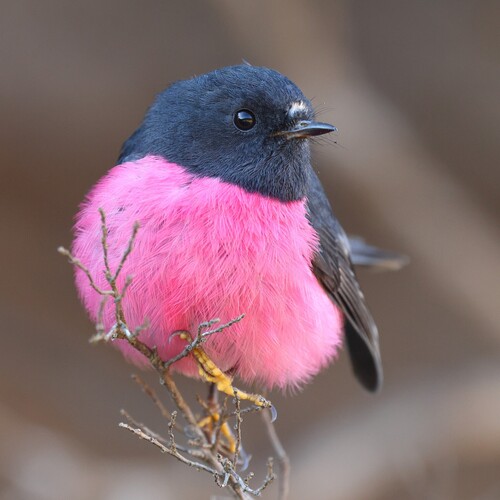
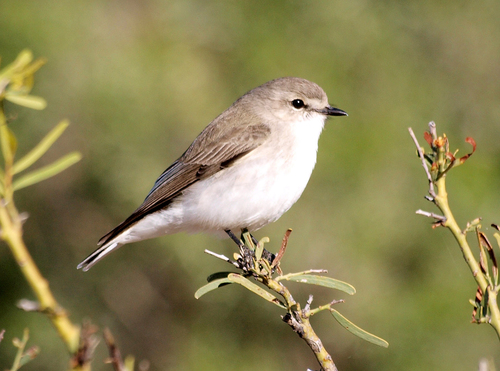
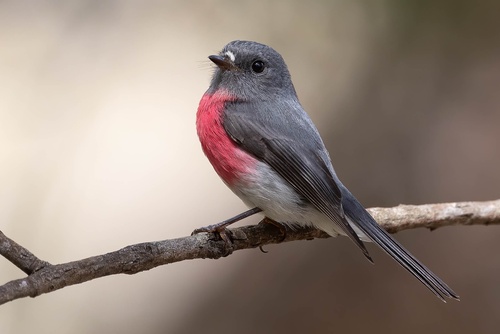
This species has the scientific name Petroica rosea Gould, 1840, and is commonly known as the rose robin. Adult rose robins are approximately 11 cm (4.3 in) long. Males have pink breasts and abdomens, paired with dark grey heads, throats, backs, and tails. Their foreheads and outer tail shafts are white, and they have no white wing bar. Females are plain-colored, with pale grey-brown plumage on their upper bodies and grey-white plumage on their underbodies. They have small white marks on their wings and above the bill. Both sexes have black bills, legs, and eyes. Both males and females produce a tick call. The rose robin is distributed across eastern and southeastern Australia, ranging from Rockhampton east of the Great Dividing Range through eastern New South Wales and Victoria into southeastern South Australia. It is not found in Tasmania. It inhabits gullies and valleys within wet sclerophyll forest and rainforest, and disperses to drier forest during cooler months. Rose robin populations are vulnerable to forest development and clearing, which has caused the species to disappear from affected areas. Populations have been recorded in conservation areas: the Dandenong Creek, Scotchmans Creek, and Gardiners Creek Corridors located in Melbourne's eastern suburbs.