About Petrochelidon fulva (Vieillot, 1808)
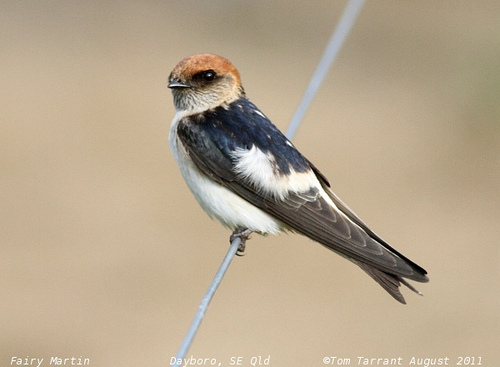
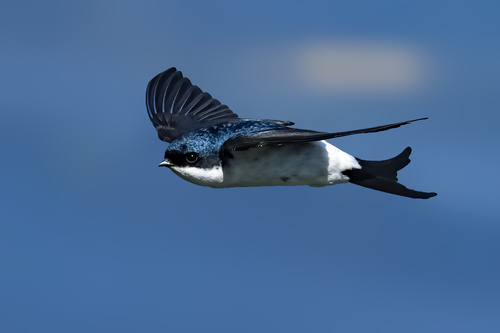
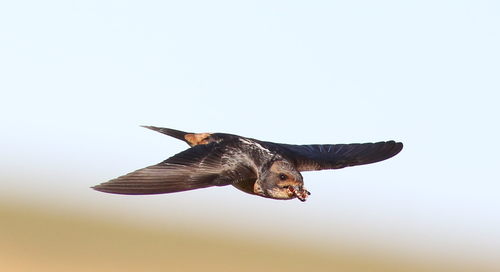
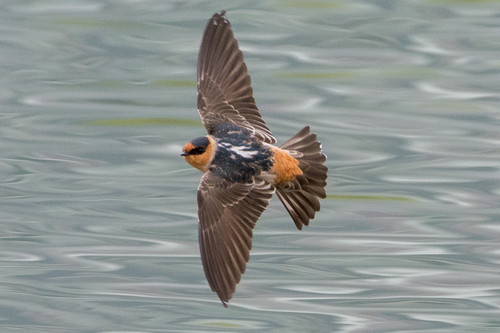
The cave swallow (Petrochelidon fulva) measures 12 to 14 cm in length, with an average weight of 19 g. Of its five recognized subspecies, the largest is P. f. pallida, which has an average wing length between 107.0 and 112.3 mm, while the smallest subspecies, P. f. aequatorialis, has an average wing length between 93.0 and 93.5 mm. Differences between males and females are minimal; the two sexes are similar in size and weight, and cannot easily be distinguished by their plumage. This species has grey-blue upperparts, and a brown-tangerine forehead and throat.
Cave swallow eggs are elliptical ovate in shape, typically white with fine variable spotting that ranges from light to dark brown, or may even be lilac or dull purple. Typical clutch sizes are between three and five eggs, and both sexes are thought to help incubate the clutch, though only the female has been observed to develop a brood patch. When they hatch, cave swallow young are altricial: they are blind and cannot maintain their own body temperature. They stay in the nest until they are able to fly, which happens roughly 20 to 22 days after hatching. Both parents feed nestlings small insects throughout the day, and will defend the nest from threats by swooping and calling loudly at the intruder.
During the breeding season, the three North American subspecies (P. f. fulva, P. f. pallida, and P. f. citata) usually nest in caves and sinkholes, and sometimes use man-made structures that provide similar habitat, such as highway culverts. The two South American subspecies, P. f. aequatorialis and P. f. rufocollaris, prefer to nest in open areas, including cliff faces and the sides of buildings. All subspecies forage for insects over open areas and water near their roosting sites. The spring and fall migrations of cave swallows are poorly understood, but P. f. citata, P. f. aequatorialis and P. f. rufocollaris are considered resident species that stay within their breeding range during winter.
P. f. pallida is found further west, in the southwestern United States and extending into northeastern Mexico. P. f. citata has the southernmost range of the North American subspecies, and occurs on Mexico’s Yucatán Peninsula. P. f. aequatorialis is found in Ecuador, and researchers speculate its range may extend into Peru. P. f. rufocollaris occurs in northwestern Peru. Breeding has been recorded in Mexico, southeastern New Mexico, southern Florida, the Greater Antilles, and areas of Texas. South American populations, as well as most Mexican and Caribbean populations, are resident, breeding and overwintering in the same geographic area. New Mexico and other northern populations migrate south, but their wintering locations and migration routes are unknown. Cave swallows have been observed overwintering in southern Texas since at least the 1980s.
As noted earlier, North American cave swallow subspecies primarily roost and nest in caves and sinkholes, while South American subspecies prefer open nesting sites like cliff faces and building sides. Breeding takes place between April and August. North American subspecies are currently undergoing human-facilitated range expansion, driven by increased availability of alternative nesting sites including highway culverts and bridges. In Texas alone, the breeding range of cave swallows increased by 898% between 1957 and 1999, with populations growing at an annual rate of approximately 10.8%.
Cave swallows are open-cup nesters: they build cup-shaped nests with an open top to allow flying in and out. Nests are constructed from mud and bat guano, and can be reused for multiple breeding seasons. Cave swallows also use old barn swallow nests, modifying them to fit their needs. The two species coexist at some nesting sites, making old barn swallow nests readily available to cave swallows. Cave swallows are social and prefer to nest in colonies of varying sizes. They have even been observed occasionally sharing nesting sites with other swallow species, including barn swallows. This co-nesting is particularly common in north central Mexico, and is becoming more frequent in the United States as cave swallows increasingly use highway culverts as nesting sites. There have been documented instances of interbreeding between the two species, and concerns have been raised about the viability of resulting hybrids.
While the use of human-made nesting sites has allowed cave swallows to greatly expand their range across North America, these sites do carry potential risks. Nests in culverts and bridges have a higher risk of flooding, experience a more variable thermal regime during the breeding season, are more likely to be shared with other species, have a higher risk of nest predation, and offer less available nesting materials. In comparison, natural nesting sites in caves and sinkholes have low flood risk, a more stable thermal regime, lower rates of cohabitation with other species, lower predation risk, and easily accessible nesting materials. Despite these risks, a 1974 study found that cave swallows nesting in culverts laid more eggs, had more eggs hatch, and had more nestlings survive than those nesting at Dunbar Cave. This may explain why cave swallow populations grow so rapidly when using these riskier human-made nest sites.