About Petaurus australis Shaw, 1791
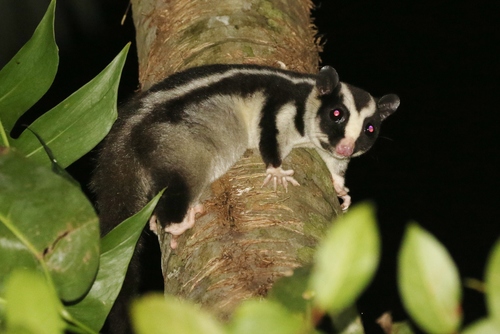
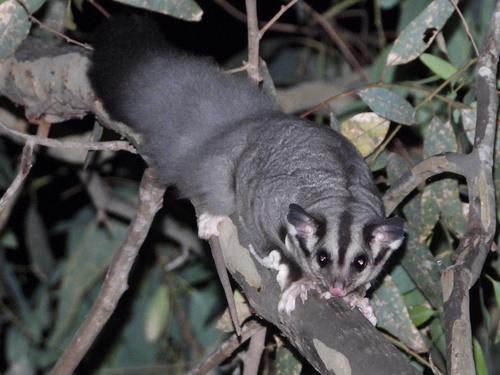
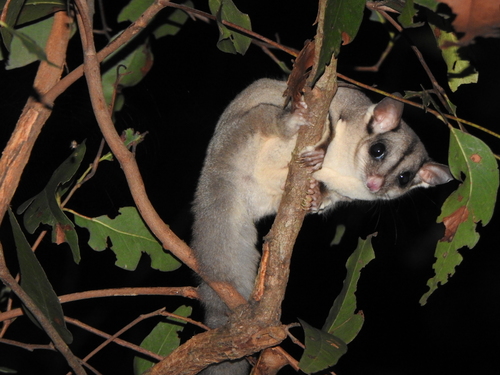
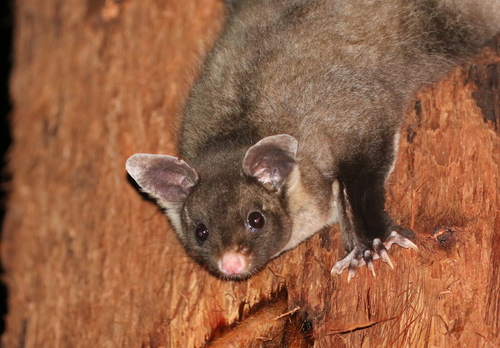
The yellow-bellied glider (Petaurus australis Shaw, 1791), also called the fluffy glider, is an arboreal, nocturnal gliding possum that lives in native eucalypt forests of eastern Australia, ranging from northern Queensland south to Victoria. This species inhabits forests and woodlands across eastern Australia, found at altitudes ranging from sea level up to 1400 metres. The subspecies native to North Queensland occurs at altitudes over 700 metres above sea level. Due to natural habitat discontinuities and human-created habitat clearings, this glider has 13 separate populations across three distinct regions in North Queensland: one on Mount Windsor Tableland, a second on Mount Carbine Tableland, and a third in a linear habitat stretching from Atherton to Kirrama on the Atherton Tableland. The total estimated number of individual yellow-bellied gliders across these three North Queensland populations is around 6000. Because its habitat is threatened, the species is classified as uncommon to rare, and listed as vulnerable in tropical regions. It has a wider distribution across southern Queensland, New South Wales, and Victoria. Breeding happens only in spring in the southern part of the species' range, but occurs year-round in northern Queensland. Yellow-bellied gliders reach sexual maturity around two years of age, at which point they pair off. Pairs are typically monogamous, and mate between August and December. Offspring are usually born between May and September. Young gliders stay in the mother's marsupium for approximately 100 days after birth. After leaving the marsupium, the young remain in the nest den for 2 to 3 months, before they are weaned from their mother and become independent. Both parents care for offspring while they stay in the den. In North Queensland, yellow-bellied gliders build their dens in Eucalyptus grandis trees, lining the dens with leaves. The total average life expectancy of this species is about six years.