About Persicaria pensylvanica (L.) M.Gómez
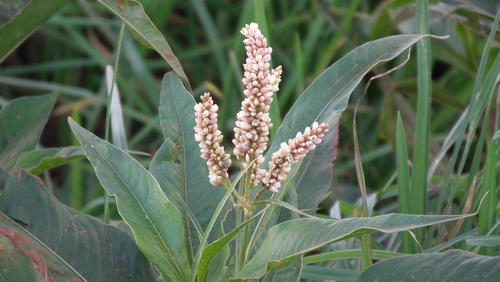
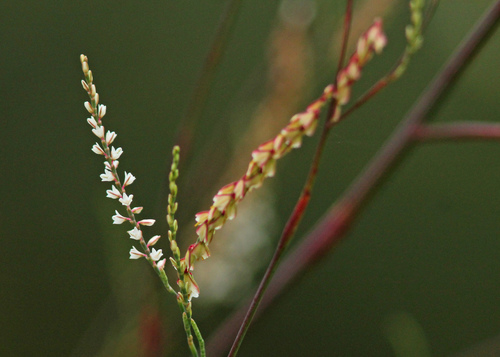
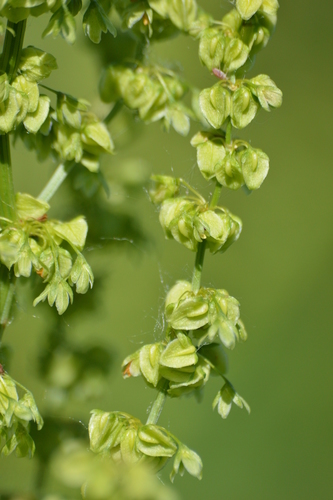
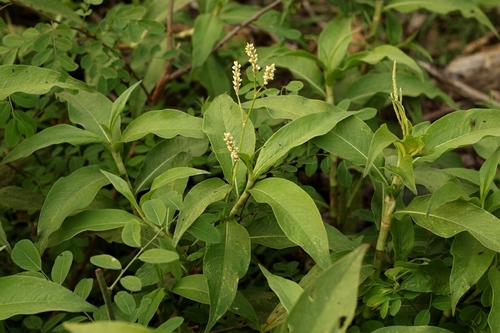
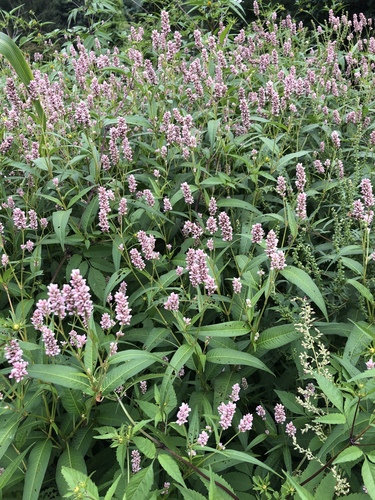
Pennsylvania smartweed, Persicaria pensylvanica, is a variable annual herb that grows between 10 cm (3.9 in) and 2 m (6.6 ft) tall. It produces upright, ribbed stems that may be branched or unbranched. Its leaves are lance-shaped, borne on short petioles, with leaf blades measuring roughly 4–17 cm (1.6–6.7 in) long, and occasionally reaching up to 23 cm (9 in) in length. Leaf blades may sometimes be marked with a dark blotch. The brownish ochrea located at the base of the leaf stalk grows up to 2 cm (0.79 in) long. Inflorescences emerge from the top of the stem and from leaf axils. Each flower has five pinkish or greenish tepals, each a few millimeters long.
This species grows in moist, disturbed habitat types including ponds, reservoirs, riverbanks, irrigated fields, and ditches. It is an important component of habitat for waterfowl and other birds, which use it for both food and cover. At least 50 species of birds have been observed feeding on its seeds, including ducks, geese, rails, bobwhites, mourning dove, and ring-necked pheasant. Mammals including white-footed mouse, muskrat, raccoon, and fox squirrel eat the seeds and other parts of this plant.
Native American groups have a number of traditional medicinal uses for Persicaria pensylvanica. The Chippewa use it to treat epilepsy. The Iroquois use it to treat horse colic. The Menominee drink a leaf infusion to stop mouth hemorrhages and support postpartum healing. The Meskwaki use the plant to treat bleeding hemorrhoids.