About Peropteryx macrotis (Wagner, 1843)
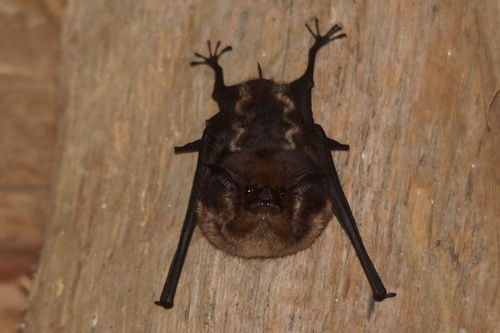
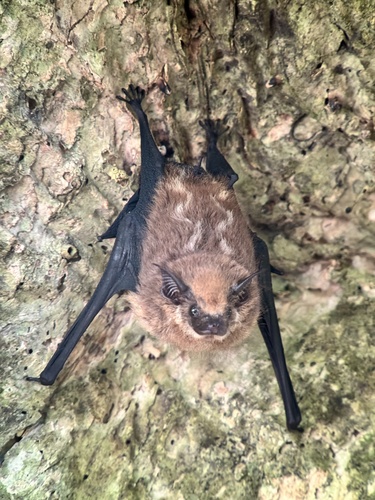
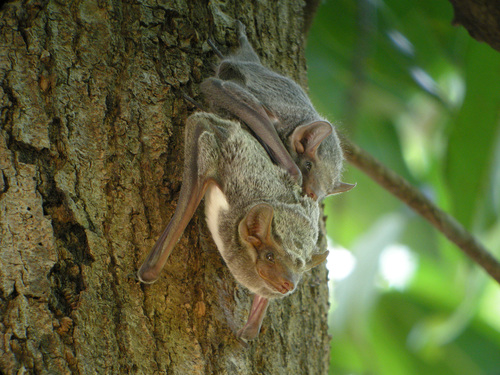
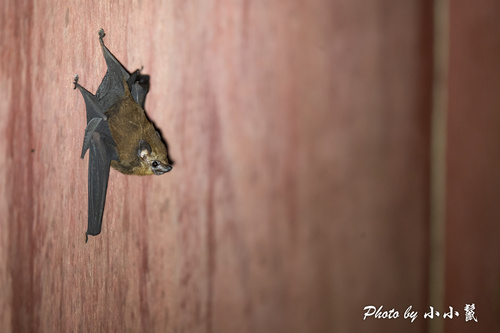
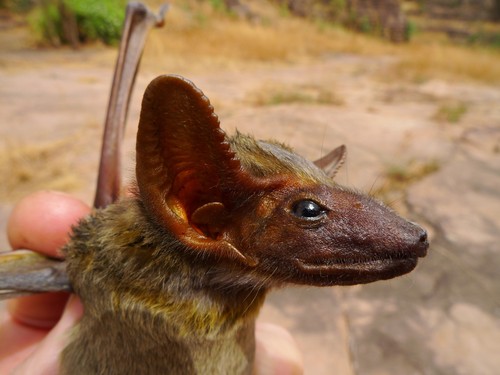
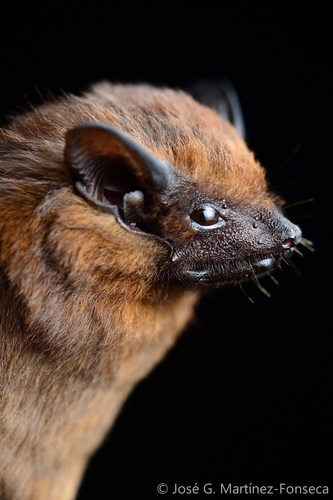
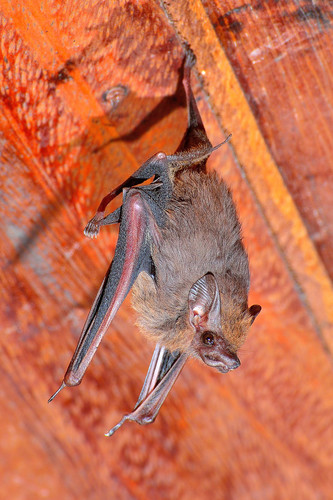
The lesser dog-like bat, scientifically named Peropteryx macrotis (Wagner, 1843), is a small bat species. Adults measure around 6 cm (2.4 in) in head-body length, with a tail approximately 1.4 cm (0.55 in) long, and weigh only about 4 g (0.14 oz). Females of this species are larger than males. They have moderately long fur that ranges in color from brown to grey, and can even be reddish. As the smallest species of dog-like bat, it shares the group’s characteristic long, hairless snout that gives dog-like bats their common name. In addition to its smaller size, it can be told apart from its close relatives by an outward-opening glandular sac located on the wing membrane forward of the arms.
Lesser dog-like bats range from eastern Veracruz and Oaxaca in southern Mexico, through all of Central America. In South America, they occur across the whole of Colombia, and are otherwise found only east of the Andes, with their southernmost distribution reaching eastern Bolivia, northern Paraguay, and Santa Catarina in Brazil. Within this range, they are most often found in tropical deciduous forest below 1,000 m (3,300 ft), though they occasionally occur in evergreen forest or semi-arid scrubland. No subspecies of Peropteryx macrotis are currently recognised; the Trinidad dog-like bat was formerly classified as a subspecies of P. macrotis.