About Peromyscus maniculatus (Wagner, 1845)
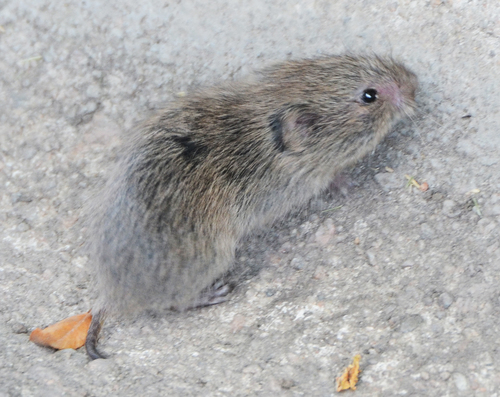
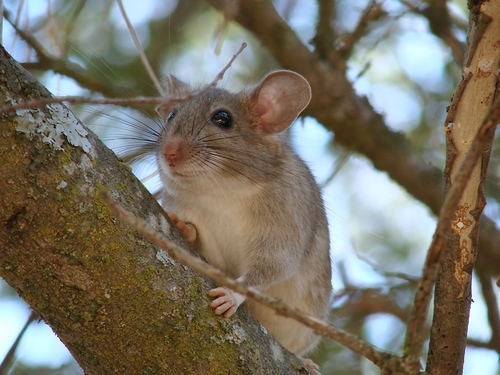
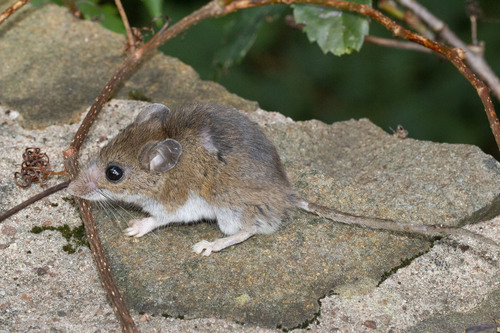
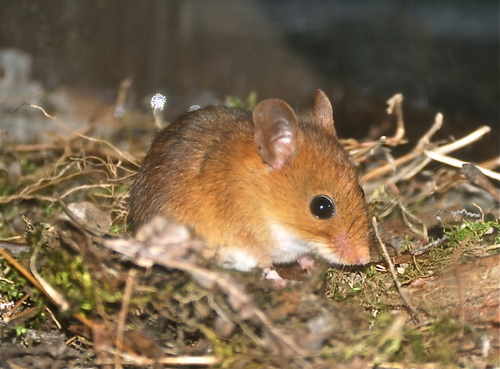
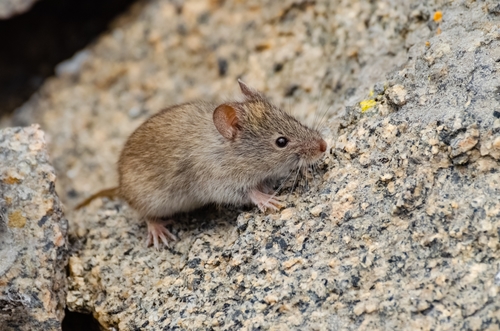
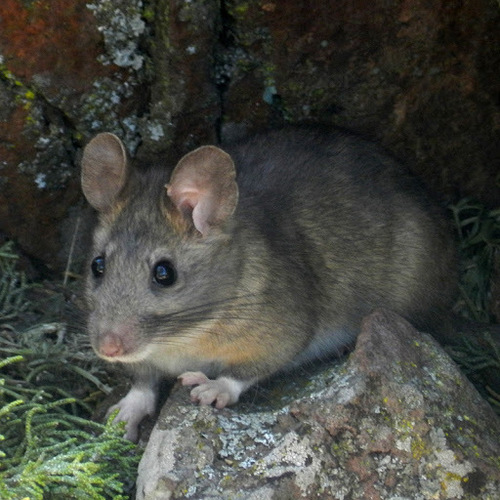
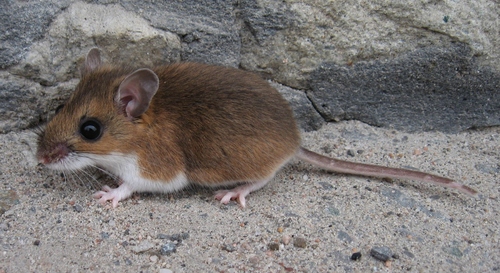
Physical description: The eastern deermouse (Peromyscus maniculatus) is a small rodent. Its body length is 3 to 4 inches (8 to 10 cm), not counting the tail. It has large beady eyes and large ears, which give it good sight and hearing. Its fur is soft, and ranges in color from gray to brown. All deermice of this species have a distinct white underside and white feet. Their tails are covered in fine hairs, and follow the same dark upper, light lower color split seen on the rest of the body. Peromyscus maniculatus has distinct subspecies. Among the most common subspecies found in North America, the woodland form has longer hind legs, a longer tail, and larger ears than the prairie form.
Habitat: Peromyscus maniculatus is found throughout eastern North America. Most deer mice of this species nest high up in large hollow trees. They usually nest alone, but will nest in groups of 10 or more during winter. The prairie subspecies form is especially abundant in farmland of the midwestern United States. During winter, deer mice can be active on top of snow or beneath logs. In northern New England, they live in both coniferous and deciduous forests. They are often the only Peromyscus species found in northern boreal forest. The different subspecies use different plant communities and vegetation structures. There are two main groups of this deer mouse: the prairie deer mouse, and the woodland or forest deer mouse group.