About Periplaneta lateralis Walker, 1868
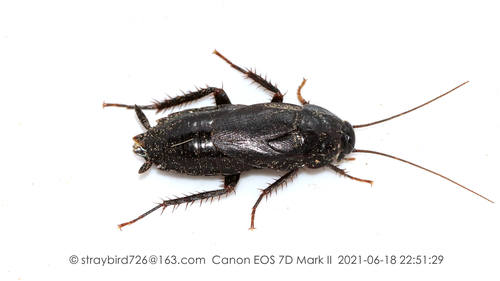
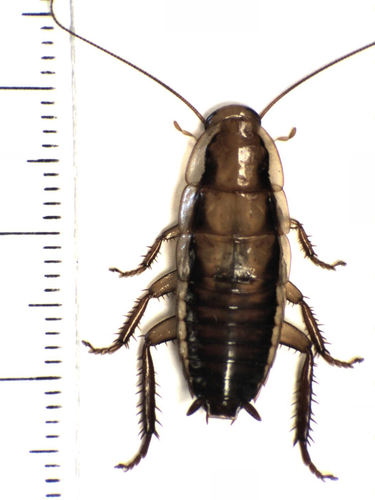
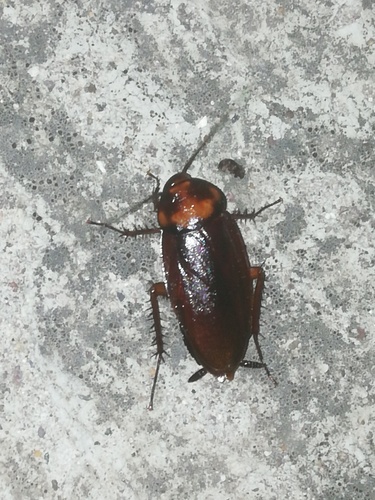
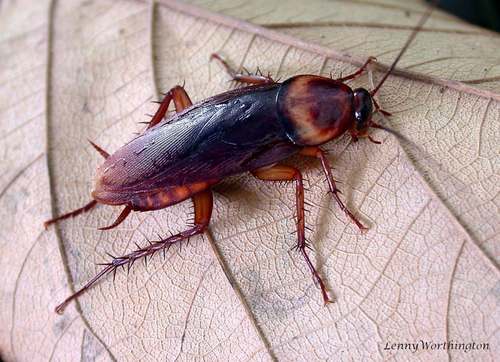
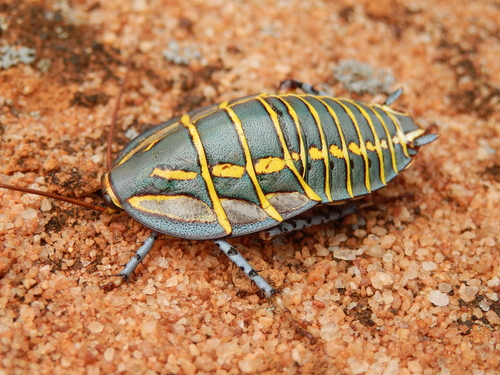
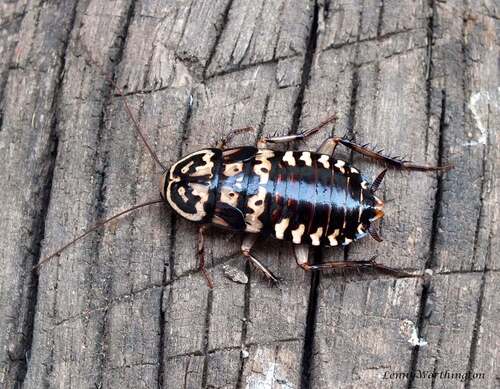
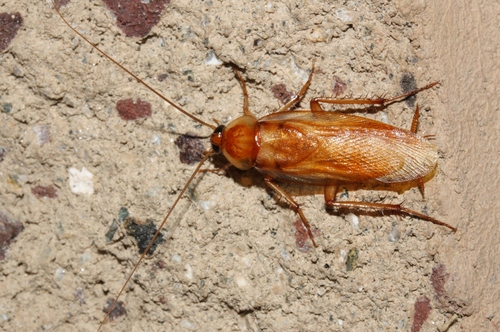
Periplaneta lateralis Walker, 1868, commonly known as the Turkestan cockroach, has distinct physical traits that differ between adult males and adult females. Adult individuals reach approximately 3 cm (1.2 in) in total length. Adult males are slender, colored brownish orange or red, and have long yellowish wings that let them glide and attract females. Adult females are broader than males, colored dark brown to black, have cream-colored markings on their thoracic shield and a cream-colored stripe along the edge of their wings, and have short vestigial wings. The species' egg capsule (ootheca) is 9–12 mm long, and eggs take between 118 and 137 days to hatch into nymphs. Nymphs are brown on their front half, black on their rear half, and are wingless. This species is primarily an outdoor insect, and is not known to be an aggressive indoor pest, unlike species such as the German cockroach and brown-banded cockroach. It will however occupy sheltered areas around human homes. In certain localities or tropical regions, it can become a notable indoor pest. Among occasional indoor intruders, males are encountered more often than females, due to their ability to fly and their attraction to lights. In Arabia, it lives under stones in damp hollows, desert farms, and wadis, and feeds primarily during the night. The species is native to Central Asia, the Caucasus Mountains, and northeastern Africa, and has been recorded in Afghanistan, Azerbaijan, Egypt, India, Iran, Iraq, Israel, Jordan, Kashmir, Libya, Palestine, Pakistan, Saudi Arabia, Sudan, and the United Arab Emirates. It is an adventive (non-native, established) species in Russia and the United States. In the United States, Turkestan cockroaches are sometimes kept as feeders for pet reptiles and other insectivores. They are selected in part because they cannot climb smooth surfaces and do not burrow. This species has been replacing crickets, which were the most popular feeder insect for decades, because crickets produce noise and odor, have short lifespans, and are more expensive. Turkestan cockroaches are a popular feeder species and are readily available for purchase online, which may speed their spread into new habitats. While reliable information on the specific dietary needs of insectivores is limited, Turkestan cockroaches have a high-protein, low-fat nutritional profile that is similar to crickets, more similar than mealworms or superworm larvae are. Depending on the cockroach's diet, the contents of its gut can provide essential nutrients that are not found in starved cockroaches with empty guts. An analysis of commercially sourced specimens found that small second instar nymphs measuring 0.9–1.3 cm (0.35–0.51 in) are 21% dry matter, which is composed of 76% crude protein and 14% crude fat. Medium third instar nymphs measuring 1.3–1.9 cm are 28% dry matter, which is composed of 53% crude protein and 27% crude fat. Most mineral requirements are met, though this species has the low calcium to phosphorus ratio typical of cockroaches, so calcium supplementation for feeding insectivores may be recommended. Vitamin A and vitamin E content is relatively low in commercially raised specimens, and both vitamins are significantly higher in free-ranging cockroaches. Insectivores fed unsupplemented invertebrates have been found to develop vitamin A deficiencies, and a study of panther chameleons (Furcifer pardalis) found that vitamin A deficiency reduces both lifespan and reproductive rates. Turkestan cockroaches are rich in vitamin B12.