About Periparus elegans (Lesson, 1831)
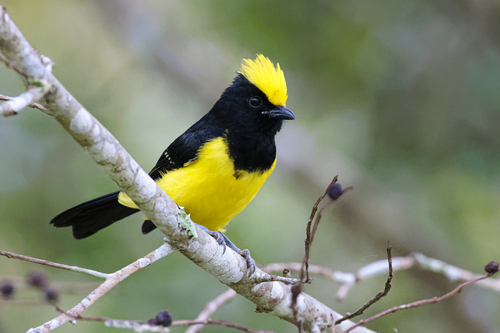
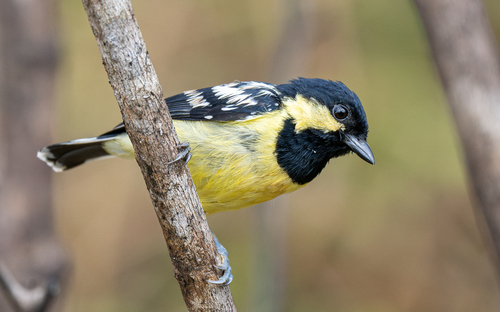
This species, Periparus elegans, is small in size, with males and females having similar overall appearance. There are nine recognized subspecies, which differ in overall color shading, as well as the amount and placement of white or yellow spotting on regions of black and wing plumage. For males, the crown, throat, and upper breast are glossy blue-black; the nape is black with a yellow spot; the mantle is black with white spots; the lower back is yellowish-grey; black tail feathers have white edges on their basal half and second portion; primary flight feathers have white edges; and the face, lower breast, and belly are yellow. Females are duller in overall color than males. Immature birds resemble adults, but have a yellowish throat and blackish moustachial streaks. Adult bills are black, sometimes with gray at the base; immature bills are yellowish to yellow-orange with horn-colored upper and lower mandibles. The iris is dark brown, and the legs are gray. Formerly, this species was included in the broader genus Parus. After a detailed molecular phylogenetic analysis was published in 2013, Parus was split into multiple resurrected genera, and this species was moved first to Pardaliparus, then to Periparus. Periparus elegans is endemic to the Philippines, and occurs across most of the country’s islands. Its natural habitats are tropical moist lowland forest and tropical moist montane forest, reaching elevations of up to 2,480 meters above sea level. The International Union for Conservation of Nature assesses this species as Least Concern, as it is fairly common within its range and tolerant of disturbed habitat. Details of this species’ diet are not well known, but it is recorded to eat insects, seeds, and fruit. It is typically observed in pairs, small groups, or mixed-species foraging flocks that include white-eyes, sunbirds, sulphur-billed nuthatches, leaf warblers, and flowerpeckers. Information about the species’ breeding is also poorly understood. It is thought to breed nearly year-round: adults in breeding condition with enlarged gonads have been collected from January to June, individuals carrying nesting material have been observed from March to April, and juveniles have been recorded from March to November. Nests are made of moss, placed inside holes in hollow trees.